Horror comedy as a genre has moved firmly into the cultural mainstream in recent years, with films like Bodies, bodies, bodies, and other recent entries in the genre questioning the anxieties and absurdities of contemporary life through dark comedy.
Valderrama’s play Witch Girl Summer follows in hot pursuit of this trend, but stands out for all the right reasons. The plot follows our protagonist Girl (Giullianna Martínez), as a rift with her longtime collaborator and Girltalk podcast co-host Odile leaves her more isolated, and more vulnerable, than ever. Lying in wait on Bumble BFF is Witch (Elinor Coleman), posing as a Gwyneth-Paltrow-esque wellness type. When Girl takes the bait and unknowingly participates in what turns out to be a possession ritual, chaos unfolds.
At its heart, Witch Girl Summer examines the shallow metrics of beauty and popularity that dominate social media, the pressure they place on women, and the sometimes-desperate lengths people will go in pursuit of fame and validation.
In a world where mainstream media typically struggles to portray online culture convincingly, often misrepresenting gen-z slang, influencers, and TikTok trends, Witch Girl Summer hits the nail on the head. Valderrama’s writing is clever and funny, with nods to popular culture that leave the crowd delighted and eager for the next punchline.
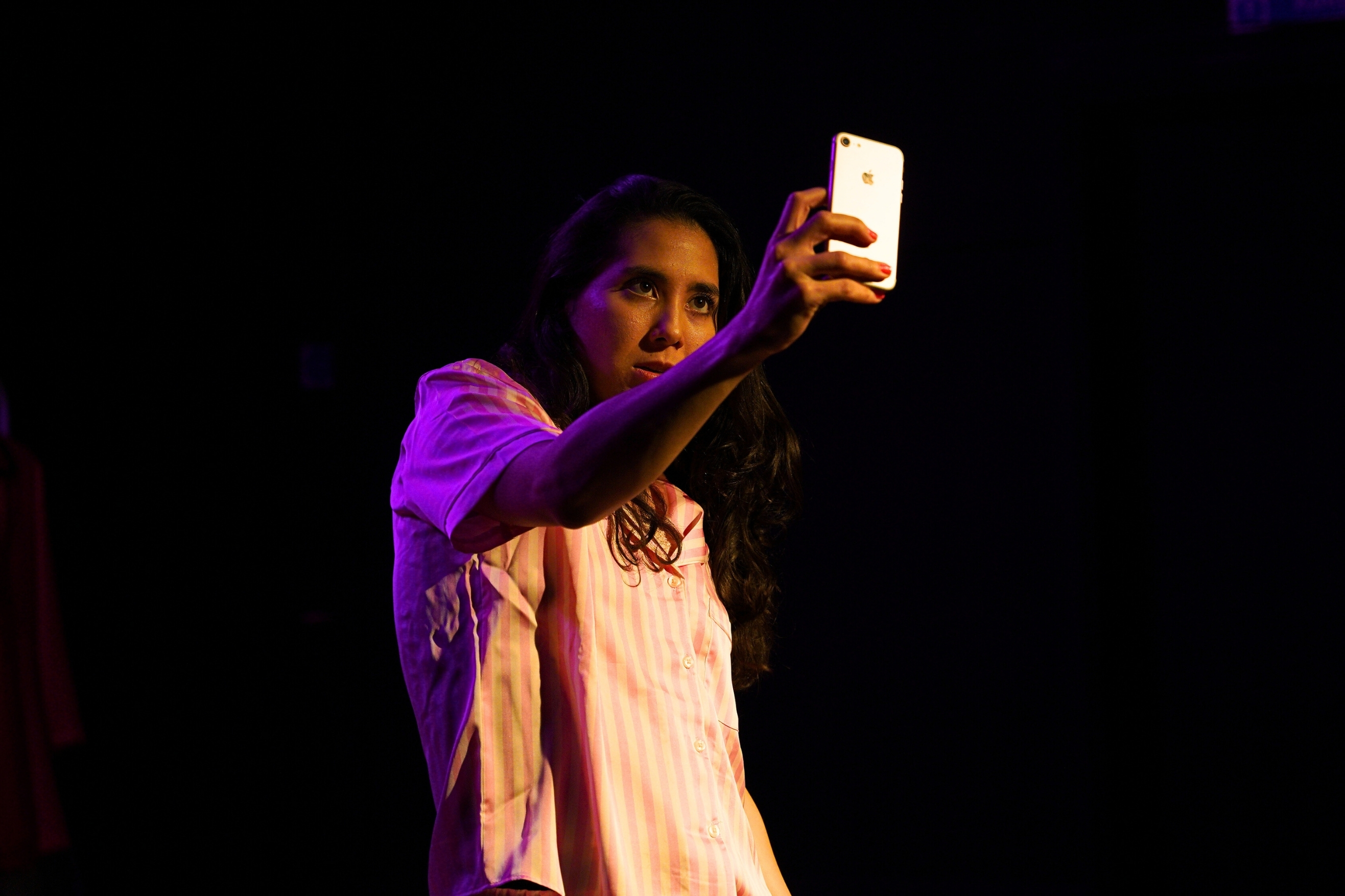
The production skilfully incorporates these digital influences into the show. In one moment of great hilarity, a four-part exorcism ‘how to’ tutorial plays over the speakers in perfect sync with Martinez’ on-stage scrolling. The pictures and videos projected against the backdrop of the scene effectively immerse the audience in the toxicity of the algorithm-driven world that Girl inhabits. This visual language is also a stark contrast to the eery green and red lighting that shines down during the supernatural rituals which gradually take over Girl’s life. The result is an imaginative staging that blends horror aesthetics with comedic punches.
The writing also lends itself beautifully to Martinez and Coleman, who are both incredibly strong performers. Martinez shines in monologues where her character spirals into fits of insecurity and jealousy, fuming about who really ‘owns’ the colour pink. Her performance as a possessed woman is genuinely chilling: she contorts her body into unnatural positions, releasing disturbingly convincing guttural sounds and screeches. She is an incredible scream queen.

Coleman on the other hand, perfectly pivots between the mask of a sympathetic new-found friend and the manipulative presence of an evil, ancient, witch. The role showcases her incredible range as an actress, as well as her sharp comedic instincts. Her timing is incredible, with humorous interactions punctuated with everything from questionable back-handed compliments to outright snark. Much like Martinez, she makes full use of her physicality, whether guiding Girl through a surreal, dreamlike sequence, or forcing her to perform absurd dance steps in a moment of comic relief.
Witch Girl Summer accomplishes a great deal considering its relatively brief runtime, convincingly developing the two characters and maintaining a well-paced narrative within just one hour and fifteen minutes.
But at times it does feel as though the play leaves certain narrative threads unexplored. Odile, whose abandonment of Girl sets the play into motion, never appears on stage except through a phone call. While the root cause of their feud - and the jealousy that continues to haunt Girl - is hinted at, it is never fully explored in front of the audience. As a result, Odile remains more of a narrative device than a fully defined character.
Given the production’s playful use of media and stagecraft, more visual flashbacks or recorded fragments could have deepened the emotional stakes of the story. Even small glimpses into Odile’s life outside of Girl’s perspective might have added more nuance to the audience’s understanding of their conflict.
What is shown, however, remains compelling and entertaining throughout. The two protagonists, Girl and Witch, are thrilling characters who drive the play forward with intensity and humour, and its gleefully chaotic premise keeps the audience leaning forward, eager to see how the story will end.
Photographer: Héctor Manchego