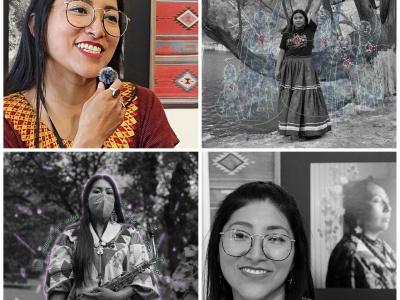
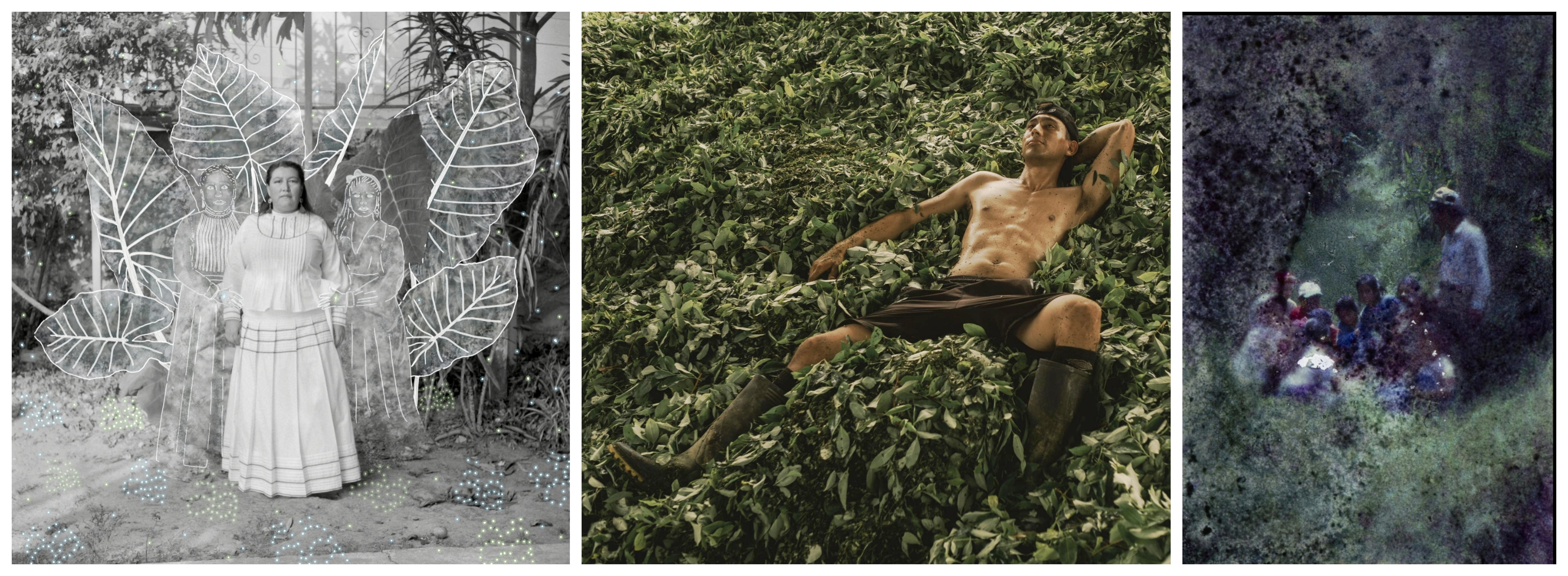
“Bilha, Stories of my Sisters” by Citlali Fabián (Sony World Photographer of the Year and Creative Category winner)
Citlali Fabián's project combines traditional film portraits with digital illustration to create images of activists and artists from Oaxaca in southern Mexico who worked with Citlali to explore identity, community, and the cultural heritage of indigenous women.
The eventual goal of the project is to create a children’s book that will inspire young girls with positive role models and shine a spotlight on the women featured who “are generating meaningful change and impact in their communities”.
Responding to the news that she was the winner in the Creative Category and overall winner as Sony Photographer of the Year, Citlali said: "It is a massive honour to receive this award for ‘Bilha, Stories of My Sisters’, a series that is deeply connected to my heart and my people. I hope this recognition will help to spread the word not only about my work, but also about the amazing efforts and work of the women in this project. They are truly inspiring and a force of hope for their communities and beyond."
Citlali drew praise for the digital drawings she applies to the portraits, which comprise symbols and motifs that reflect the sitters' personal trajectories and celebrate their cultural heritage.
Monica Allende, Chair of the 2026 Professional jury said: “Her subjects are not simply photographed, they are active participants in shaping how their stories are told. Through this process, the artist highlights the presence, strength, and achievements of women who have often been overlooked, giving them the visibility and recognition they have long deserved within the wider social and cultural landscape.”
In addition to prize money of $25,000 US dollars, and Sony camera gear, Fabián will also have a solo showcase exhibition at the 2027 Sony Awards.
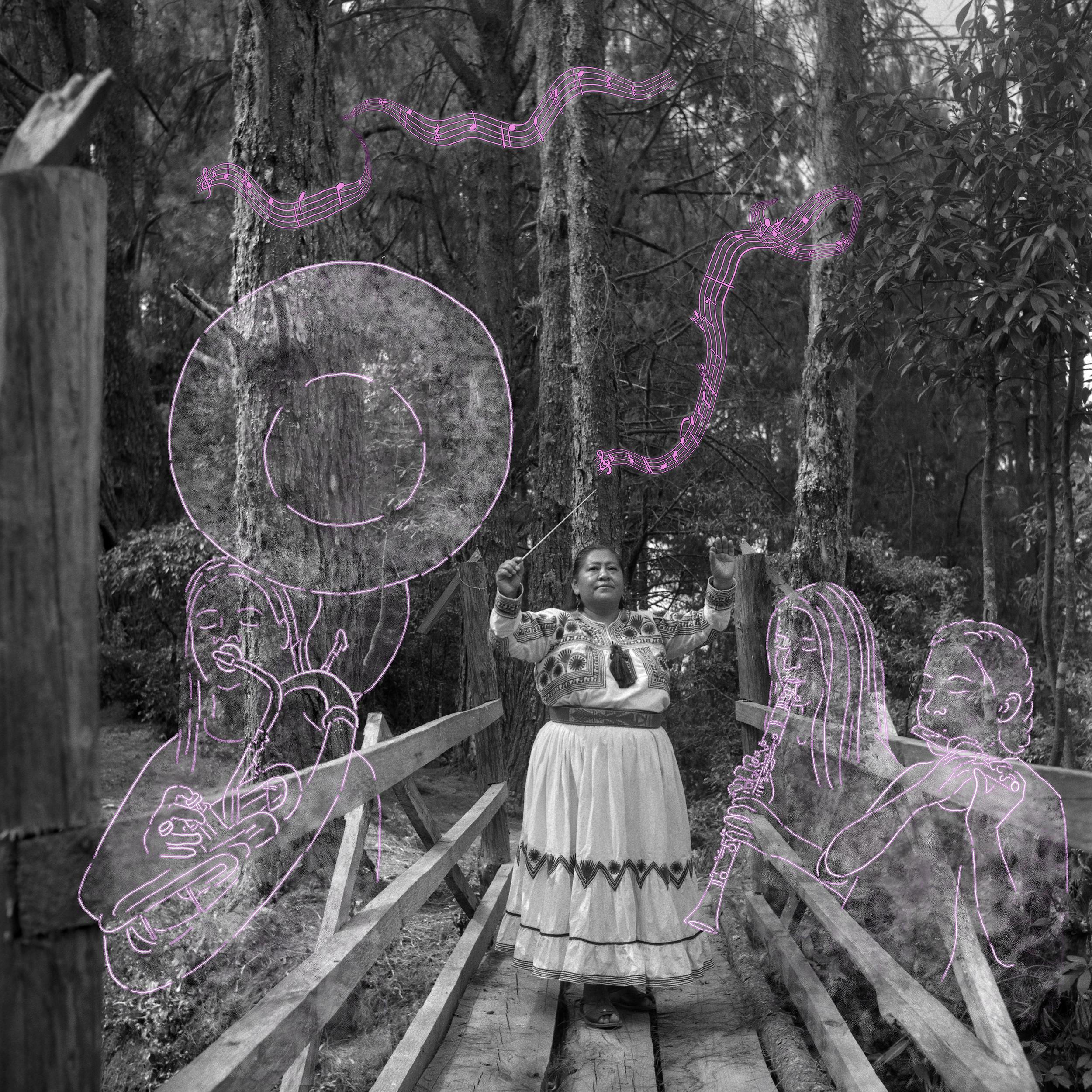
Maestra Lety Gallardo is a musician, director and founder of the first regional women's band, Mujeres del Viento Florido. Through her work she has become a girls' rights defender, promoting inclusion in a male-dominated field. In this image, Lety is shown directing her favourite Oaxacan musical composition, Dios nunca muere (God never dies).
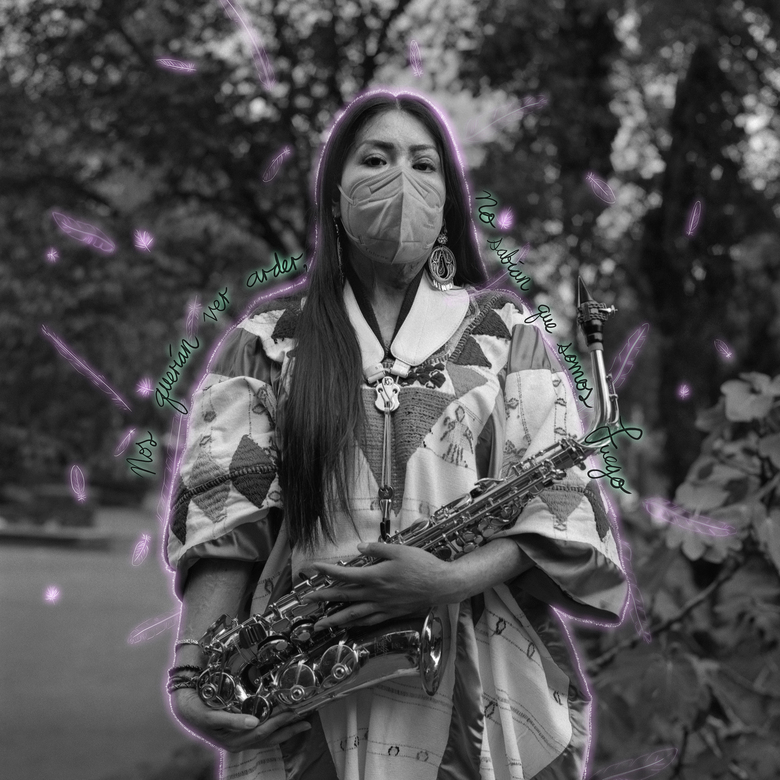
Malena Rios is a saxophonist, feminist and women's rights defender, originally from Santo Domingo Tonala, Oaxaca. She became the face against women's violence after suffering an acid attack and her campaigns promoted a law to protect women from this type of attack. The text on this image reads: ‘They wanted to see us burn, they didn't know we are fire.'
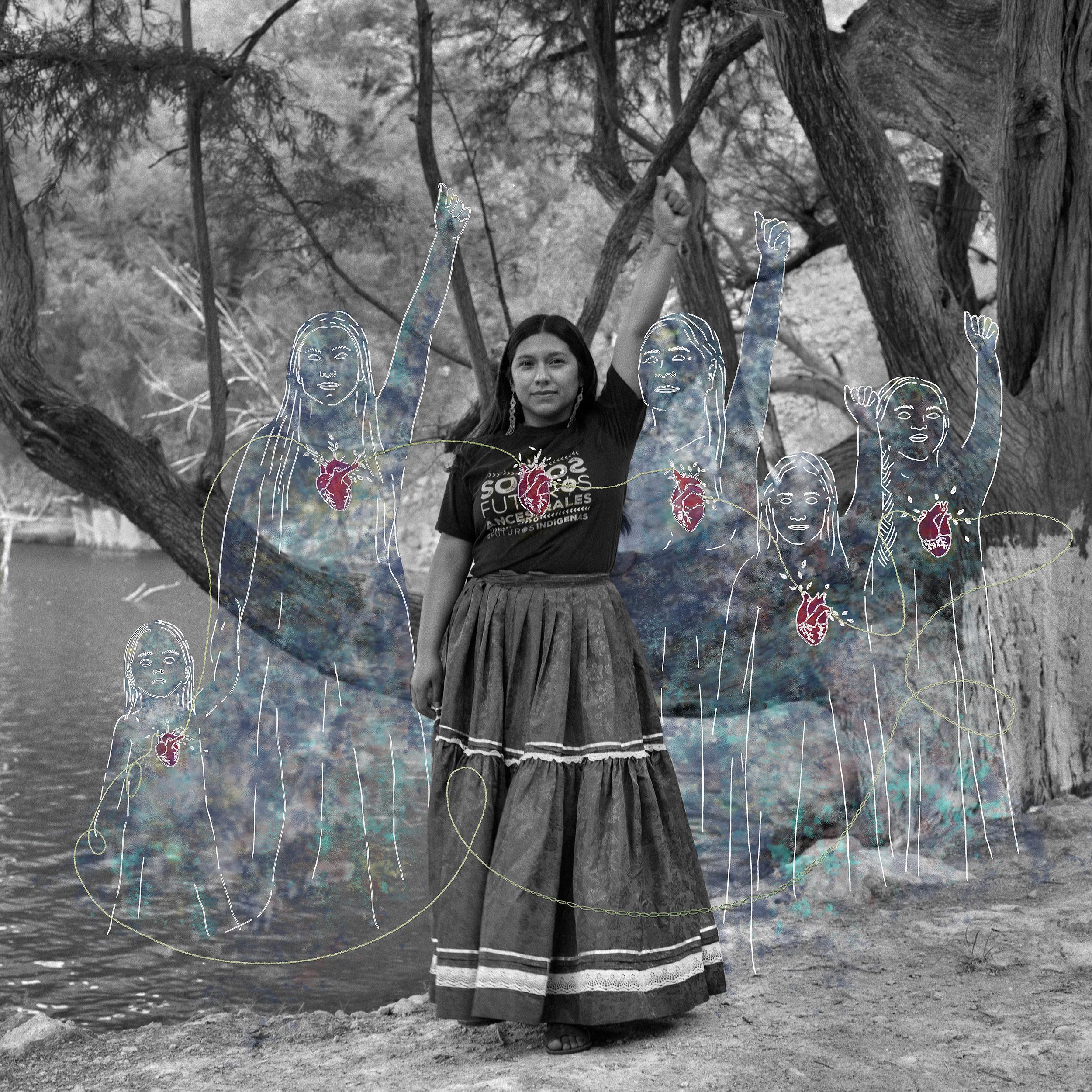
Mitzy Violeta Cortez is part of Indigenous Futures, a network that discusses the climate crisis from the perspective of Indigenous peoples. She has participated in forums including COP26 and COP30. In this portrait, Mitzy is represented with her ancestors and future generations as a united front in the defence of their territory.
“Under the Shadow of Coca” by Santiago Mesa (Documentary Projects winner)
Colombian documentary photographer Santiago Mesa focuses on social issues in his work, which has received numerous awards, including the Sony World Photography Awards 2020, Picture of the Year International 2024, and World Press Photo Awards 2025.
“Under the Shadow of Coca” documents the world of coca cultivation in the southern Colombian department of Putumayo, one of the few economic options for rural families in this neglected border region. The project follows farmers and families whose livelihoods depend on an illicit economy shaped by poverty, and a weak state presence. Armed control of the region is contested by state security forces and members of Comandos de la Frontera, an irregular armed group that controls the territory and the cocaine trade. While some families try legal alternatives, coca often provides the only stable income. Under the Shadow of Coca shows that many of the local producers are not traffickers, but campesinos (farmers), and that it is usually armed groups who profit from the trade of coca.
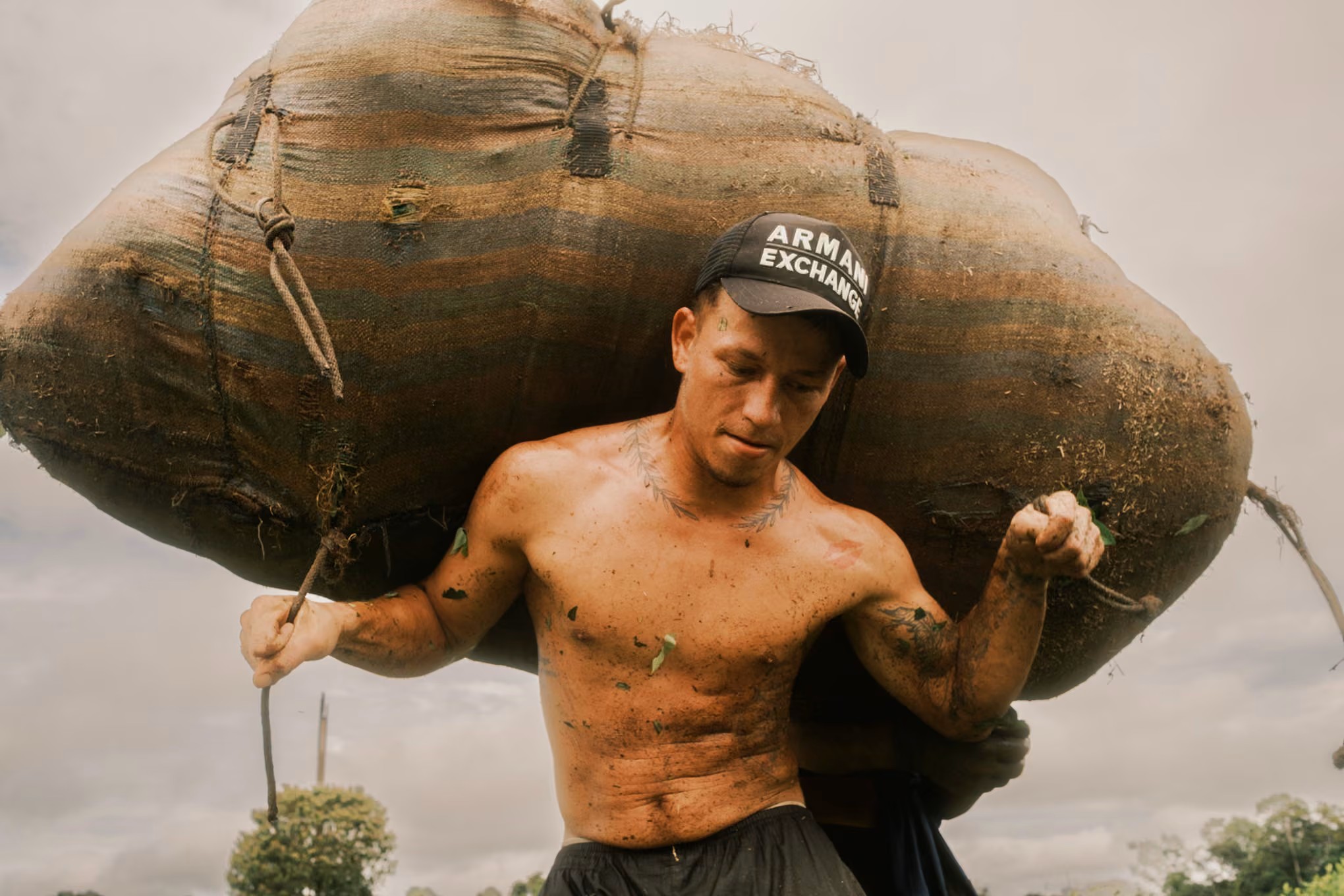
Daniel, a young coca leaf picker (raspachín), carries one of the sacks of coca leaves he gathered earlier in the day in the rural community of Jordán Guisia, in Putumayo, southern Colombia.
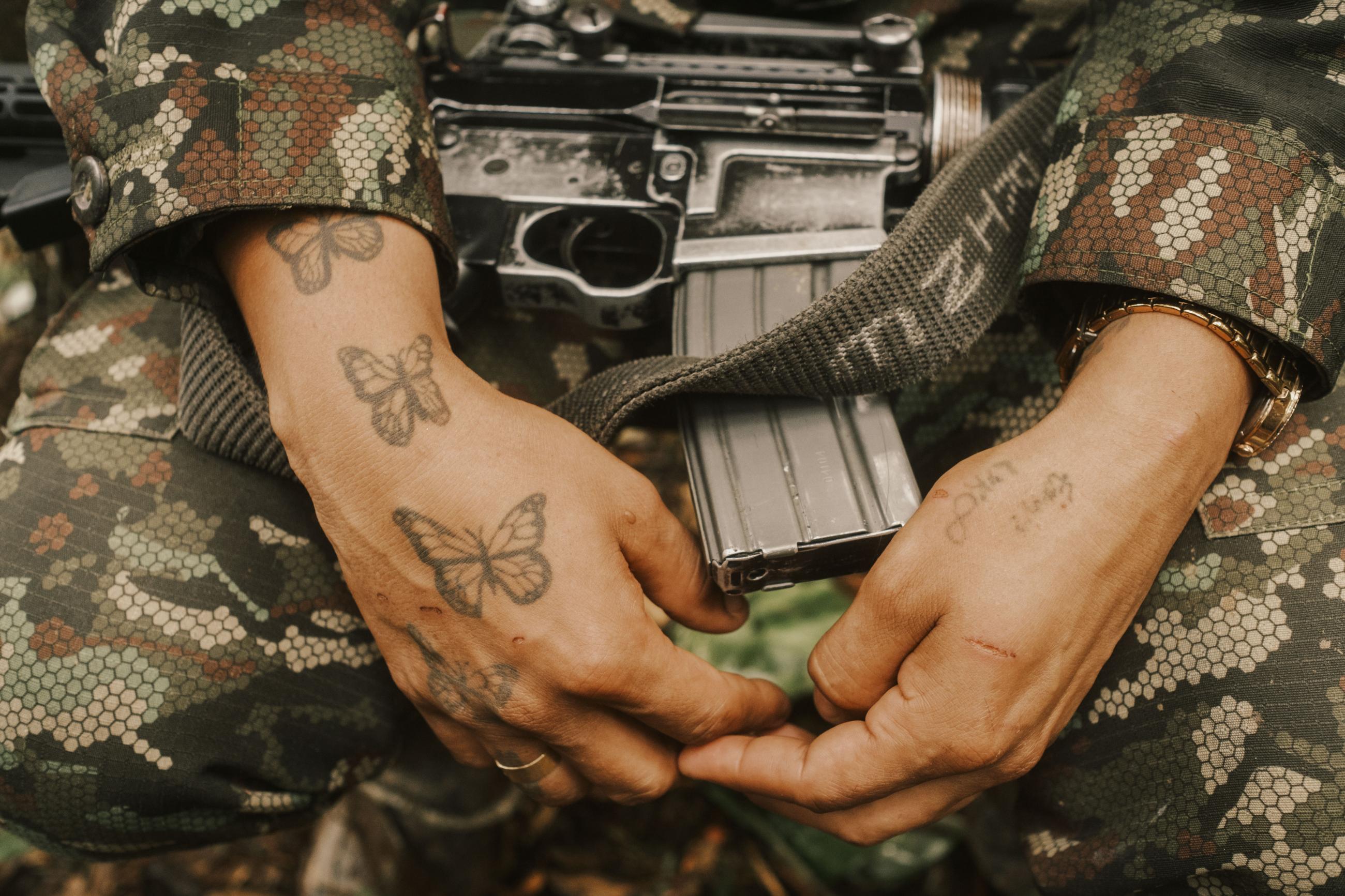
Katherine has been a member of the armed group Comandos de la Frontera for three years. She joined after failing to find stable, legal work and now earns around two million Colombian pesos per month. The group exercises de facto control over much of Putumayo, enforcing its authority through fear, extortion, and the regulation of daily life.
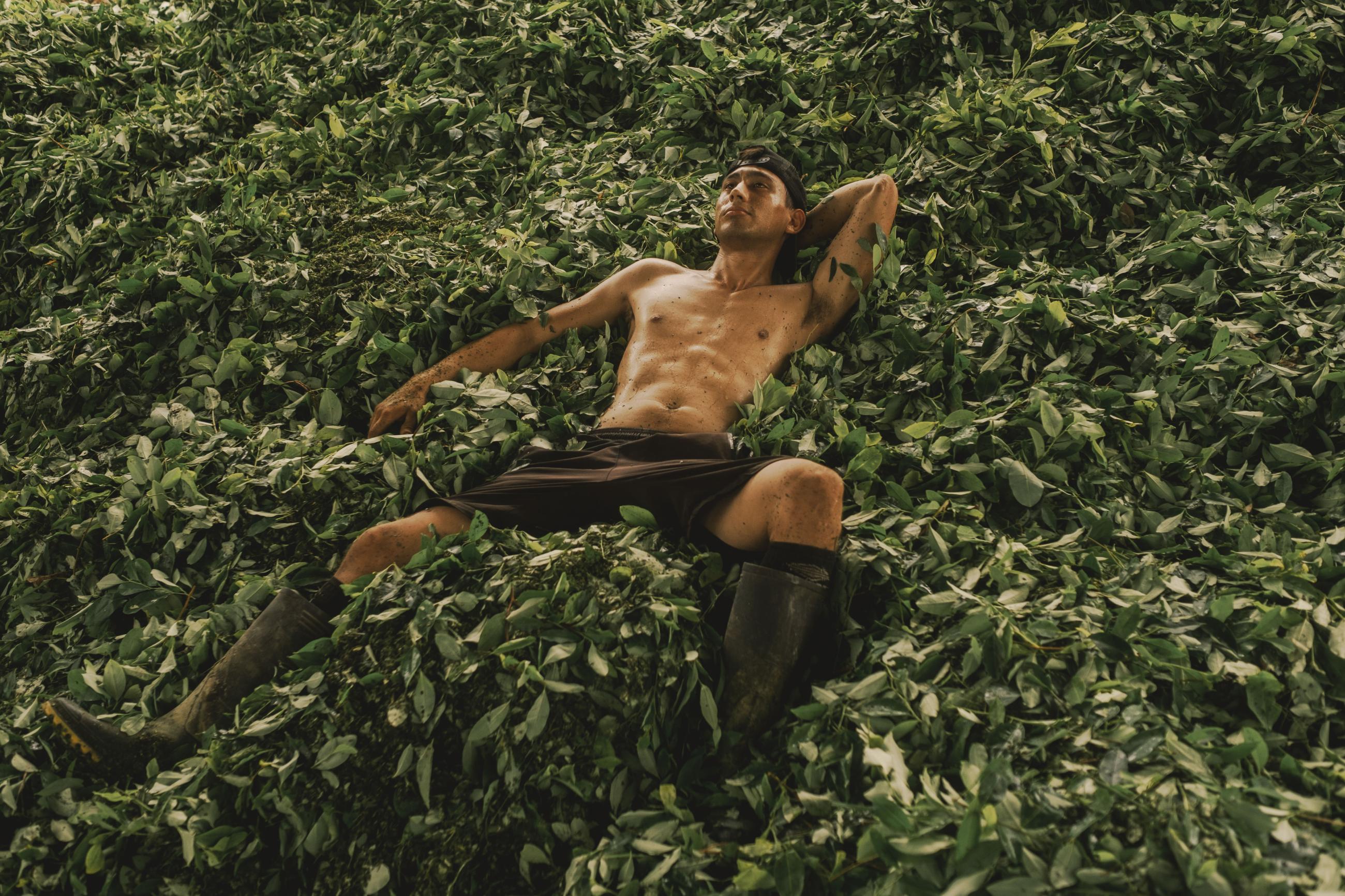
Darwin, a young Venezuelan coca leaf picker (raspachín), rests on freshly harvested coca leaves in Putumayo, Colombia, before they are processed. The raspachíne’s work is physically demanding, but the shifts are usually only half a day and are paid in cash. For many migrants, coca harvesting is one of the few reliable sources of income.
“Notes on How to Build a Forest” by Isadora Romero (Environment winner)
Isadora Romero is an Ecuadorian photographer and visual artist based in Quito. Her long-term projects focus on social and environmental justice in Latin America, using documentary and experimental photography to explore the relationship between territory, memory and ecology.
“Notes on How to Build a Forest” is a photographic project developed in Ecuador, in the territories of Mache Chindul and the Yunguilla Community - landscapes marked by layered histories of settlement and relationships with the forest.
Forests have long been narrated as spaces where only vegetation exists. Yet science and history reveal that they have always been cultural territories, inhabited and reshaped by multiple human and non-human groups over time.
Through documentary and experimental photography that includes infrared, thermal, and pinhole techniques, as well as community archives intervened with fungi, the photographer invites us “to imagine how other organisms perceive the forest, and how the forest, in turn, observes us”.
In her work she tries to construct a “polyphonic narrative” that understands forests as plural, complex, and cultural spaces, expanding the ways in which conservation can be conceived.
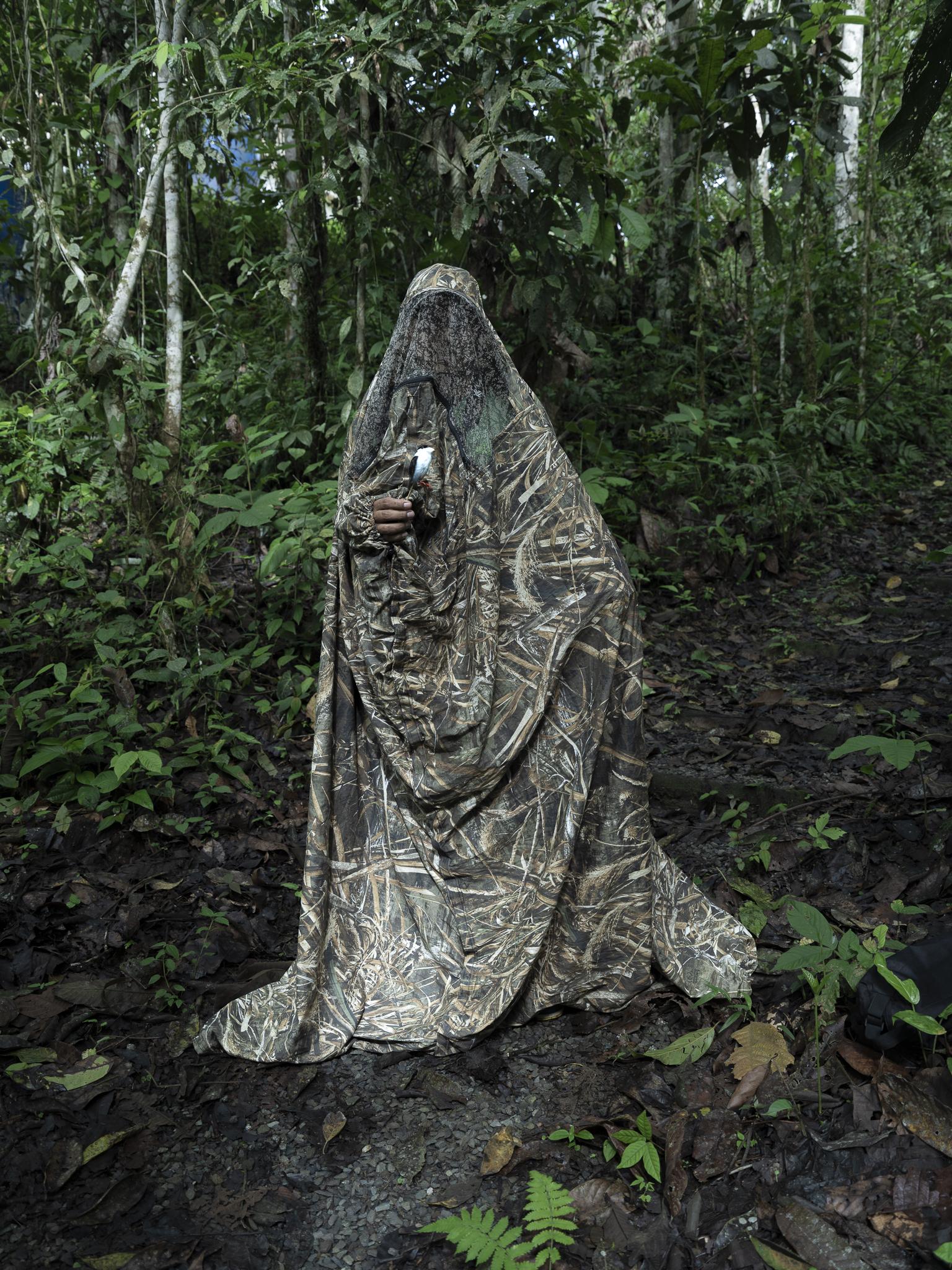
Jairo Cabo is a resident and worker at the Mache Chindul Ecological Reserve in Ecuador. He explains that he began working on conservation projects after feeling an overwhelming emotion when he helped release a bird from a trap. Since then, he has worked with scientists visiting the FCAT (Foundation for the Conservation of the Tropical Andes) research station, supporting studies on the manakin bird. In this image, he holds a taxidermy specimen of a male manakin used in research.
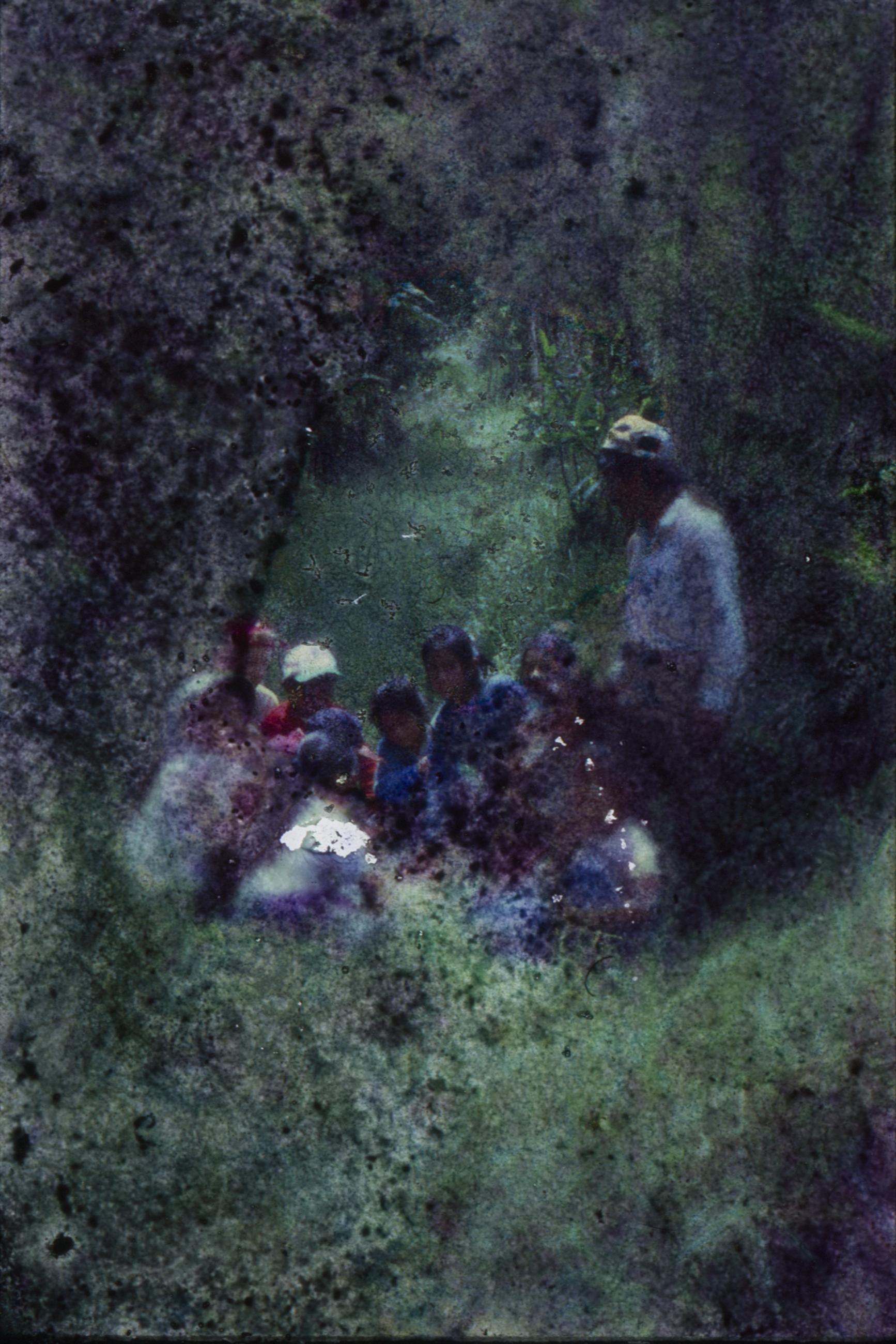
A photograph from the community archive of Yunguilla, documenting early ecological work to restore the forest after it had been cleared for charcoal production. Since the 1980s and 1990s, the community has regenerated the forest and developed sustainable ways of living in coexistence with it. This print was altered by fungi due to the forest’s humidity, turning the microorganisms into collaborators in the creation of this near-abstract image.
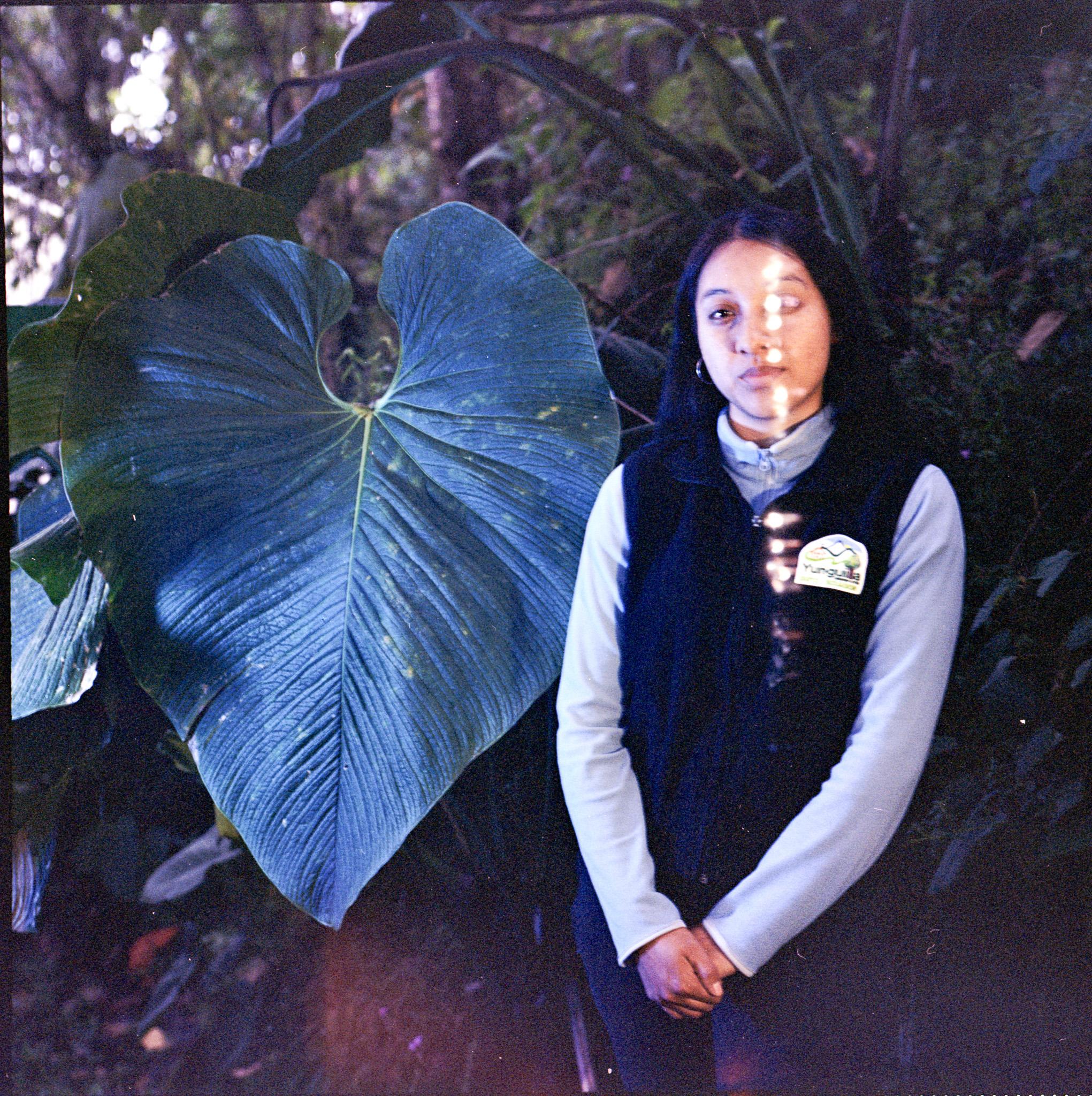
Yessenia Morales is one of the new community leaders of Yunguilla, in the Andean region of the Ecuadorian Chocó.
The 300 shortlisted images from the competition are on display - alongside a special presentation of street photography from Europe and beyond by the veteran US pioneer of colour photography Joel Meyerowitz - at The Sony World Photography Awards 2026 Exhibition at Somerset House, London through to 4 May.
Russell Maddicks is a travel writer, author and co-author of guidebooks covering the Balearic Islands, Colombia, Cuba, Ecuador, Guatemala, Mexico, Nicaragua and Venezuela. His latest book Culture Smart! Costa Rica was published in January. Follow him on Twitter and Instagram @LatAmTravelist.