Tracks like Mas, Que Nada by Jorge Ben Jor, later popularised worldwide by Sérgio Mendes, or classics like Oba, Lá Vem Ela, often shape international perceptions of Brazilian sound. But samba is far richer than these familiar entry points. To understand it properly is to move beyond the surface and into its roots where rhythm, history and resistance intertwine.
Samba was born in the state of Bahia within Afro-Brazilian communities, drawing heavily on African musical traditions carried across the Atlantic through slavery. Over time, it evolved in Rio de Janeiro, where it would eventually become synonymous with the city’s cultural identity. Yet this journey was not straightforward. For decades, samba was criminalised, associated with marginalised Black communities and viewed with suspicion by authorities. Its survival is, in itself, a testament to resilience.
At its core, samba is immersive. It’s not something you passively listen to; it’s something you feel. The deep pulse of the surdo drum sets the foundation, while the sharp accents of the tamborim and the melodic lift of the cavaquinho create a layered, infectious rhythm. This musical structure mirrors the collective nature of samba itself which is built on participation, call-and-response, and shared energy.
But samba is also political. For generations, it has functioned as a powerful tool of expression. Artists like Cartola infused the genre with poetic reflections on love, hardship and everyday life, as heard in Preciso Me Encontrar.
Beneath its melodies, samba has long carried messages of protest addressing structural racism, inequality, and the ongoing marginalisation of Black Brazilians in the post-abolition era.
This duality, celebration and resistance, is what gives samba its depth. It honours African heritage through rhythm, spirituality and storytelling, while also carving out space for voices that have historically been excluded from official narratives.
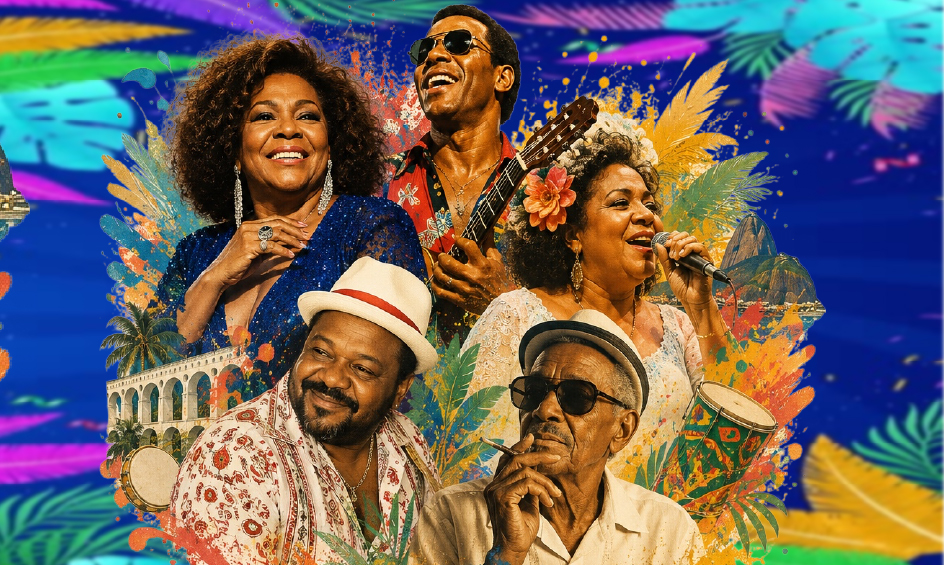
Nowhere is this more visible than in the rise of samba schools in the early 20th century. Emerging in the 1920s and 30s, these community-led organisations transformed samba into a collective movement. During the world-famous Rio Carnival, entire neighbourhoods come together in elaborate performances that blend music, dance and visual storytelling. Figures like Beth Carvalho and Alcione played a key role in preserving this communal spirit, ensuring that samba remained rooted in the people.
Samba also acts as a keeper of memory. Through samba-enredo ( the narrative songs performed during Carnival) histories are retold, often highlighting stories overlooked by mainstream education. In this sense, samba becomes both archive and classroom, preserving cultural knowledge across generations.
Like any living art form, samba has continued to evolve. Subgenres such as pagode have brought its essence into more intimate, everyday settings. Artists like Arlindo Cruz and Zeca Pagodinho helped shape this sound, turning samba into the soundtrack of family gatherings, street corners and late-night conversations.
To engage with samba is to engage with Brazil itself, its histories, its struggles, and its celebrations. It is the country’s heartbeat, not because it is universally heard, but because it continues to pulse through communities, carrying stories that refuse to be silenced.
And for those in London looking to experience that energy firsthand, samba isn’t as far away as it might seem. Join us at LatinoLife in the Park where we bring these rhythms alive in the capital. The UK’s biggest Latin festival.