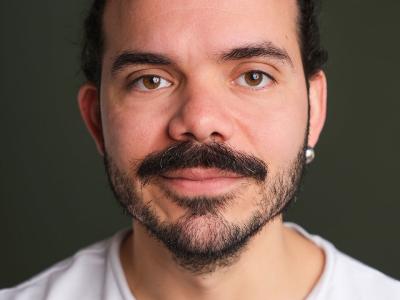
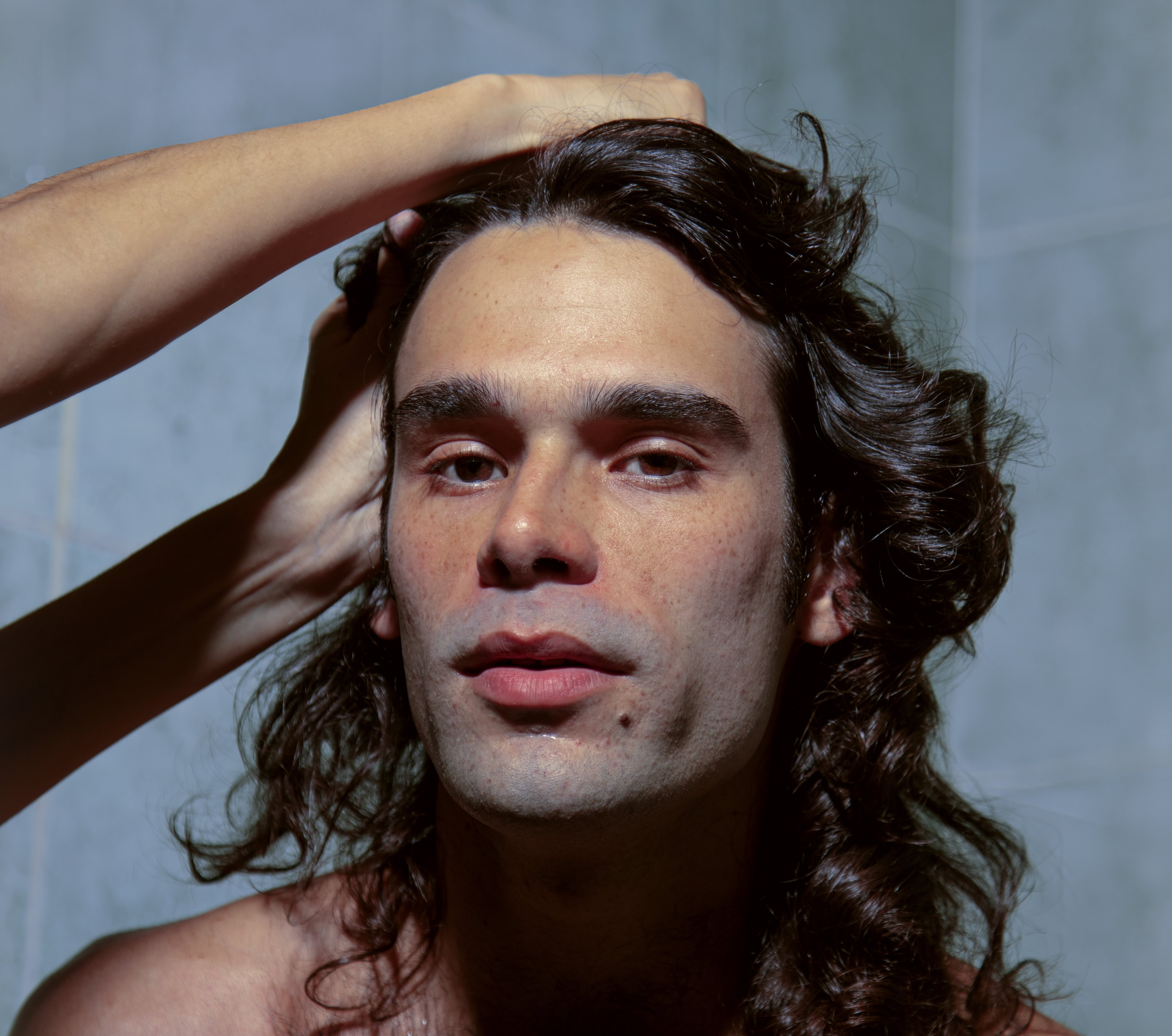
In 2022, having accepted Milton Nascimento’s invitation to take the sacred space of Lo Borges (the co-composing vocalist and guitarist of ‘Clube da Esquina’) an ethereal Zé Ibarra, dressed in white cotton, with his guitar and cristaline scale-climbing voice, astounded all who heard him at London’s Union Chapel, including my friend Kiki who filmed his performance and sent it to me, with the words…
“Ele é maravilhooooooso !” (He is maaaaaaarvellous!)
Zé Ibarra is indeed something to marvel at. A synthesis of tropicalista, slowed-down samba, dreamy bossa and a pinch of funk, he is the kind of singer that, even if you don’t understand the lyrics, you will feel them. He makes organic music from the heart, curating elements of what's come before him and through him, to make a soundscape of our times. A philosopher as well as musical crafter, on his second solo album, AFIM, Zé speaks of the collective and intimate, weaving his peers’ musings into his own compositions.
It is winter in London and summer in Rio when Zé appears on my screen, freshly arisen from fractured sleep due to building works. He is surrounded by dazzling bright light and drenched in Rio morning sun, in graphic contrast, his hair is dark and abundant in free-flow as it frames his face.
He looks surprised as I greet him, “I didn't know it was a video call! For me it's fine, but I’m…you know (he points to his bare chest), I'm just at home.’’ He adds, smiling, “I’m ok if...for you it’s ok I’ve no shirt.”
“I’m ok," I laugh, slightly embarrassed, feeling I have to explain my contrasting sartorial state. "You see I'm so cold, (in my studio) I should wear a coat, but I'm trying not to.”
Feeling I should quickly switch to the interview, I quickly add...“so I wanted to ask you some questions from a different perspective because I make music too…”
“We know each other. Yes! We met at Nana’s…” Zé quickly remembers. “We played a song together. You made a song with Alberto (Continentino, his band member)”
After briefly deliberating on whether we should speak in English or Portuguese, I put my journalist cap on and settle into my questions…
Nina: So, as I get so offended by music I don't like, I tend to stick too much to the output of the 70s...but when I saw Bala Desejo play live in Rio in 2023 it was one of the few new bands that I really enjoyed. The songs were fantastic as was the chemistry between you all, not just the core four, but the extended band is killer too, with Daniel Conceição, Alberto Continentino, Thomas Harres and more.
The band seemed to show how we can be the best versions of men and women, our plurality. And we get to be friends, and make and create and explore new sides of ourselves and each other. The best bands show an intimacy of exchange and can share, in the most epic way, a super-bliss state. But weirdly it’s pretty unusual to get men and women doing that together... I saw footage of Doces Barbaros in 76, they did it.
Zé: and ABBA.
Nina: ABBA. Yeah, ABBA… I suppose ABBA did that in a way that’s very relatable. And now, in a way, you’re new album AFIM is like an Abba album, in the sense that…large records labels say people get frightened by something ‘too sophisticated’ and with this album you’ve kind of put it on a tray, or in a high heal that everyone can wear together. It's like you've democratised yourself… you make people happy and at the same time, let you be you, in a more …’aaah’… relaxed way. It’s as if you’ve climbed a tall mountain and you can just sit on the plateau and enjoy the view.
Zé: My greatest goal in making music is to put together everything I like to hear. So, the thing you said about making something complex. Yeah, my desire is to…make what Bossa Nova made in Brazil, that is, to make popular music with super interesting and complex harmonies and melodies, because I love this, and I think it's super possible. When people say, no, let's…let's, de-complexify it, make it easy. Why make it easy? Complexity is not an opposite position. I think communication is the key, and to communicate, we have to know how to do this, and to make it good… the right recipes, I think, with the best ingredients.
We know how to do this. And I think with Bala and all the things I've done and I want to do, it's based on this thing. I don't want to underestimate the audience, you know? Let's…let's push it further…as Alberto (Continentino) does, as Dora ( Morelenbaum) does. I think, the greatest thing about Bala, is the chemistry, the song. Making the album in 2020 was to communicate being exactly what we wanted to be in that moment, and using all the tradition of from Brazilian music without being hermetic, or… not understandable, you know?
Because melody is the key for everything. Yeah. We have good melodies, we are…we're fine. In this new album as well I feel that nothing is…stuck. It’s like your skin is porous, and, your instruments are porous, and you see other people’s capabilities as flexible as well. So while you're being flexible it encourages other people to be flexible, which is what you're saying to your audience, that you are… you will come in one person, and you will leave another. And in a way, that's what we want every day to be…fluid.
Nina: So much of my frustration when I was younger was a sense of, too much emphasis on the body and acquisition, and what this says about who you are. And I feel like the music you're making, is about the mind and the heart. If we are curious, we are rich and what I love about being in Rio is the sense of adventure. Your shows have this adventure, there's a…there's a plasticity to it as well, even in the artwork suggests the sound of it.
Your new album cover with the toothbrush does this. The other day my friend asked to take my portrait with her daughter, and Martha walked in brushing her teeth, I thought of your album cover, and said, let’s do it with you brushing, and that photo was so much more interesting, because it was authentic…and active.
She was being herself, in the day-to-day, and maybe that's what art is, pinpointing something banal which can also be fascinating and activating. The image-maker encourages us to look more, the music-maker, to make us hear more, the epic details.
Zé: So yes, the cover thing touches a lot of points. The first thing was to put my face in the frame. Because I think its my first really big album. At the same time, I was trying to make reflections about the moment we are living in…our social media, and all the desires to change our appearance, our look, our image, and the difficulties in accepting what we are, our own image, you know?
And accepting ageing, I don't know, all the things that are natural in being an animal, and all the fears that involve us showing ourselves… nowadays, more than ever, I think, because we are not in control of our image. So, it depends on us…the image that we want to share. And I always try to think that the good way of walking in this path is showing everything, not hiding, not trying to manipulate, not trying to fool ourselves. We think we're fooling others, and we're fooling ourselves. So I think of it as an act of respect.
With me and my audience. I should bring myself as I am I just decided to take that photo. The thing about the toothbrush, it's about… Going even further into this thinking of exposing what I don't want to expose. Because… I don't feel myself beautiful in that photo. It's strange, it's like sketchologic, it's kind of tricky the exercise of showing what we don't want to show.
I put that image, because I don't want to get neurotic about how I look. So I try to put myself into a place of discomfort, to take the pressure of this thing that is to be a musician, to be a public person, to be a person that puts itself in front of things. So that I don't get neurotic about myself, you know?
Nina: And perhaps you might not want to be too perfect and too pretty. I think sometimes there might be an instinct to sabotage that. But also …we have to deal with the mask of being on stage, and the persona, and maybe the toothbrush in the mouth is also, like, reminding us that underneath the face we're all skeletons.
When I think about your image and your music, I think about deforestation. You’re the antithesis of deforestation, while women are getting waxed and lazered, straightening their hair, you're like a natural long-haired barefoot gorgeous-voiced beauty. You’re Gal Costa's animus. You remind us “look at what nature made here.” What you wear on stage, your enjoyment of dress, happy in your own skin, and often your belly button is exposed looking out, a front-facing chakra. We were born to be out, and you've really gone out, and now you're going all over the world with this kind of sincere sound, which is like a synthesis of so much beautiful music that we love.
For example, Clube Da Esquina and Earth, Wind and Fire, who apparently loved Milton, and have this carnival vibe, and throughout the world, there's these threads, like Ananda Shankar in India, and these souls that were oscillating at the same time, connecting people that have a broad, globally-minded musical education.
Zé: Yes. You know. That's our school. That's our school.
Nina: So, I'm going to try and be like a normal journalist now (laughing)…when you play at the Jazz Cafe, will you play, mainly this album Afim, or will you play the last album? Will you play Donica? Will you play Bala Desejo?
Zé: I’m gonna play a mixture of everything. There's a lot! And the whole thing of Afim. Afim is a tiny album with just 8 songs, so it's simple to play it all, but mixing with a lot of songs from the preceding album. Marquês, 256. I'm playing the arrangements, but different ways, because we don't have all the instruments to do how we did it on the album but the songs are good. …A lot of times, we know our album, but after understanding the songs even more, I think it's even better now, playing live. And then all of my band, it's a fucking great band. Frederico Leodoro, bassist. That's like a soul son of Alberto. Great. Joel Oliveira is a guitarist from from Sao Paulo, And Gui Salguriro keyboard player both super good.
Nina: That’s gonna be amazing!
Zé: I don't play an instrument on stage anymore, because I'm loving to just dance and to express music, through my voice but also through my body. Because… all these years, when I sing, I'm just a voice, when I play the guitar, I'm the hands, too, but It's like a hypnotic thing that happens when I'm all present. And it's nice. I discovered using the full body to express myself and I’m loving it. So, in this journey, I'm gonna just sing and perform, and the guys play.
Nina: When I've seen you on stage with this new album, I love the way you're a like a conductor to space. You're very elegant, the way you make room for people to look at the musicians, because otherwise they will just look at you, because there's something hypnotic about a singer, people can't help following the front-person… and so you're like, okay, I'm going to give you guys space. But you’re a bit like a ringmaster, or a a lightning rod, you know? Then like all the characters in a circus, you might be a very, delicate clown at one point, and then a thoughtful ballerina, and then, maybe a lion. Yeah, so it seems you're really enjoying yourself now?
Ze: Yes and this moment being on stage for me is the best. Because… Yes, I'm a musician. Before being a front man/artist. I'm way more musician than an artist. So, when I'm on stage, I'm a musician. That’s why I think people say, you open space for the guys. This is not even a discussion for me at all. Not a thing, because I don't have this paranoia about… I'm already what I am, that's okay. And I'm what I am because I sing, I compose. But the guys play, and for me, it's the same thing, when I sing, I'm singing to them, too, you know? I'm singing with them.
Nina: Yeah yeah yeah!
Zé: I’m an arranger, so I hear every note of that instrument, and I'm having hidden conversations with them all the time just through the singing. And they are speaking with me, too, like, jokes, a lot of things, a lot of things happen. You know this because you're a musician. With Fred Eludor, it's beautiful, because Fred and Thomas, that's the most…symbiotic relationship in a band, like, drum and bass and me.
We are always having a lot of funny conversations. And not just funny ones, but all the types of emotions. Yeah. Emotions are being told there. Because they know how to communicate. So, that's the beautiful thing, and I think people feel this. But for me, it's natural, because I'm a musician. Yeah. I listened and then the keyboard, and then the guitar, and then the electric guitar, and then the singing. So that's it for me. It’s the most beautiful thing ever being on stage and doing these things.
Nina: The recent ‘cultura livre' concert you did (above) is a synthesis of what you're talking about: like you and your band in a funky trance, and Thomas Harres being dramatic on drums, and your band members are just chugging away, like, this very steady train that is just… just going with you, nudging each other along, and you're all feeling each other's nudges, and then we get caught up in it, because it gets to a point, that It seems effortless like the music is playing itself.
Zé: I'm gonna try my best to keep my voice, because this concert is unbelievably difficult for the voice. It's very hard. All the adjustments, all the… craziest things that I try to do, and I do. And all the tuning… the challenges, But it's nice, because I’m doing this and pushing absolutely hard. And I develop myself.
Nina: Yes, because you’ve got those moments all the time. It's like being a trapeze artist. You're, like, climbing the ladder, then suddenly you have to jump and hope that someone catches you, and there's that moment when you're doing the twirls in the air, you know,…
Zé: Yeah, it's like gymnastics, like, that utility. There's a lot of moments that the voice is the guide, so…one song starts with no chords, and I have to pick the tone in my head, and go, and the guys take the lead from that… and it works, but if I'm, like, unstable, like, suffering with, a hangover, It's difficult, so I prefer not to drink or anything!
As I sign off, I’m reminded of the most natural high of when music flies between us.
Wooosh! Let’s catch that trapeze!
Zé Ibarra Will play with his full band at Jazz Café on Wednesday 6TH MAY https://comono.co.uk/artists/ze-ibarra/
- Thomas Harres - Bateria
- Frederico Heliodoro - Baixo
- Joao Oliveira - Guitarra
- Gui salgueiro - Teclado