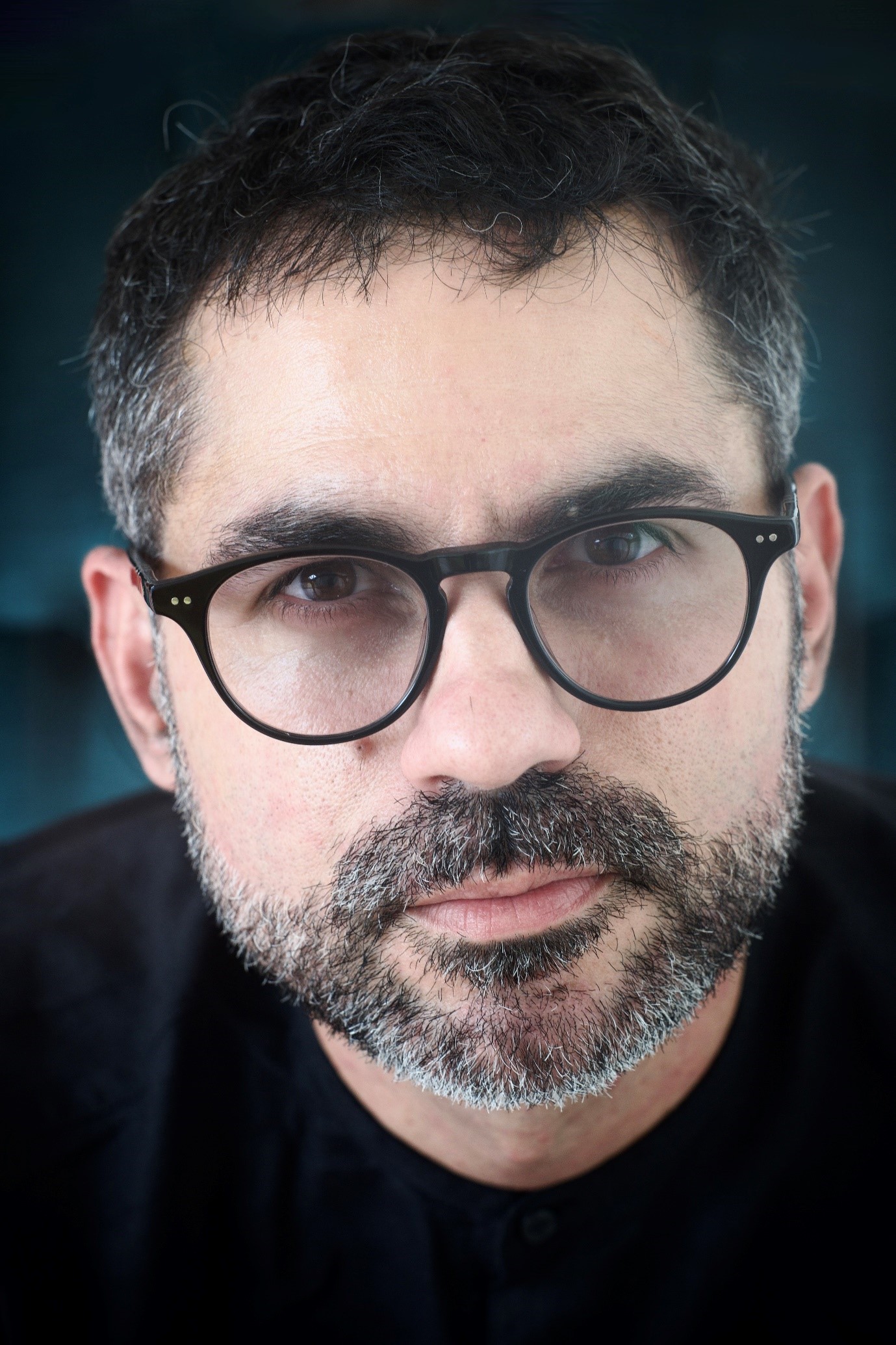
Gabriel Mascaro
“O futuro e para todos.” (The future is for all)
Gabriel Mascaro came up with the chilling premise for ‘The BlueTrail’ after a sad loss within his own family circle: -
“For me, it came from a very beautiful event after my grandfather passed away, and my grandmother started painting. It was very inspiring to me to see her flourishing and finding new meaning in her life in her late eighties. I realized that it was unusual. It’s not common to see elderly protagonists in the cinema. When conflicts are normally associated with them [ it’s because] friends are dying, or they’re very stuck in the past – The conflicts tend to be about a time that has gone, and nothing about the present. So, I was looking for a way to investigate the present: finding new ways, discovering how to feel and be passionate about life. So, this topic is totally contaminated by Utopia. As well, it’s a hybrid experience, very playful, that mixes dystopia with a coming- of- age and road movie – I tried to explore (in films) for moments of discovery & transformation if you like… [I found that] in general these experiences are only associated with young bodies. So ‘coming- of- age’, doesn’t come easily to your mind in movies about elderly people facing ordeals or transformation, meeting with friends or travelling free to discover their life. You don’t see an elderly dystopia… “
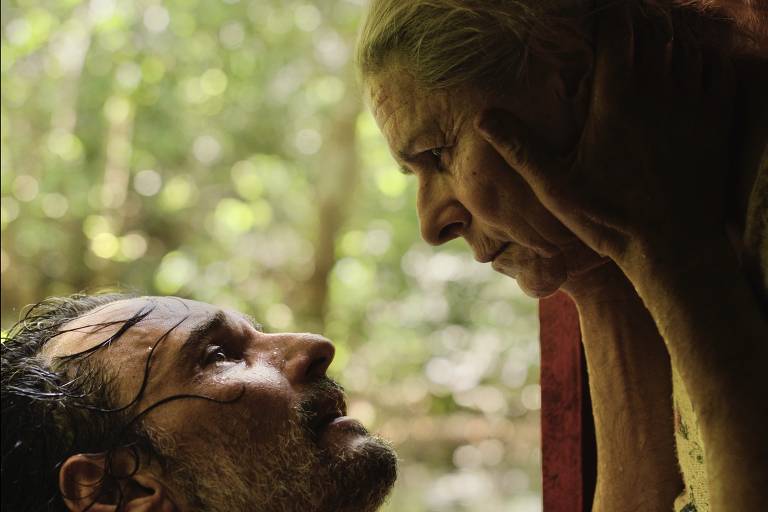
Rodrigo Santoro as Cadu & Denise Weinberg as Tereza in 'The Blue Trail'
‘The Blue Trail’ has won a clutch of prestigious awards at the festivals, including the Grand Jury Prize Silver Bear at the Berlinale, Best Feature and Best Performance (Denise Weinberg) at Guadalajara, and multiple nominations including the well -deserved Best Cinematography award at BOFA 2026 for Guillermo Garza.
Gabriel Mascaro emerged from the hot bed of talent that is Brazil’s north-eastern Pernambuco area. He first won a Special Jury Prize at the 32nd São Paulo International Film Festival and things got better and better. He was born in Recife in September 1983 and initially worked as a visual artist creating installations, until the film bug bit him and he has never looked back. This is not surprising for the state of Pernambuco has a long history of artistic culture and enterprise, from an array of astounding folk arts, to becoming an important of filmmaking centre, having produced creatives like Kleber Mendonça Filho (The Secret Agent), Julianno Dornelles (co-director Bacurau), Marcelo Gomes (Portrait of a Certain Orient), Claudio Assis (Rat Fever) and Guto Parente (Death & Life of Madalena). This has created a hub known as the Cinema da Retomada, (Cinema Revival).
Especially of late, there have been growing links with Bahía as well, as the whole northeast develops a character of its own, separately from the big cities further south, like Rio de Janeiro & São Paulo: for instance, the award-winning actor Wagner Moura is from Bahia, as are musicians like Caetano Veloso, Gilberto Gil, Milton Nascimento, Maria Bethania and writers like Jorge Amado, the list is endless.
“Recife has always been culturally strong in Brazil and, at some point, we became strong in cinema as well. It’s nice because, as we’re far from Rio & São Paulo, the main industrial centres, we’re not that contaminated with the industry. So, I think it can help in how we approach the arts from a different perspective. Even the interaction with other fields of art like music, visual arts and cinema, everybody is a little more flexible with what they are doing. There is also a strong filmmaker’s community here where people have a lot of interchanges. We share screenplays, we share work in progress and discuss… “
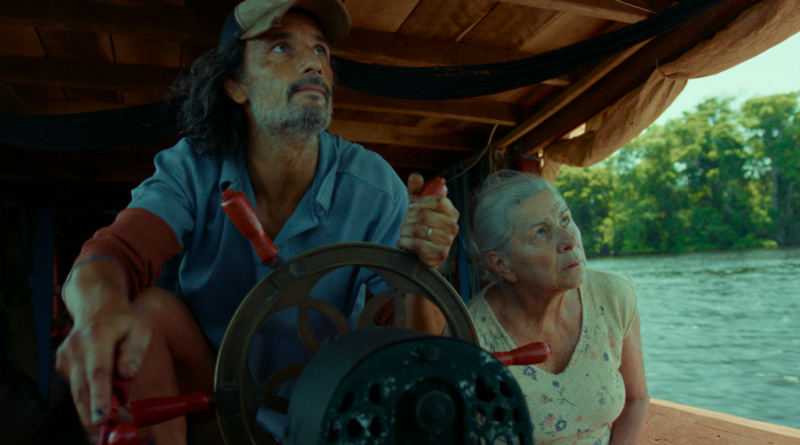
Rodrigo Santoro & Denise Weinberg
Being immersed in all the good sounds in Recife, in particular the powerful movement of Mangue Bit (Manguebeat) in the 1990s (led by artists like Chico Science and Fred Zero Quatro), Mascaro had dreamed, initially, of becoming a musician himself. He played guitar but he soon realized he did not consider himself good enough: -
“When I was younger… I began my career as a frustrated musician, [but] my greatest talent is to know when I don’t have talent! So, I started out doing visual installations on the exhibition circuit but my movies became stronger and stronger and at some point, I told myself that is what I wanted to do.”
The themes and point of view of Mascaro’s early documentaries already displayed some of the characteristics that were to come to the fore in his later fiction movies. Like the 2009 ‘High Rise’ exploring the private lives of people living in luxury penthouses in Rio de Janeiro and São Paulo) or ‘Avenida Brasilia Formosa’ (2010), about the disconnect between urban planning policy and what the people actually want. This could apply to any country in the western world!
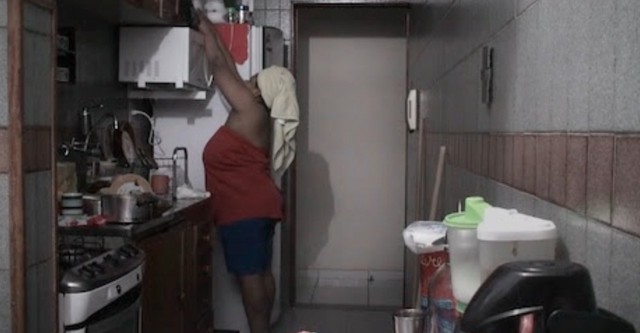
'Housemaids' 2012 (documentary)
However, it was his next documentary that was to have such an unexpected and profound effect on him that it altered the direction he was taking, and that film was ‘Housemaids’ (Domesticas-2012). In this movie, Mascaro decided to hand 7 teenagers a camera to film their own housemaids for one week, to be edited by him later: -
“At one point I realized, while I was doing ‘Housemaids,’ that it was all about performance. How they wanted to ‘perform’ as a good ‘boss’ and how the housemaids also wanted to portray themselves as great ‘housemaids.’ Watching these performances made me go in another direction because the movie in which I did not participate in the shooting [process] became the movie that the performances were closer to fiction in their realization. The film in which I was least involved creatively in the process of shooting, became my most ‘performantic’ documentary movie.”
This led Mascaro to come out with his debut feature film called ‘August Winds’ in 2014.
“‘August Winds’ was like a hybrid experience, there was some kind of artist’s residence programme in the region. I tried to write a story about elements that already exist in reality but are also displaced from reality, where your characters from the local region can also really combine elements from their real lives, with elements of what they want to do and what they want to be. So, there’s a mix from the real people with fictional elements that are created by me and [those] by the actors, these non- professional actors… I use non-professional actors in films, as an experiment, even if the portrayal of all of them is acted.”

August Winds (2014)
Gabriel Mascaro’s influences are quite specific and his interest seems to be focussed on the ability to contemplate and observe how certain details can sensitively build up to the whole picture: -
“I was very touched by Claire Denis (Chocolat-1988 /Beau Travail -1999)- I really like her, the way she observes- Also the Chinese film director Jia Zhang- Ke (Still Life- 2010) - I like the way he observes the landscapes and the development of China: how a country can develop ‘contradictorily’ and how it affects humans… they [both] give me a feeling of how to look at the landscape and then help me to look at the bodies[of the people].”
Claire Denis‘ ‘Chocolat’ (1988) has an autobiographical element, being the story of a French woman who reflects on her childhood in Cameroon. With an adult sensibility, Denis explores the fragile connections between people, picked up on the sensorial and visceral aspects and the conflicting desires versus foreign-ness and alienation. Some of these themes also appear in auteur filmmaker Jia Zhang-ke’s work. With his minimalist individual style of using long takes, observational camerawork and non-professional actors, Jia studies the everyday lives of people as they respond to being surrounded by rapid urban transformations.
In Mascaro’s case, he is more optimistic, revealing he is a poet at heart. He explores the unfolding of Tereza’s story using the powerful, mesmerizing pull of the Amazon River, as it transforms into a character in its own right in the film as she searches for her dreams on a boat going upriver, encountering people, experiences and finding a freedom she had never known: “She wants to fly and she can fly higher than even she could have imagined.”
“For me it was very beautiful to be able to portray the river as a place where you can hide yourself and find yourself in a new way, for me the river is a portrayal because it is slow in its movements, but deep in its possibilities… so there are elements that inspired me to play with nature and the environment as things that can take the character in another direction.”
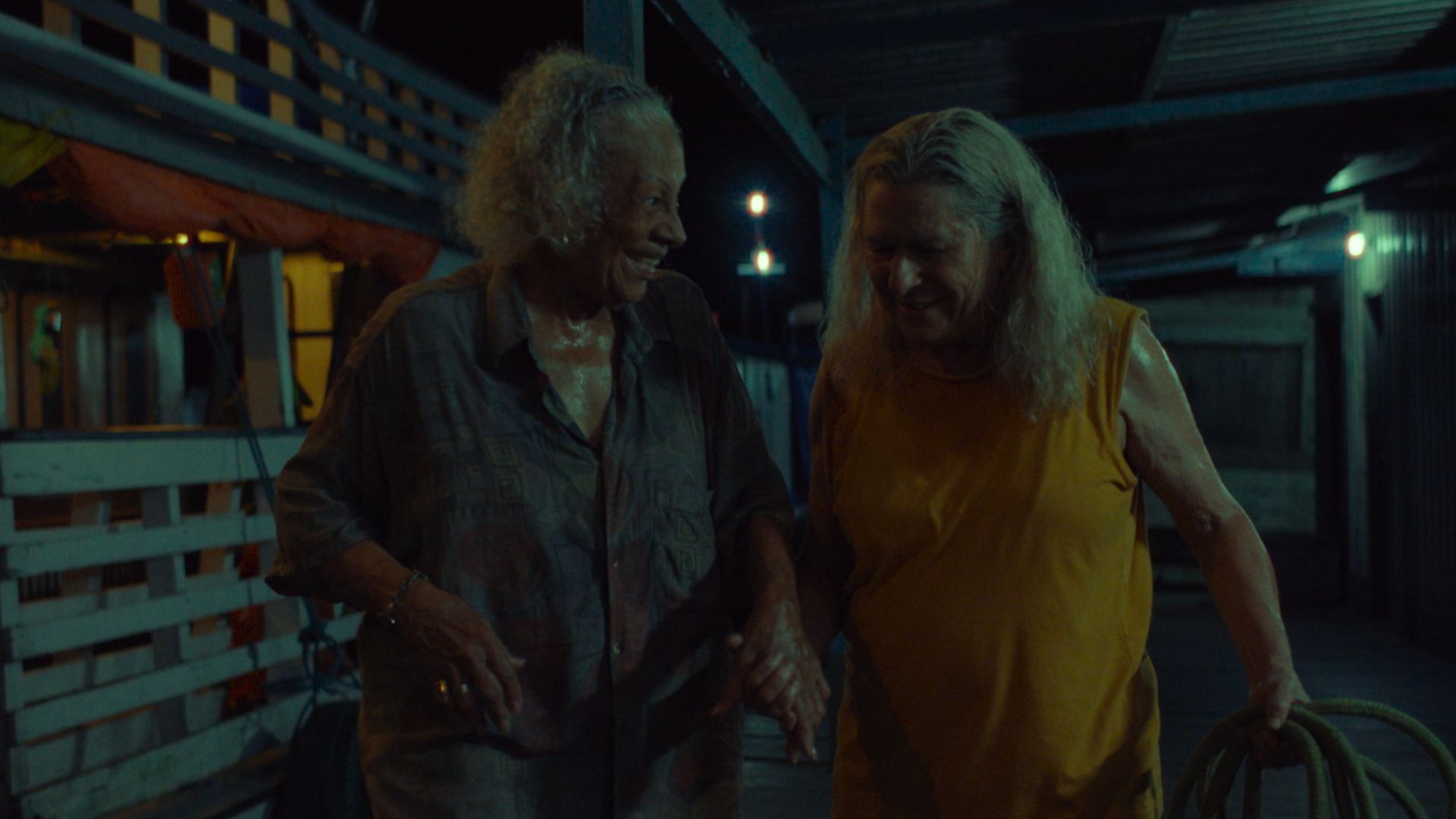
Miriam Socarras as Roberta & Denise Weinberg as Tereza.
The atmosphere that Mascaro creates, with its magic realism and ethereal quality brings to mind the ‘Beasts of the Southern Wild’ (2012) by Benh Zeitlin, that also unfolded from an infinite collage of images, luring you into the rhythm of life on the water.
Meanwhile, current world scenarios profoundly preoccupy Mascaro: -
“Yes, this year was fascinating with its movies because we are facing forced displacement everywhere by reason of things like genocide, wars & climate crisis. In this movie, I try to talk about the same subjects but from the perspective of the old. So, elderly people being forced or displaced merely for the reason that they are not serving the productivity ideal of the society. There is another direction to take the same issue that people are suffering everywhere but from a different perspective.”
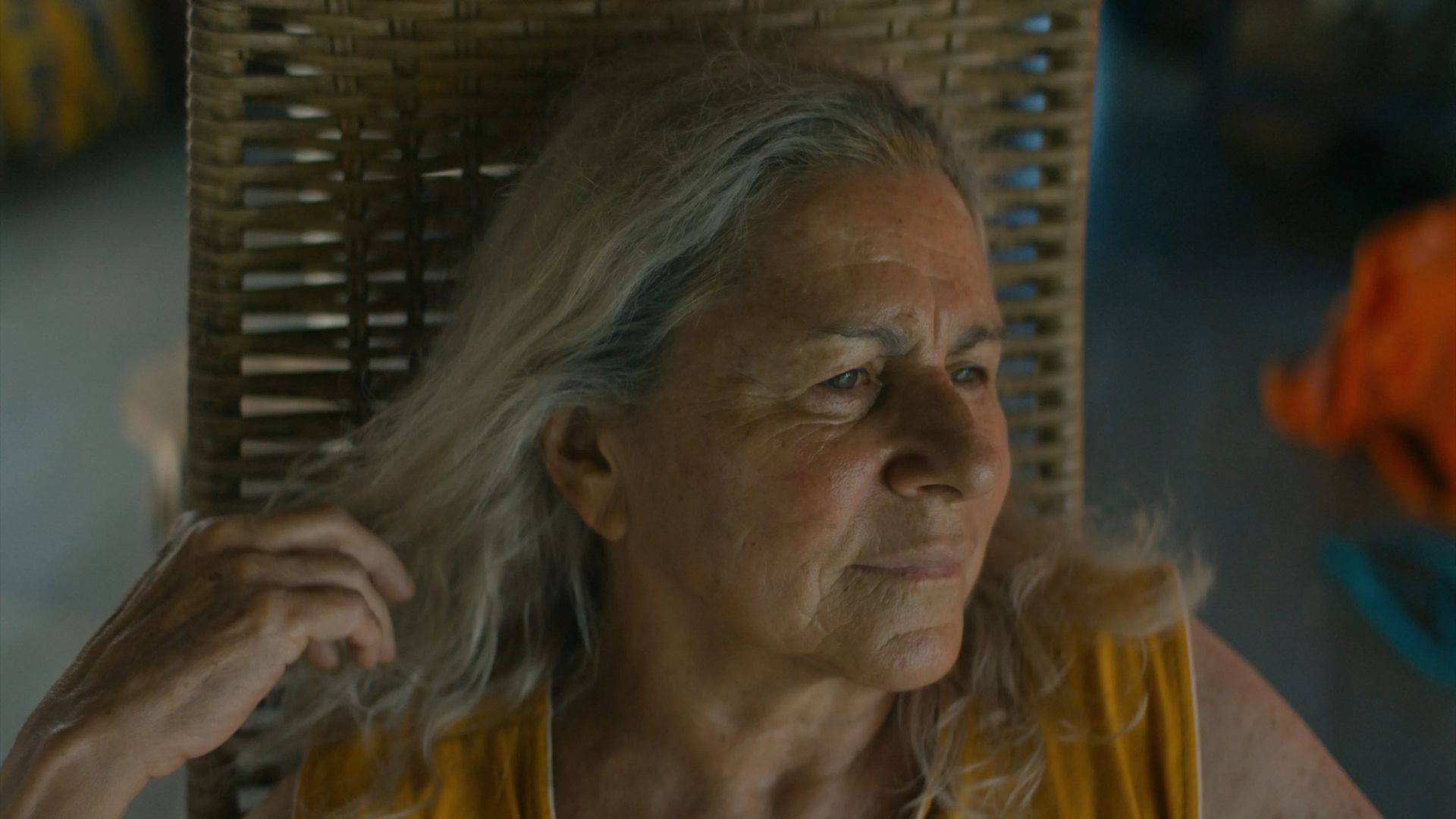
The lead in ‘The Blue Trail’ is played by multi-award-winning actor Denise Weinberg. Born in 1956 in Rio de Janeiro, she plays Tereza to perfection: -
“She is a professional actress who has concentrated more with theatrical work than with cinema and TV. Actually, it’s very sad in Brazil, because the pressures of the main stream industry [are such] that all the actresses feel that they have to hide their age with procedures, so there are not that many actresses that we could find to be the [protagonist] of this movie because we needed someone who was proud of her wrinkles. Luckily, I found this amazing actress. [Also,] Miriam Socarras [who plays Roberta]. She is 85 years old and comes from Cuba! She [even] had to learn to drive the big boat.”
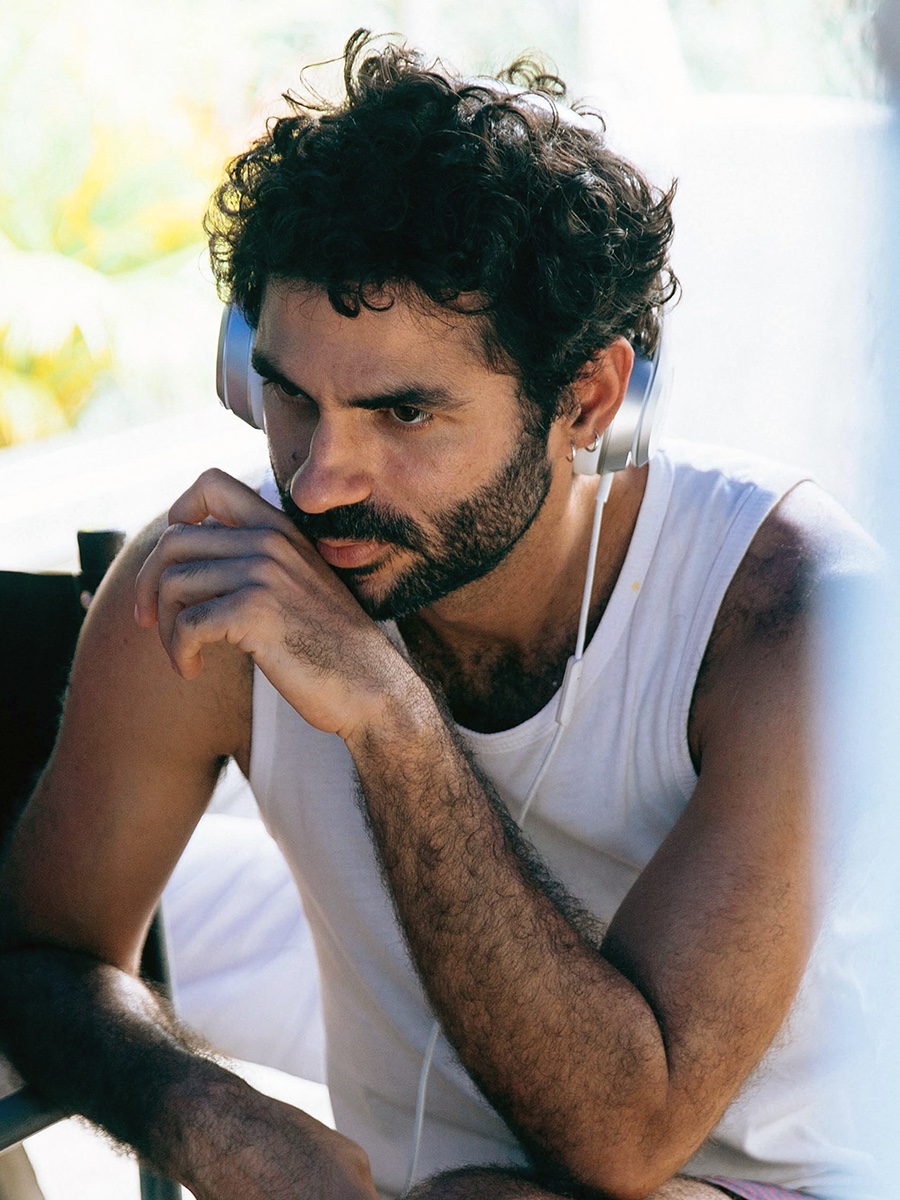
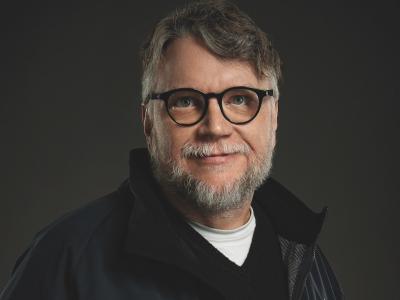
Gabriel Mascaro (Photo by Bruna Valenca)
An awareness of ageism is an issue close to Mascaro’s heart, and he’s been very moved by the reactions that he has witnessed to his film on the festival circuits: -
“It has been a very special feeling for me that came across in all of these screenings and Q&As, and that is, to see the faces of young people being inspired about the idea of watching a movie about freedom in a body that they don’t recognize [would have] the capacity to generate that freedom! Also elderly people going to the cinema, retired people, to be able to mirror some kind of inspiration … they’re closer in age so they see the specific tone, as they can laugh at it because there is humour – in the humour the connection is strong, as there is a complicity between an elderly audience and the movie and also the idea that I might take them in another direction, so it’s beautiful that we can be playful and have fun, but also address [these issues].”
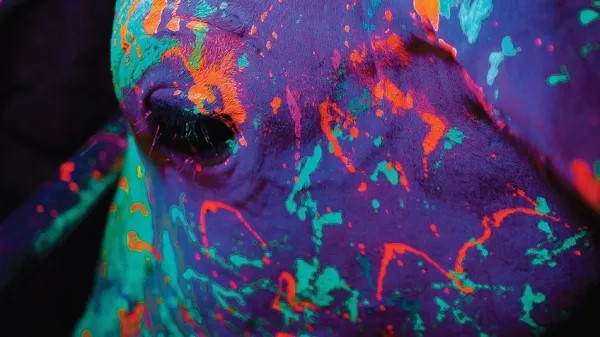
Neon Bull (2015) Mascaro's second feature.
All the main characters in 'The Blue Trail', including Rodrigo Santoro (as Cadu) and Adanilo Reis da Costa (as Ludemir) are cast to perfection. The powerful chemistry between the actors is palpable in all their scenes, especially between Roberta and Tereza, as they stoically face their future.
Mascaro manages to have a light and sensitive touch allowing a gentle humour to shine through, from the black humour of the basic premise of the story, to the interactions between the characters and their idiosyncrasies. He has the ability to carry you along with his poetic eye, with superb cinematography, from the most intimate moments to the wider social environment.
Gabriel Mascaro is working on his next project, but refused to reveal any secrets yet. We look forward to it, as all his films have revealed a constant progression that can only lead to more success.
“E do amor gritou-se o escândalo / Do medo criou-se o trágico / No rosto pintou-se o pálido / E não rolou uma lágrima / Rosa dos Ventos- end song
(Scandals were called out from the love/ fears led to tragedy/ the face became pale/ but no tears rolled down).
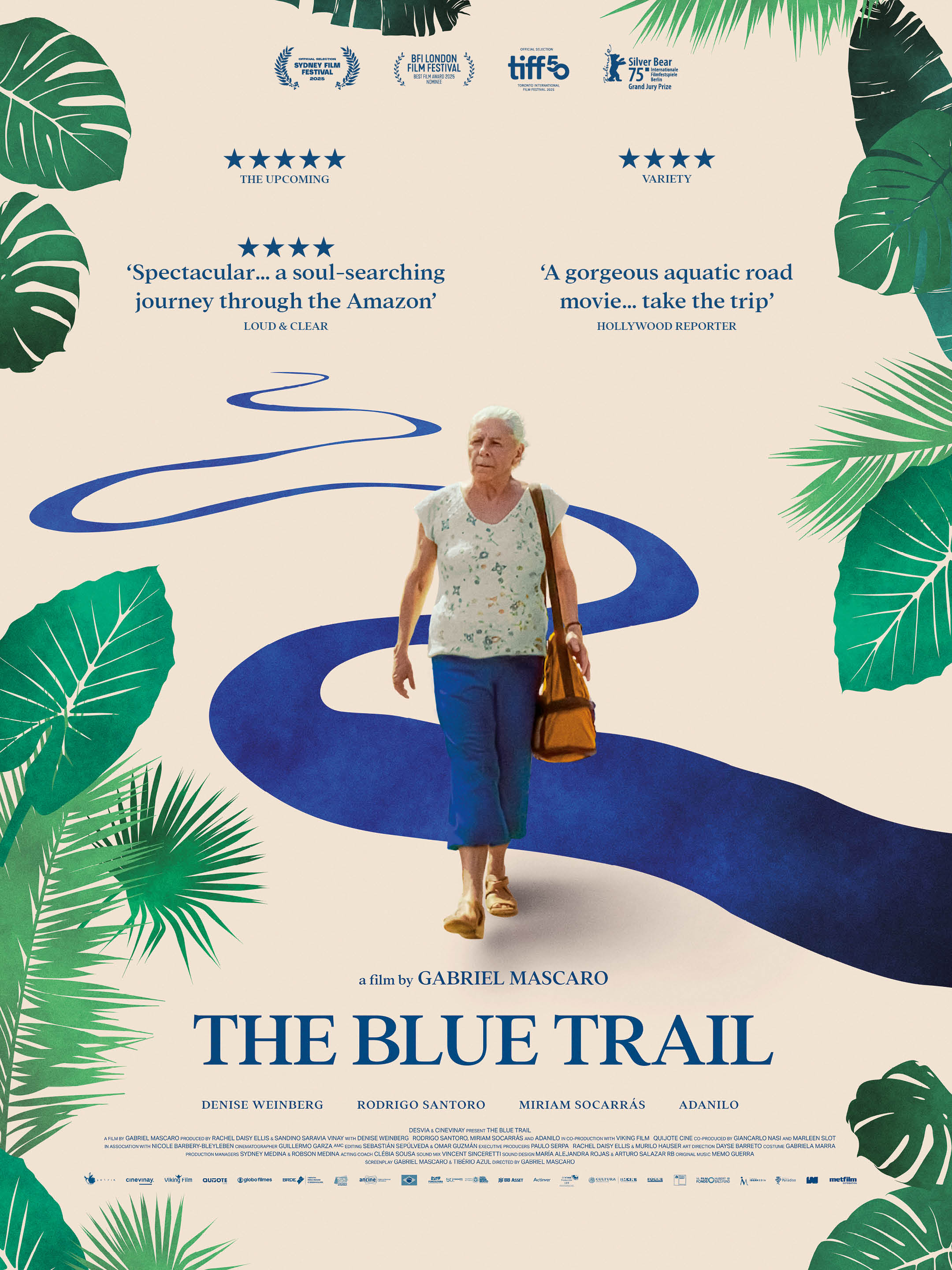
THE BLUE TRAIL (2025) WILL BE IN UK & IRISH CINEMAS
FROM APRIL 17- 2026.
Director: Gabriel Mascaro /Writers: Gabriel Mascaro and Tibério Azul/ DOP: Guillermo Garza/ Editors: Sebastián Sepúlveda and Omar Guzmán/ Music: Memo Guerra/ Production: Rachel Daisy Ellis, and Sandino Saravia Vinay / Sound Designer: María Alejandra Rojas and Arturo Salazar/ Direct Sound: Liliam Villaseñor/ Casting: Gabriel Domingues / Rosa dos Ventos by Chico Buarque de Holanda sung by María Bethania
Cast: Denise Weinberg as Tereza / Miriam Socarrásas Roberta / Rodrigo Santoro as Cadu / Adanilo Reis da Costa as Ludemir /Rosa Malagueta as Esmeraldinha / Clarisa Pinheiro as Joana / Heitor Lôris as Daniel-
Company Credits: Desvia Filmes and Cinevinay.