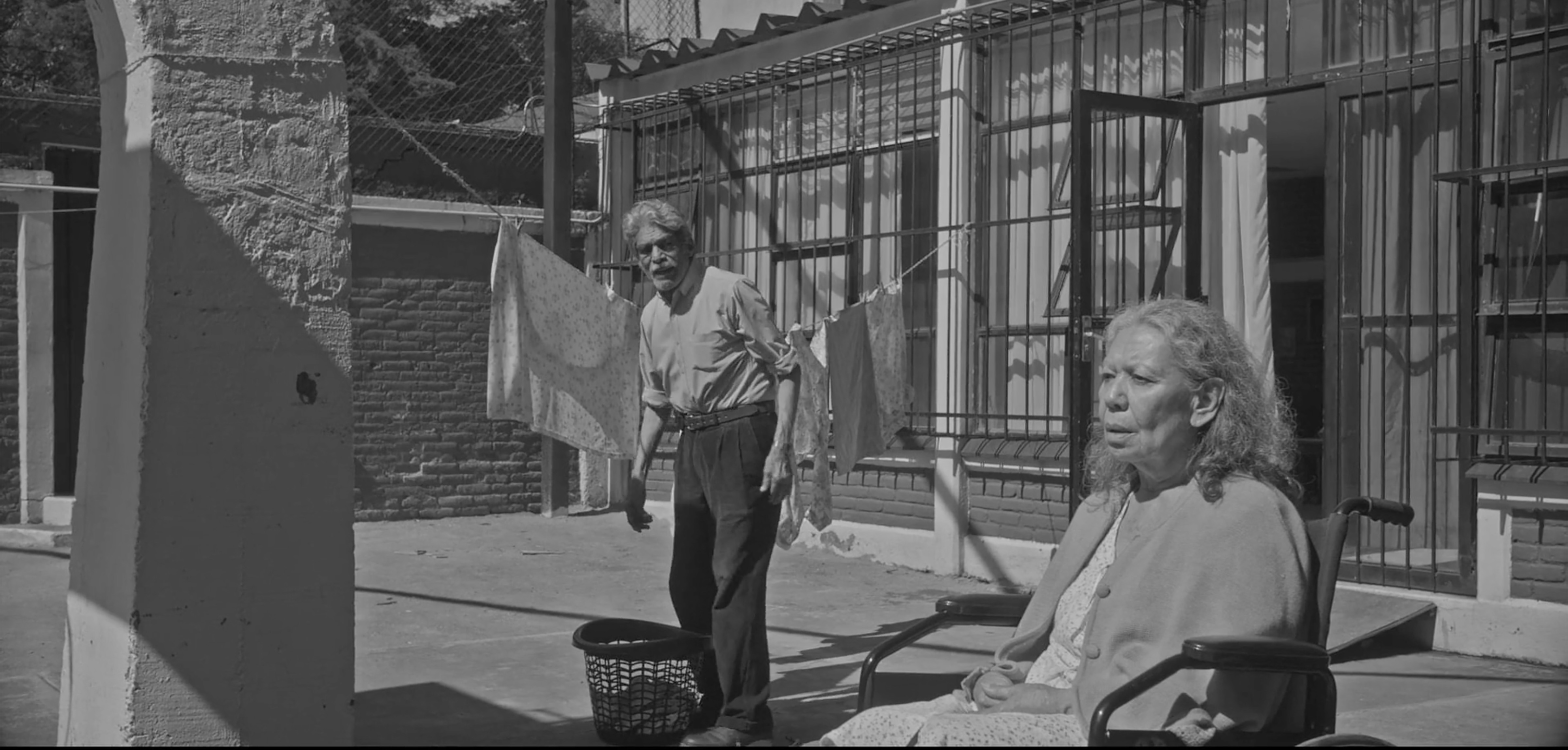
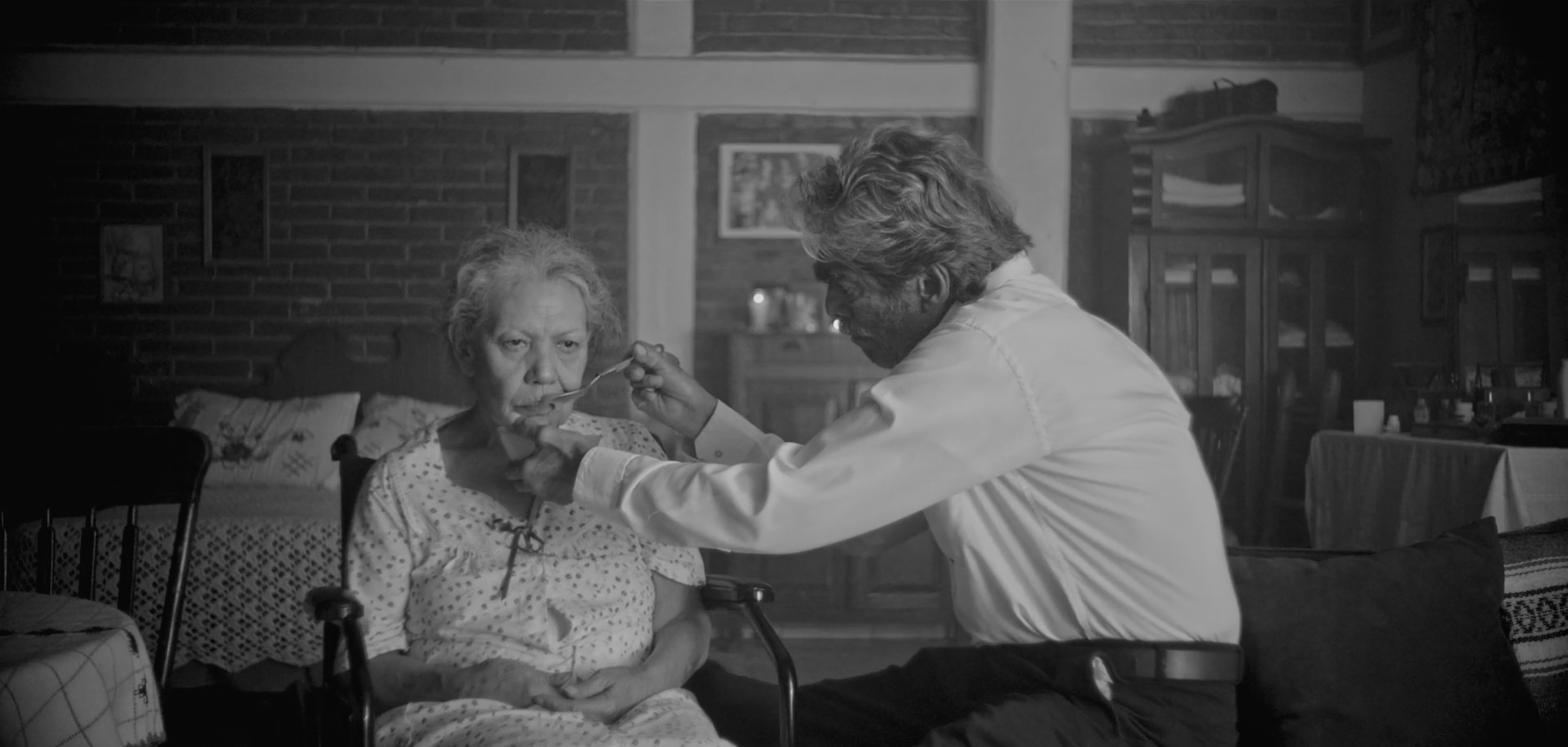
Humberto Yáñez as Ricardo and Luisa Huertas as Ana
“The Janitor is a portrait of one of the invisible people” - Mauro Mueller
Ricardo (Humberto Yáñez) is the aging janitor at a primary school. He lives in a cramped room on the school grounds with his crippled wife Ana, who needs round-the-clock care. He is beginning to feel his age and suffers a bad fall when cleaning the masses of lewd graffiti that started appearing on multiple surfaces around the school. The principal has placed the task of keeping the place clean squarely on the janitor and his small group of subordinates. When Ricardo finally catches the two schoolboy culprits in flagrante, their resentment leads to terrible consequences. Yet, though the system fails him in every way, Ricardo is driven by an innate human need to hope and carry on.
The idea for THE JANITOR was based on a real person. The screenwriter, Aleluya Rivera attended a private school and was struck by the precarious living conditions, in the school ground, of the school janitor, who was the father of one of her classmates. After some discussions, they realized that this kernel could be developed into their first feature by the production company REGIÓN 4: -
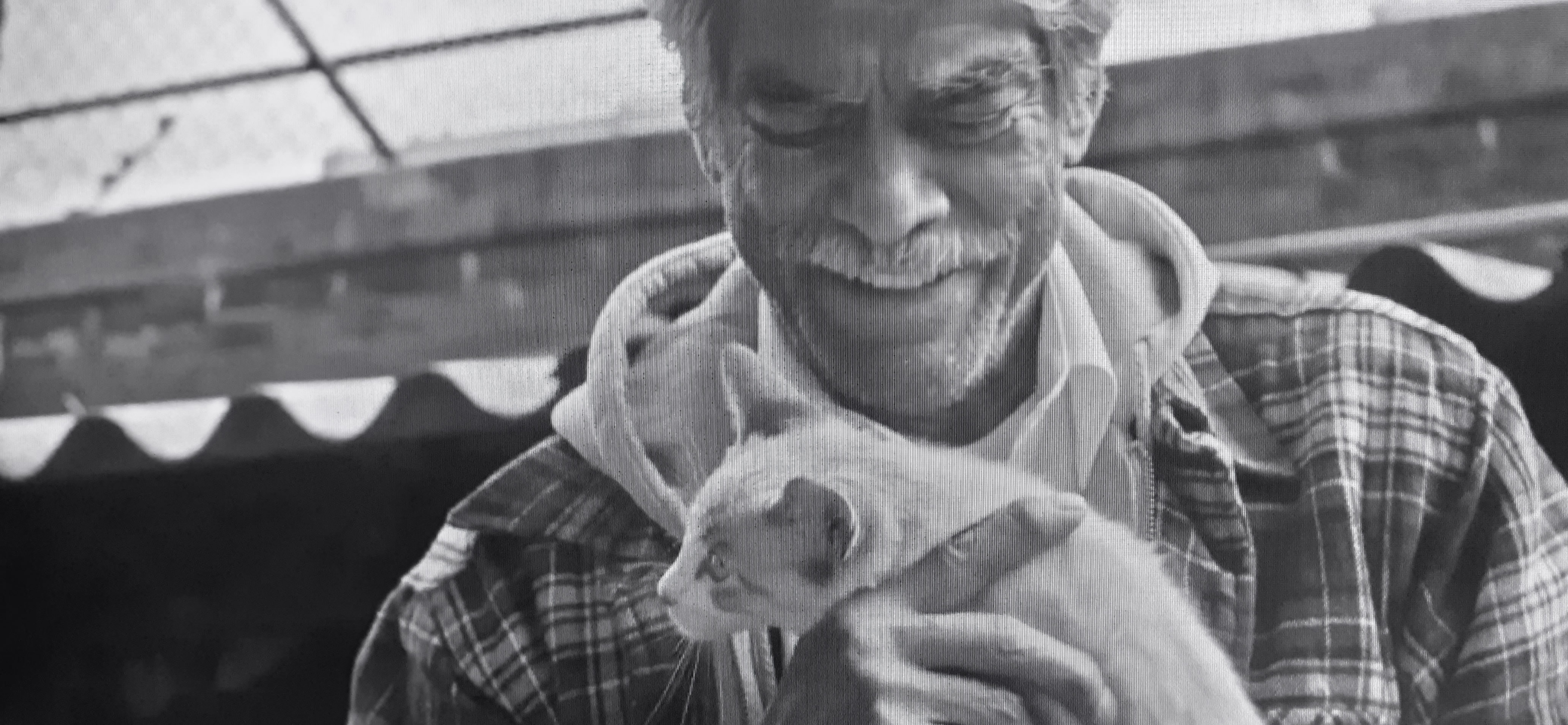
Humberto Yáñez as Ricardo
Mueller: “We liked this story more and more and realized that we wanted to make it ourselves… the school is a microcosm of Mexico and its society and other societies too, no? It’s a system which you trust, and then it never gives you what you expect: it does not give you a proper pension, it doesn’t care for you and the system really fails. We make our films because we have the hope that someone will be moved. [We try] to plant the seed that will open the conversation to make things better. That is our hope”.
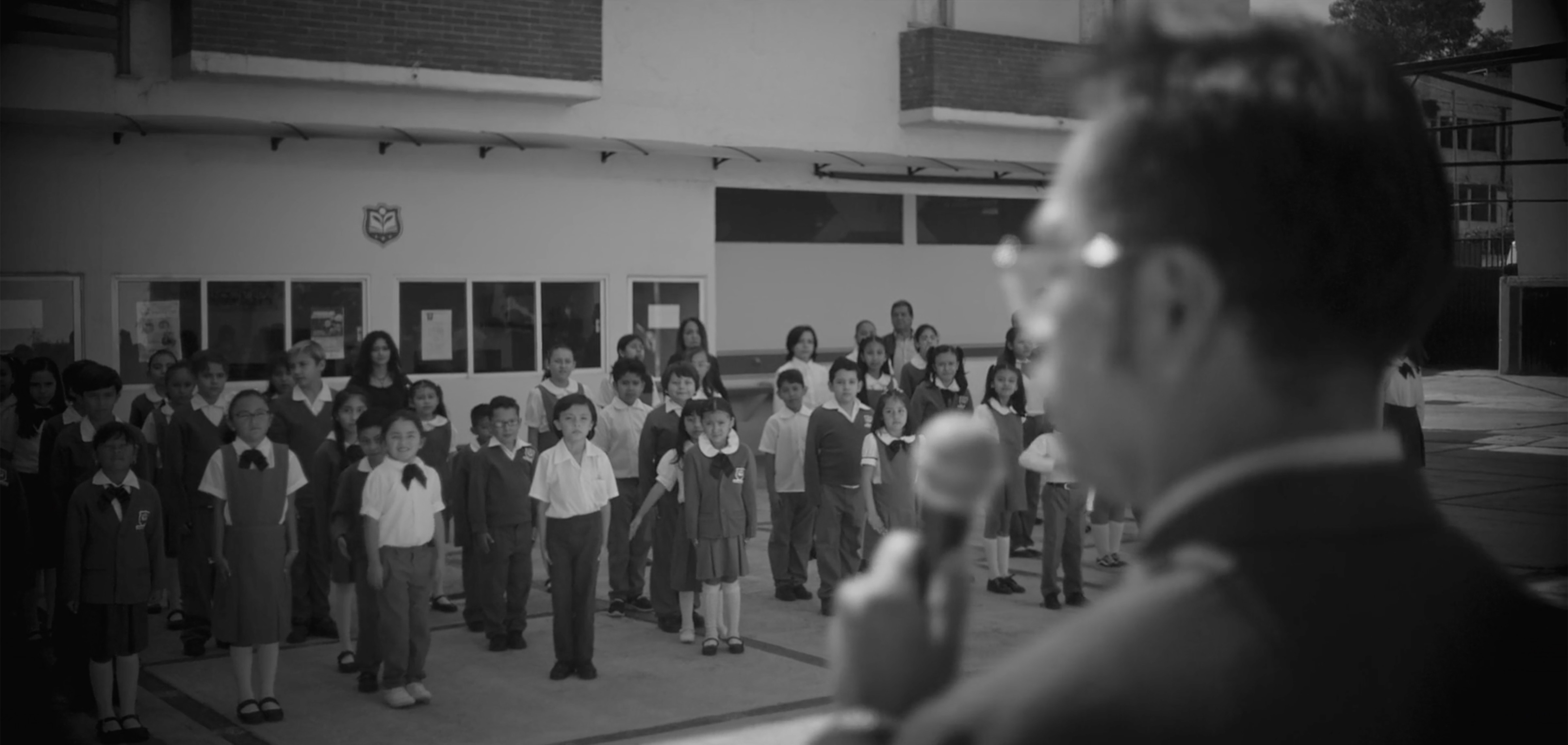
Pedro Hernández as Director Armando at the raising of the flag
Ricardo is superbly played by Humberto Yáñez. His performance is subtle, minimalist and nuanced. You feel the weight of life on his shoulders as he patiently and lovingly cares for his ailing wife. There is a warmth and a refusal to be bitter at his situation or his superior’s arbitrary demands. He just goes about his mundane tasks, be it sweeping the courtyard at ungodly hours on the darkest dawns or scrubbing the toilets of the messes left by the uncaring pupils (who, supposedly, come from good homes). These boys display a profound disrespect for the janitor and wander about with a sense of entitlements and even elitism, but, as the film progresses, a darker side to those very same families is slowly revealed.
The film was dedicated to Humberto Yáñez, who was 80-years-old during filming but, very sadly, died aged 83. That he managed to see the finished film was gratifying for the directors. Yáñez had had a long successful career as a support actor, mostly in theatre, and had never had the opportunity to play a lead. It was particularly fitting therefore, that this chance to play the protagonist, that had always eluded him, should be his swan song. Apparently, he loved the film. Previously he was known for Carretera del Norte (2008), Malibu (2021) and on TV, Cenizas y Diamantes (2010) and Valeria & Maximiliano (1991).
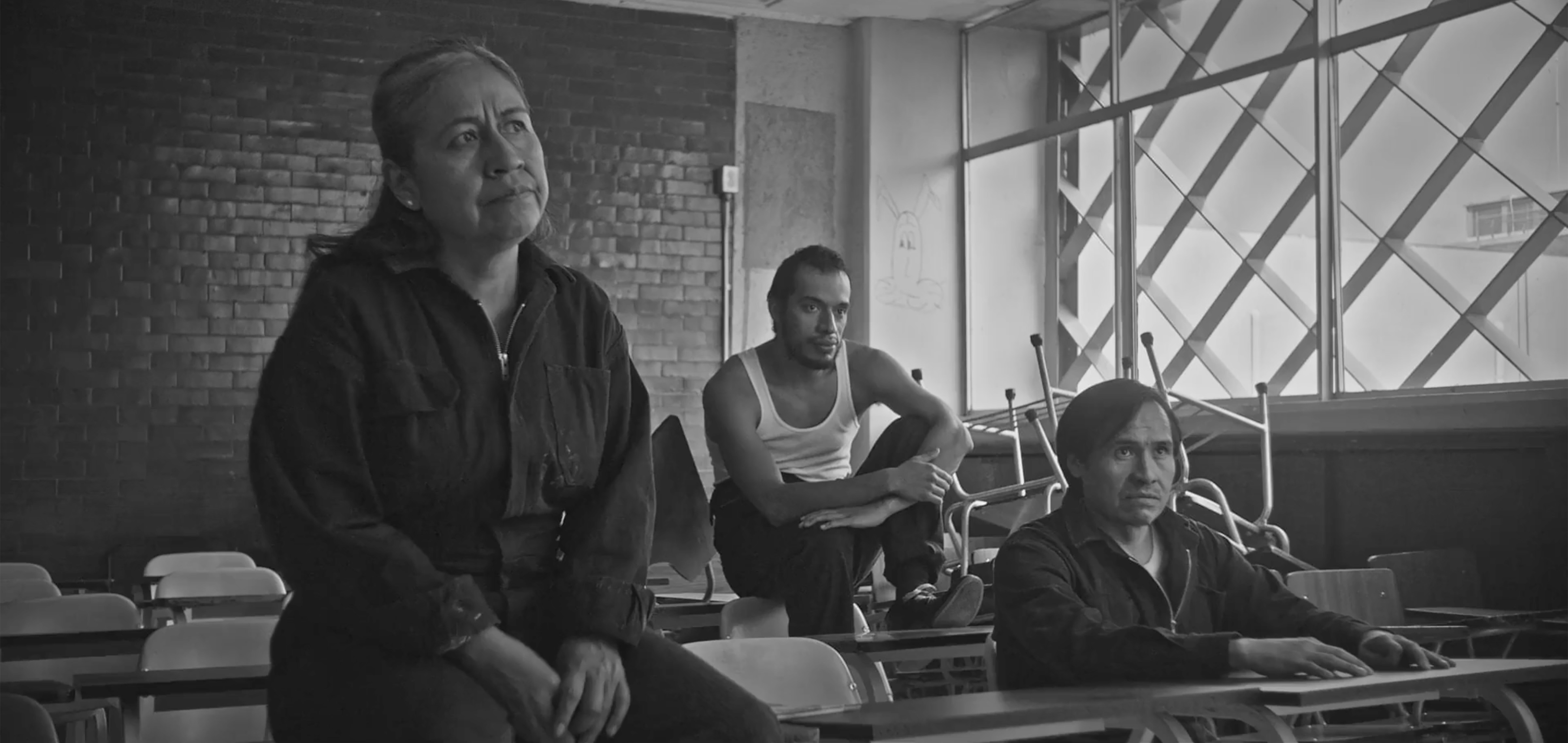
Mercedes Hernández (Claudia), José Antonio Becerril (Pepe)& Leonardo Alonso (Luis)
His crippled wife Ana, is played by Luisa Huertas whose background is also largely in theatre with TV appearances including in La Casa de las Flores (2020) and Dos Mujeres y una Vaca (2015). Mercedes Hernández, whose performance in ‘Señas Particulares’ (2020) was outstanding plays Claudia, one of Ricardo’s colleagues, with José Antonio Becerril as Pepe and Leonardo Alonso as Luis.
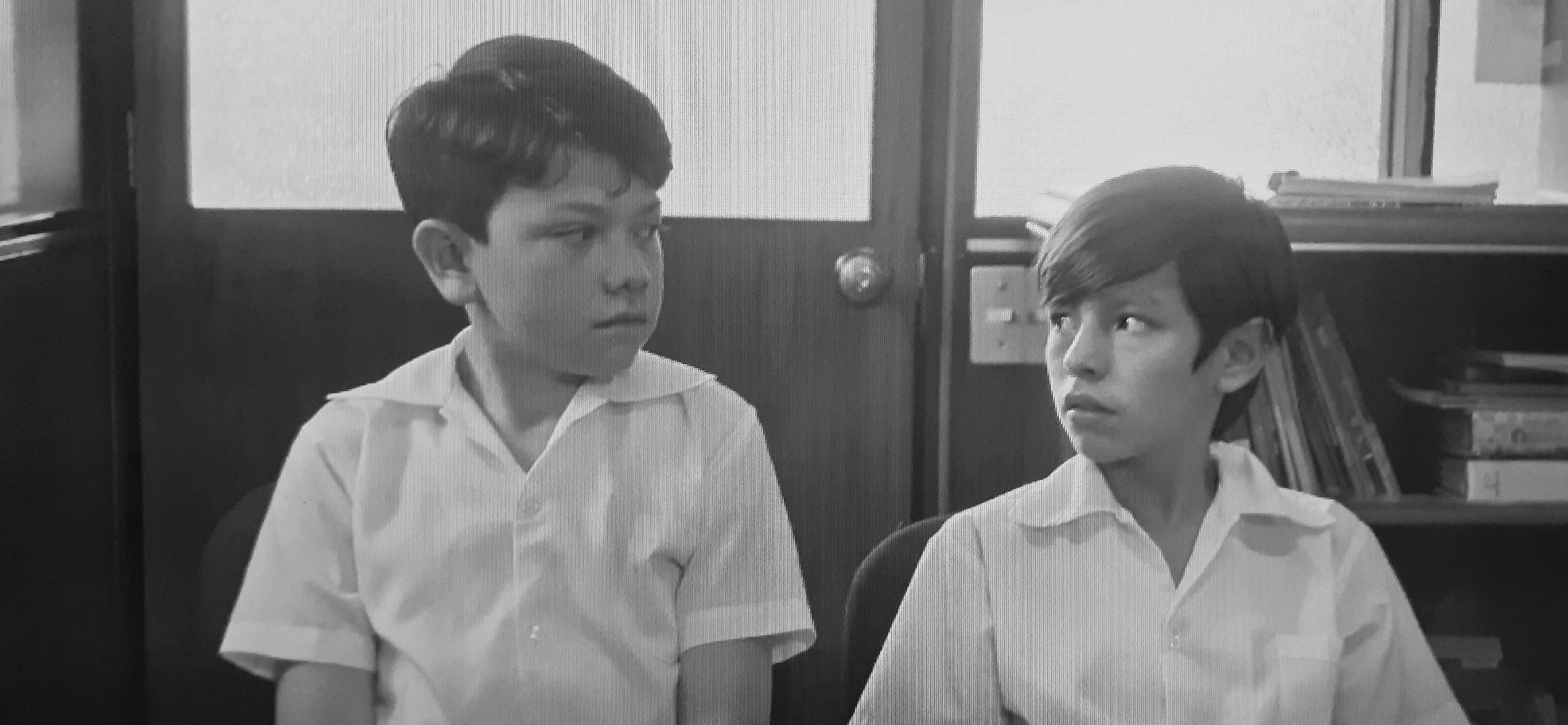
Luis Ángel Macías (Camilo) and Donovan Said Martínez Pérez (Daniel)
The two boys who play young delinquents and graffiti artists with a penchant for hairy penises, Camilo (Luis Ángel Macías) and Daniel (Donovan Said Martínez Pérez) were discovered through a theatre workshop for young children: -
“We did a workshop with lots of different children. Some three or four months earlier, working with an actress who does these workshops. There were about 15 children. They did a lot of exercises and for us, from a casting point of view, it became a very organic experience because we started to develop a relationship with the kids and they began to trust us and we were able to introduce some scenes [from our script] creating situations and in this way, they got used to the process. Most of these kids have never been filmed before.”
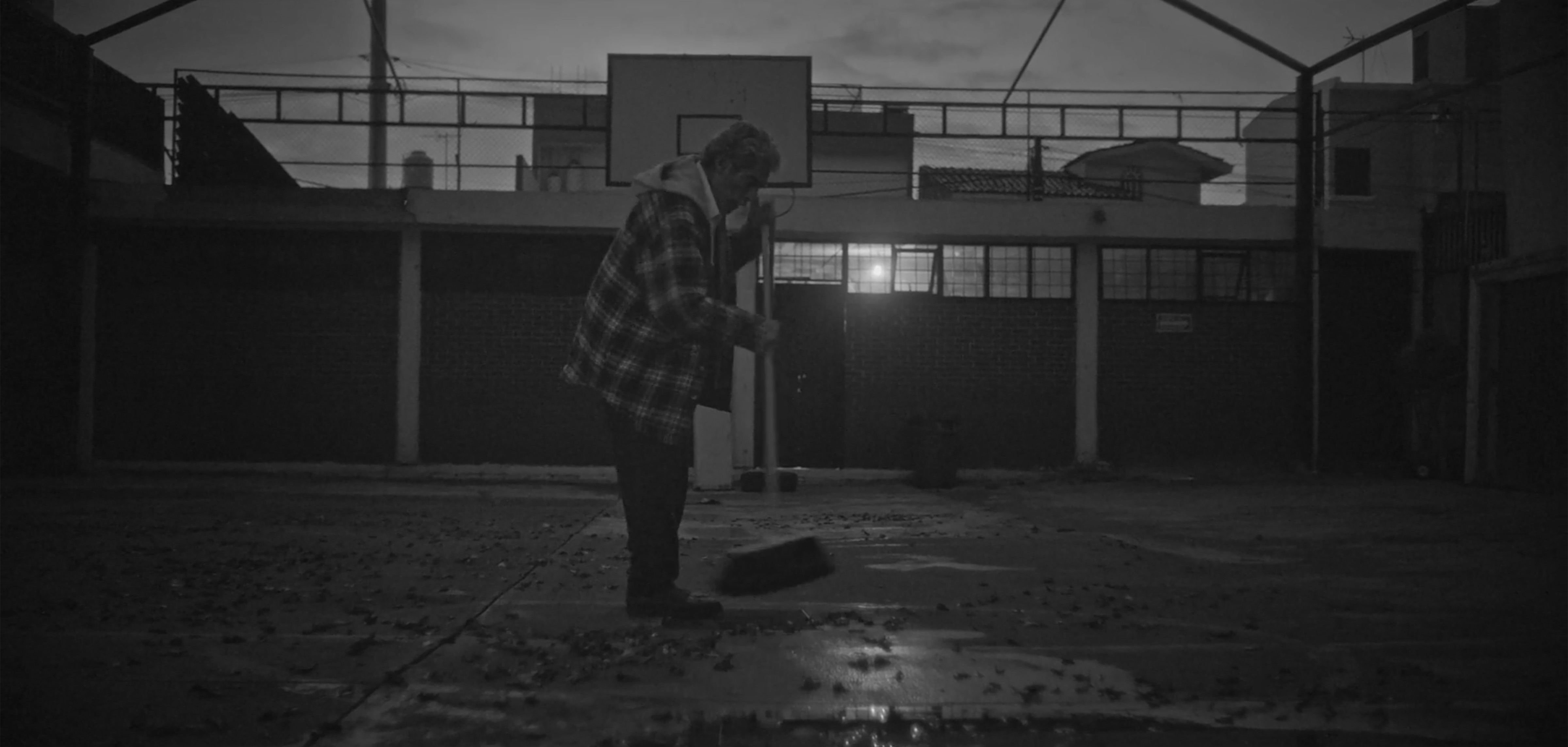
The crew on this production was small and intimate, and the budget very modest. The production company REGION 4 was set up on a particular premise, to aim for artistic and emotional depth, rather than immediate commercial success. This move has to be celebrated in the challenging world of the cinematic industry today. Finance is hard to raise and films that will not guarantee an immediate return have a hard time accessing funds.
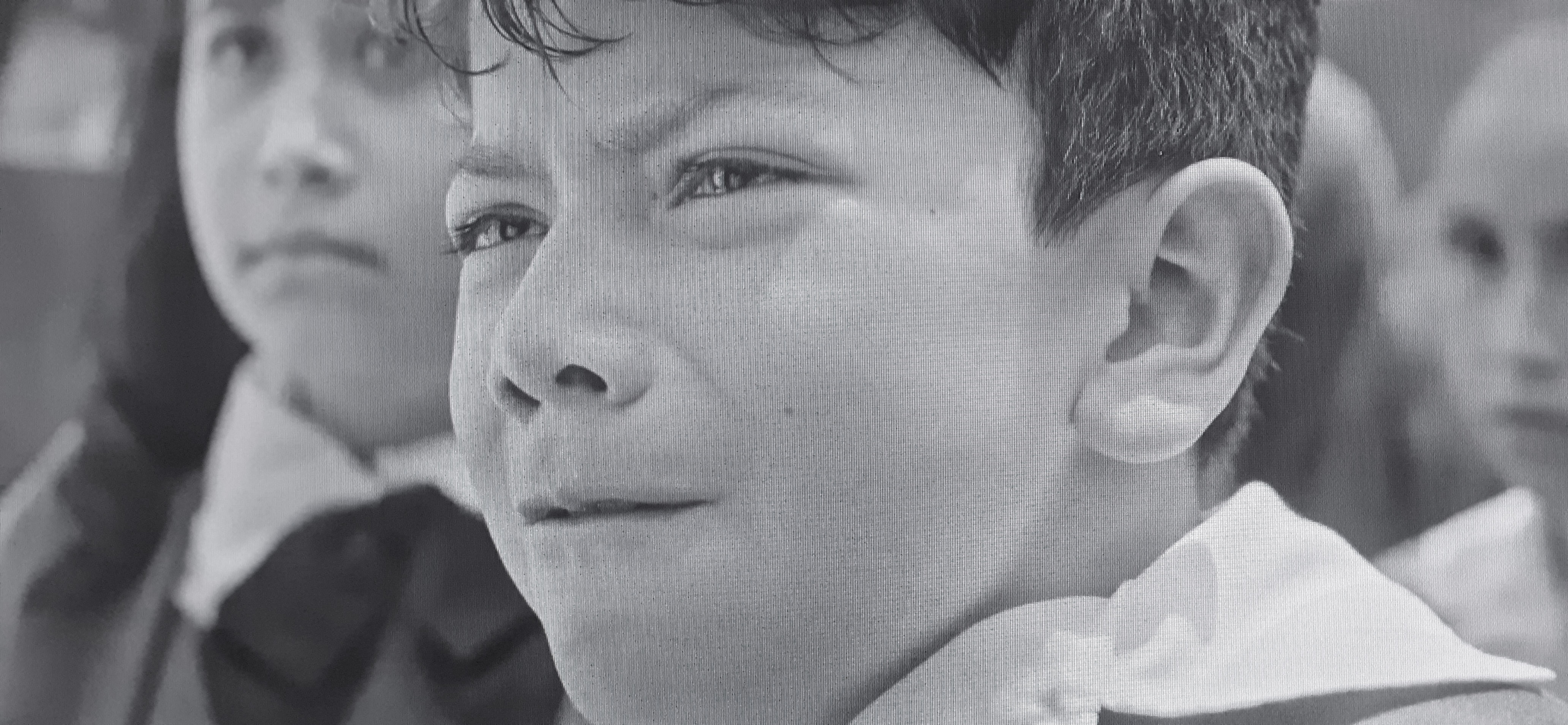
Luis Ángel Macías as Camilo
With cinematographer Juan Munive, the directors deliberately chose to film in black & white. This emphasizes, with fewer distractions, the raw dramatic elements of people grappling with real-world issues. The whole production, including the soundscape, plays on a quiet minimalist take on the story, allowing it to unfold almost in real time as if in a documentary giving it another dimension: -
“Juan [Munive- the cinematographer] was hungry to work on this production, he worked tirelessly on the preparations. This is what we like, people who are involved with the film and what we are trying to do. We premiered the film in November 2025 in Goa at the 56th International Film festival of India (IFFI) and it has just celebrated its European Premiere at the Raindance Film Festival in London now in June and we are waiting to premiere it in Mexico. We are now sending it to other festivals, The film was made with much love and we really want it to be distributed in the right way”.
This film brings to mind other socially-motivated films, like Ken Loach’s Kes -1969 & Cathy come Home-1966, or Robert Bresson’s Mouchette-1967. These films are not minimalist and feel almost like a documentary, not as melodramatically intense or violent as typical ‘kitchen sink’ realism dramas that emphasized tough social issues such as Look Back in Anger (1959)- Saturday Night and Sunday Morning (1960).
The 1960 was a period for overtly political and socially-motivated subject matter. In the Americas, we have the Argentine Film directors Héctor Olivera with ‘Rebellión in Patagonia’ and ‘La Noche de Los Lapices’ and Fernando Birri with ‘Tire Dié’ or Chilean Miguel Littín with ‘The Promised Land”. More recently, we have American Cary Joji Fukunaga’s “Sin Nombre” (2009) and Fernanda Valadez’s ‘ Sin Señas Particulares’ ( 2020), Alejandro Iñárritu’s “Amores Perros”( 2000).
At least in this last film, “Amores Perros” people were listening and dog fighting has now been outlawed in Mexico since 2017, directly as a result of the effect this movie had on the authorities.
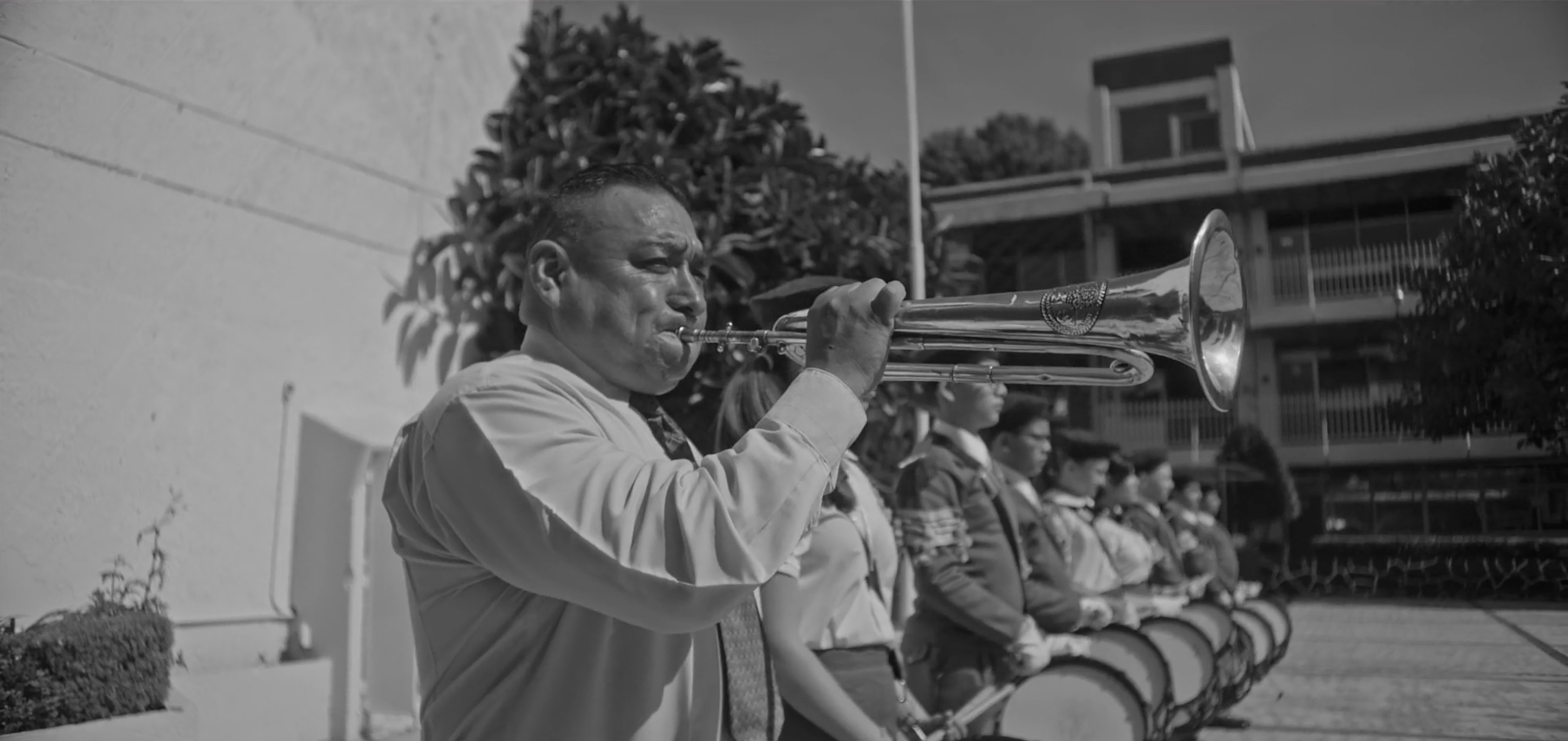
Raising the flag at the school
These deeply-moving productions are far from what critic David Alexander has labelled “Waitrose Films.” These are deliberately feel-good movies that mostly erase reality and create a cushy, escapist comfortable and unchallenging world (The Best Exotic Marigold Hotel/ The Unlikely Pilgrimage of Harold Fry).
But however enjoyable they are, it’s often, nevertheless, these non-typically commercial films like ‘The Janitor’, (or Kes- Mouchette etc) that remain with the viewer as we can relate to them on a deeper level. Sometimes they develop a cult status (Cathy come Home). As Mauro Mueller emphasizes, the hope is that someone is moved by the issues illustrated and that some changes in society might follow from their films. It is definitely true that there is no better way to communicate these wonderful stories than through film, where fine detail, poignant situations and even sound effects can be fused to create a realistic portrayal of these ‘invisible ‘people’s lives.
Through the story of just one man, Ricardo, and how he faces the challenges in his life, the directors have outlined the failures of the Mexican state to honour their hard-working citizens, cynically ignoring their needs and casting them aside like discarded rubbish when they get old. It is an endless journey that is endless repeated. What is very moving in THE JANITOR is how Ricardo responds. He is good natured, warm and forgiving., He treats his own subordinates with respect, unlike the school Principal who, rather than accept he has a serious discipline problem in the school, obliges the cleaners to work overtime with no pay rather than confront the parents and his own failings as a school director.

David Figueroa García co-director
The two directors, Mexican David Figueroa García and Swiss-Mexican Mauro Mueller co-founded Fidelio Films and its sister company, Región 4. Mueller has directed three features including ‘The Janitor:’ These include A Few Days in the Sun (2026), a kidnapping thriller and 111: Echoes from Halifax (2026) about the aftermath of the 1998 Swissair crash in Halifax. David Figueroa García has a string of shorts behind him, while ‘The Janitor’ is his directorial feature debut. He has a background in production and writing for Television.

Mauro Mueller- co-director
Mueller describes how they used the soundscape to introduce humour and lighter moments:
“The composer (Lucas Lechowski) is a Polish- American who lives in LA with whom we have developed a relationship. We also used songs [like boleros] to illustrate the nostalgia that Ricardo feels as they remember when they were younger and Ana was not crippled. We also wanted to use the music for humour to show how the characters survive by imagining themselves elsewhere, such as the cleaner who stops cleaning and dances imagining himself in a night club.”
We also see Ricardo dancing around their little cramped home in the school grounds, pushing Ana around in her wheelchair, as if dancing to the music on the radio could bring back some of their youth and good times.
“We want people to take home the experience of seeing how the janitor lived. To understand Ricardo. He is no hero, but he is good-natured and in particular he is very noble. He worked all his life and we should be aware that there are so many more people like him. We want to shine a light on these [invisible] people.”
“As if my life was but a dream from which I was finally waking …”
EL CONSERJE (The Janitor- 2025) had its European Premiere at the Raindance Film Festival.
CREDITS
Directors: David Figueroa Garcia and Mauro Mueller /Screenwriter: Aleluya Rivera / Production: Pamela Carvajal Luna, Benjamin Figueroa García and David Figueroa García / DOP: Juan R.L. Munive / Editors: David A. Castillo Roldán y Alicia Segovia Juárez / Composer: Lucas Lechowski / Production Designer: Edgar Laurrabaquio / Sound Mixer: Liliana Villaseñor / Sound Design: Alejandro Ramírez Collado.
CAST
Ricardo: Humberto Yáñez / Ana: Luisa Huertas / Claudia: Mercedes Hernández / Pepe: José Antonio Becerril / Luis: Leonardo Alonso / Camilo: Luis Ángel Macías / Daniel: Donovan Said Martínez Pérez/ Martha: Olivia Lagunas / Director Armando: Pedro Hernández / Genaro: Fermín Martínez.
For further viewing on LatinoLife: -
- Sin Señas Particulares (2020) https://www.latinolife.co.uk/articles/sin-senas-particulares-dir-fernanda-valadez
Amores Perros (2000) https://www.latinolife.co.uk/articles/films-watch-you-die-10