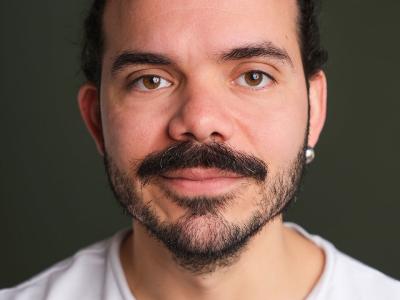
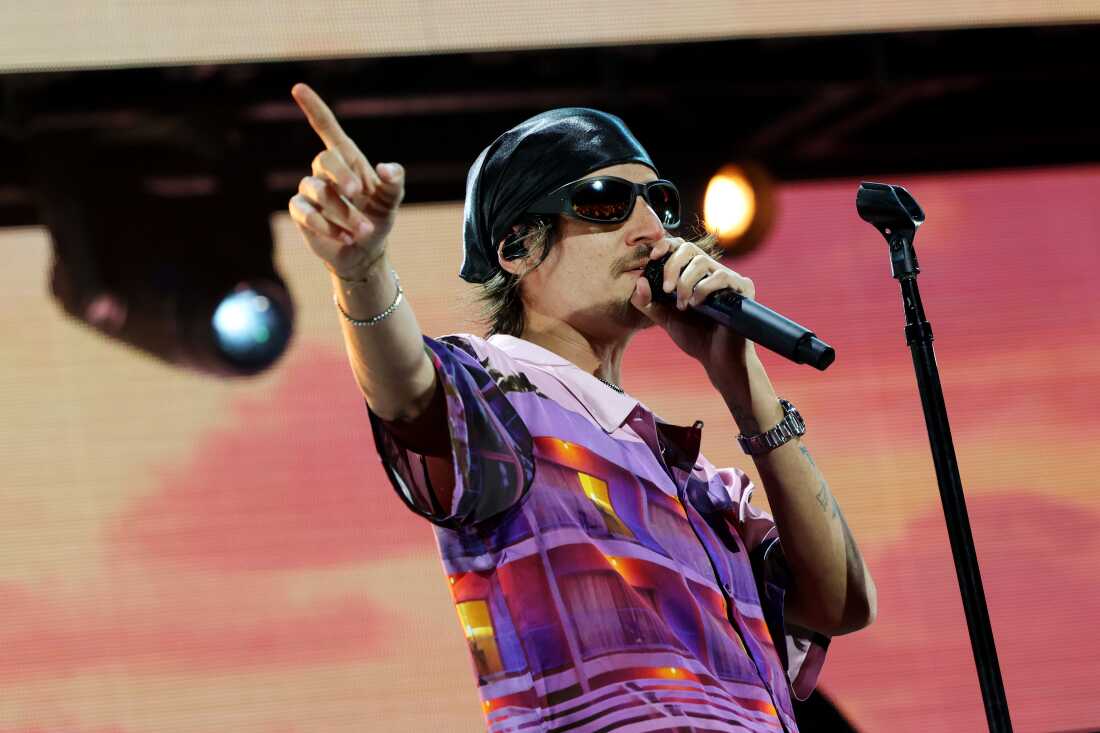
If migration is the keyword of our age, then the song Me Rehúso is surely its soundtrack. It’s author, Danny Ocean was a delivery boy in Miami, struggling to make a new life abroad, like eight million other displaced Venezuelans across the world, when his heartbreak ballad quietly exploded and, like a gentle eruption, wafted across borders. Travelling through WhatsApp threads, long bus rides, borrowed apartments, shared bedrooms, the track went on surpass 2 billion streams on Spotify and 1.9 billion views on YouTube
When I meet Danny over zoom, ahead of his sellout tour of Europe, I ask him how it feels to have become famous outside of his country first.
“What can I tell you? I made a lot of music in Venezuela before leaving. I finished university there and, a year after I emigrated, I made a song that changed my life. It was a Valentine’s Day gift, but also a kind of emotional release about what we as Venezuelans were going through at that time. Those were the years when the exodus was massive.”
A Song That Meant More Than It Said
On the surface, the song, which translates as “I refuse” or “I decline”, was a refusal to let go of a love story cut short. Underneath, it mirrored the experience of a generation forced to leave — lovers separated by visas, families split by circumstance, futures postponed indefinitely - a refusal to be victims, despite the tragic circumstances of the biggest displacement crisis in modern history.
Ocean never marketed the song as political, yet its ambiguity was key and its emotional architecture allowed millions to project their own stories onto it. It didn’t ask for permission from radio or labels. It moved with people who were already moving. Rather than a protest song, it was an emotional container, and containers travel well.
On a personal level, the superstar tells me, “it changed my life, brother…. I made the beat in Venezuela and recorded it in Miami three months after arriving. I never really had the chance to build a name in Venezuela. And honestly, Venezuela is difficult— the circuits are very closed. There’s very little industry, and it’s hard to get an opportunity to break in. I respect that and understand that’s how things are. But everything happened here in the United States. Me Rehúso started traveling—it completely turned my life around, 180 degrees—and now we’re here.”
And so, Daniel Alejandro Morales Reyes, graphic design graduate from Caracas’ Universidad Nueva Esparta became Danny Ocean, pop star travelling the world. The stuff of dreams.
Danny’s rise may make a good headline — DIY artist breaks through with trending global hit - but rather than a story about perfectly timed algorithms, its a story of of emotional resonance and cultural timing. An song-writer that could write on two levels was bypassing industry bosses before they could deem his romantic qualities too commercially risky for the urban space.
You don’t have the reggaeton look, your lyrics aren’t “street”, you’re kind of an underdog of reggaeton in a way, I propose…
“Reggaeton isn’t really my main pillar.” Danny agrees. “I think of myself more as pop— in the sense that it’s an umbrella for many genres. Any genre can be pop depending on its musical structure. When I decided to become an artist, the first thing was to be who I am. I’m not good at pretending or putting on an image. I’m not one of those artists who like to show off cars and chains—I didn’t grow up like that. I come from a middle-class family in Venezuela, and other things matter more to me.”
At the same time, he clarifies, “I also come from Venezuela’s hip-hop scene, which was huge and had a big influence on me. That scene is more underground—more about codes, about doing rather than talking.”
He cites Canserbero, one of Venezuela’s most brilliant rappers and lyricists who tragically died at a young age. “Canserbero was a huge reference for my music and lyrics. I don’t try to box myself into genres. I like reggaeton—I like the movement and the dance it gives you—but I try to keep my lyrics as open as possible. I’m not a problematic person. I also don’t think Venezuela has that culture of talking about women in a degrading way. Venezuelans are very romantic.”
It’s clear that Danny’s message was the voice that Venezuelans abroad needed to hear. In another era, his softness might have been a liability. In the crisis age, it became an advantage.
Do you think the fact that Me Rehúso became such a global success gave you independence from the beginning and helped you maintain your essence? I ask
"Yes, I do.” Danny replies. “No matter how much I might want to do other kinds of music, my musical instinct always pulls me back to my style. I can’t go into a studio and sing things that aren’t me—the magic disappears. I think Me Rehúso opened that door. Maybe it helped open the idea of romantic reggaeton, or pop-reggaeton. None of it was planned—it all happened unconsciously. To this day, I’m still finding myself, honestly—like everyone else.”
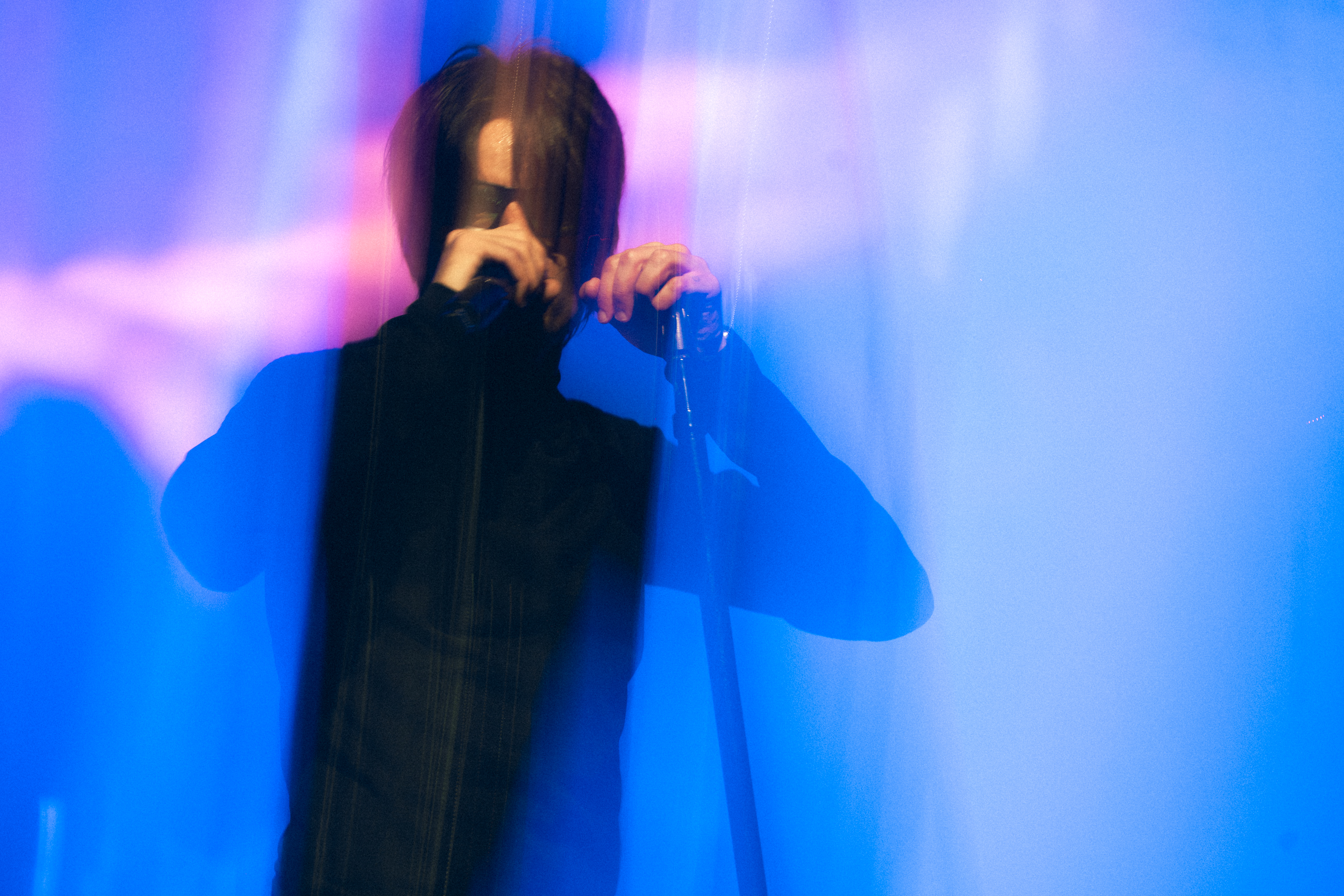
The Discipline of Not Rushing
However, instant fame, multiple offers from record labels, brands and management also put the young immigrant at a crossroads. What kind of artist did he want to be? Want kind of career did he want to have?
“When Me Rehúso happened, nobody expected it. At that point, I made a decision: if I was going to be an artist, I was going to be myself. I’d rather refine who I am than invest in something I’m not. That’s a pact I have with myself. I truly believe that when you do things genuinely, calmly, with your own vision, and from the heart, the universe surprises you.”
Danny signed with Atlantic Records. But, having never performed on stage, Danny says at the time of his success he wasn’t ready to be a touring artist or a media personality. So, when Me Rehúso exploded, Ocean disappeared — deliberately.
“When it came out, I wasn’t ready—not for interviews, not for stages. I had never been on stage before. Some people criticized me for not stepping forward immediately, but I wasn’t ready.” The Venezuelan confesses.
He did not immediately attach a face to the phenomenon. He did not flood the market with follow-ups. He studied.
“I spent a year, a year and a half, watching interviews, studying shows,” he recalls. “I wasn’t in a rush. Life is long.”
This decision — to delay visibility — is perhaps the most controversial, countercultural move of his career. In the streaming era, momentum is sacred. But Ocean retreated, treasuring his creativity as something to be protected, not exploited.
“I wanted people to discover me,” he says. “Like before, when you heard a song on the radio and didn’t know who sang it. And when you finally found the artist, you stayed.”
He had no choice but to trust — in the audience, in time, in self.
From survival to softness: building Babylon
Danny took his time, but slowly the hits came in the form of Dembow, Vuelve Ley Universal, Volaré and the multi-platinum Fuera del Mercado. Collaborations followed naturally with Karol G’s "Ay Dios Mío" and Reik’s “Raptame.” In 2024, he received two Latin Grammy nominations for Amor (Best Pop Song) and Caracas en el 2000 with Elena Rose and Jerry Di (Song of the Year).
Then in 2025 Danny released an incredible 14-track album—Babylon Club - very well produced, with top-tier collaborators including "Priti" with Sech. It’s an album that shows his artistic versatility,“consolidating his position as one of the most prominent figures in contemporary Latin Music” according to Rolling Stone magazine.
“With my la Babylon Club, I wanted happiness. Joy. Beach energy. My body was asking for that. My soul too and my music followed.” Danny says,“I entered a tropical state. It was very genuine. For the first time, I got to tell a full story.”
Some may see Babylon as an advert for escapism, and Venezuelans have always had that hedonist streak, but for Danny, it’s more a liberation, when vigilance of being an immigrant begins to soften. Its a another refusal, this time a refusal to remain in survival mode. Danny’s Babylon becomes less about excess and more about refuge: a space where softness is permitted.
“I’m just telling who I am and what I’ve lived. The album reflects the years after emigrating, and that desire to leave behind survival mode and start enjoying what you’ve worked for.” Danny says, and, crucially, he adds, with the album’s release: “Many people also started to see my face—to connect the person with the music.”
Babylon is notable for its many collaborations El Alfa, Árcangel, Sech, Aitana and Kenia OS. Was there anyone you wanted to collaborate with but couldn’t? Or someone you’d like to collaborate with in the future?
“I think it was perfect. Collaborations shouldn’t be forced—they happen naturally, at the right moment. It’s also important to personally connect with the artist. Things will come little by little.”
Holding rhythm, emotion and accessibility at once, Danny’s music moves easily between spaces: playlists, festivals, clubs, bedrooms, road trips. That flexibility explains his sustained success outside Latin America. European audiences, less bound by genre politics, responded to the songcraft. The melodies and emotion needed no translation.
La Patria: Reality versus Fantasy
In Danny’s best year to date, as he was reaching then stars, reality brought him back to earth in an emotional way, as he was invited to sing at the Nobel Ceremony in Olso, Norway in honour of the Peace Prize winner Venezuelan opposition leader María Corina Machado. Ocean performed Alma Llanera and Venezuela, two songs that probably mean more to Venezuelans than any others.
How did the decision to sing at the Nobel Peace Prize Ceremony come about?
“When I emigrated, like every Venezuelan, I was just in autopilot doing everything not to sink. The first years in the US were very hard. But after Me Rehúso became like an anthem for Venezuelan migrants I felt that staying silent would’ve disrespected the very song that changed my life. Music is very spiritual for me—it often feels like you’re channeling something greater.That performance was the most important of my career. And María Corina giving me that opportunity was incredibly special.”
Only a month later, on 3 January 2026, the United States launched a military strike in Venezuela and captured President Nicolás Maduro. With the removal of Maduro, however, the opportunity for a new beginning and democratic elections, in which Machado could run, never materialised.
Despite the disappointment for many Venezuelans hoping for democracy, Danny has remained hopeful, calling for a democratic transition and still supportive of Machado. Meanwhile, the repressive regime is still in tact, seemingly too useful for Trump, as he seeks to grab the oil he came for and, in a bizarre hostage-like moment, Machado ended up giving her Nobel medal to the American president who had long claimed he deserved the trophy. Its understandable why Danny is steering clear of getting more politically involved.
“I don’t want a political career.” he says categorically. “I see myself helping, contributing, supporting. I want to support culture and art, to help rebuild a solid music industry.”
For Venezuelans in the diaspora, visibility is never neutral. Ocean is aware of the symbolic weight his success carries, even as he refuses the role of spokesperson.
“There are things I can’t do,” he says quietly. “I can’t sing in Venezuela. And that hurts.”
In Danny’s case, success is more of a double-edged sword than for most. His music, which comes from and taps into the pain of a generation, has made him one of the most successful Venezuelan artists of his generation. A decade on and with his position no longer up for debate, he is “at peace with Me Rehúso and what it did.” He has the future at his feet, he has every reason to feel positive.
“I want the universe to surprise me. I want to keep making the best music I can and carry my flag as far as possible. The diaspora is helping us grow culturally.” As if wishing onto his country his own success, where emotional clarity, patience and faith, turned out to be catalysts for powerful change, he says, “Venezuela has everything it needs—we just need time."