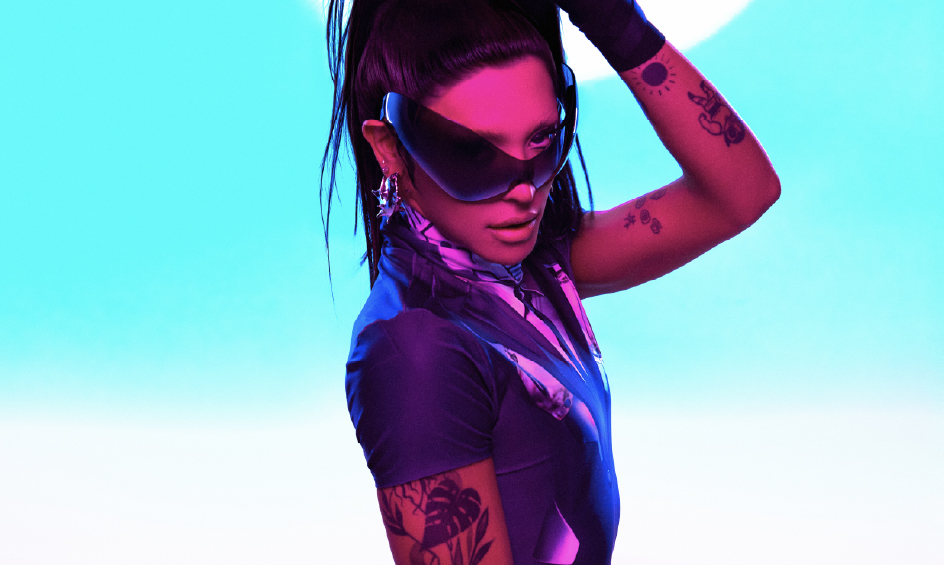
Phabullo Rodrigues da Silva has the same surname as Lula, the centre-left current president of Brazil, and he was one of the main attractions at Lula’s third inauguration concert on 1st January 2023. No, sorry, that is not quite accurate. Who was on stage was actually Pabllo Vittar, Brazil’s most famous drag queen and Phabullo’s public persona. While Phabullo is a shy gay man who preserves his private life from public scrutiny, Pabllo Vittar is his alter ego — the saucy, naughty star who doesn’t hesitate to flirt with any handsome man she fancies.
As you may have noticed, Phabullo doesn’t mind being referred to as he. “I feel like a boy,” he told the New York Times in July 2024, adding that gender is a societal construct and that he is indifferent to pronouns. But when Pabllo Vittar arrives painted to the gods, things are different: Pabllo is a she, “for God’s sake!”, she says with conviction.
Phabullo was born to a working-class single mother in São Luís, the capital of Maranhão, the poorest state of Brazil, in the north-east of the country. Despite the financial struggles his family faced, he tells Latinolife he is very proud of his origins: “It was there that I learnt how to be strong and to hold on to big dreams, even with scant opportunities.”
As a little boy (now 1.88 metres tall) with delicate and effeminate gestures, Phabullo encountered very early the two opposing sides of mankind: hate and love. Outside of his house, life was difficult: “I suffered a lot of prejudice and bullying, but it made me stronger”, he assures us. But at home, he received unconditional love and support from his mother and siblings.
His twin sister Phamella, on a Brazilian TV show, remembers: “He was always messing with my makeup, and when I went to use it, it was gone”, she laughs. “He would practice his makeup techniques on me, and then do his own makeup. For me, it’s nothing extraordinary to see him as a drag because I grew up seeing it.”
His mother, in turn, said on the same program: “When he came to me and said what he wanted to be, I already knew. Many people today accept their children because of what Phabullo says and does. He put himself out there, and I, as his mother, am proud.” Phabullo himself concludes: “That’s why I say: embrace, love, and give all your support to your LGBT children.”
Music entered his life early, Phabullo continues: “I used to sing at home, in church, imitating artists... It has always been my refuge and my way of expressing myself.” He would later sing at small parties and nightclubs for several years, and when faced with scepticism, he kept believing in himself. As with several contemporary artists, the internet was a game-changer, but that tells only half the story.
On his 18th birthday, Phabullo tried drag for the first time and felt incredibly liberated and empowered. Three years later, already embodying Pabllo Vittar, she went viral in Brazil singing I Have Nothing, a Whitney Houston song, and caught the attention of a music producer and manager. Three years on, she took Brazil by storm in 2017 with her good-humoured hit Todo Dia (Every Day), and a catchy chorus that goes “Eu não espero o carnaval chegar pra ser vadia, sou todo dia, sou todo dia” (I don’t wait for carnival to be a bitch / I’m one every day, and every stitch.”)
From that point on, she rocketed. Pabllo Vittar performed alongside Madonna at her biggest concert ever on Copacabana Beach, sang at the United Nations for Queen Elizabeth’s 93rd birthday, featured in a Calvin Klein global ad campaign, launched her own fashion collaboration with Adidas, and her songs have been streamed more than 1.8 billion times. Having released six studio albums, she has received multiple gold and platinum awards and several diamond discs.
Pabllo Vittar’s appeal derives from several qualities: she moves effortlessly between humour, vulnerability, and glamour; she can sing and dance; her choreography is sophisticated and intense; her performances are technically controlled, yet glamorous, intense and emotionally unruly. Furthermore, she managed to transform Brazilian regional music (tecnobrega, forró, arrocha among other rhythms) into legible global pop without falling into the trap of folkloric exoticism.
With all that in her portfolio, comparisons with RuPaul, the influential American drag performer and TV host who turned drag into a global mainstream entertainment format through RuPaul’s Drag Race, were inevitable. “RuPaul may still be the queen of queens,” the New York Times suggested, “but the heir to the global crown has arrived.” RuPaul, for his part, refused any rivalry and publicly tweeted his love and support for Pabllo Vittar in 2022.
This public show of solidarity was wise and elegant. Why encourage friendly fire when the LGBTQI+ community already faces so much misunderstanding, homophobia and violence, especially in Brazil, one of the most dangerous countries in the world for gay and trans people? Indeed, where the former president, Jair Bolsonaro (now in jail for attempting a coup d’état), proudly declared: “I would be incapable of loving a homosexual son, I’m not going to be a hypocrite: I’d rather my son die in an accident than show up with a moustachioed man. For me, he’d be dead anyway.”
I ask Phabullo, given this context, if it was inevitable that his pop music and activism would become completely intertwined: “Just by existing and occupying these spaces, I am already performing a political act,” he replies. “My music, my image, everything carries this message of freedom and representation.”
But Phabullo went further, engaging directly with the most powerful person in Brazil at the time, even when the former Brazilian President’s words directly put his life in danger by saying, “The son starts acting a little effeminate, he gets a beating, and his behaviour changes.” Phabullo responded with rainbow and glitter: “I strongly believe in joy as a form of resistance. We already face so much violence. Celebrating, laughing, and dancing are also political acts. We deserve to be happy and live life to the fullest.”
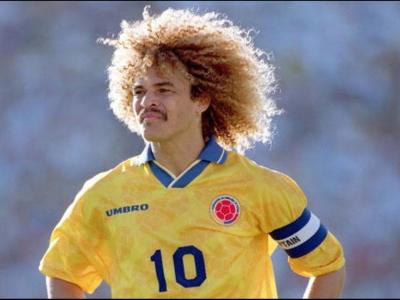
It is no surprise, then, that Pabllo Vittar was performing at Lula’s inauguration concert, showing her support for a political agenda that sits within the democratic spectrum and places tolerance and diversity at its core. A few months later, just as Brazilians had become accustomed to seeing the green and yellow colours as a symbol hijacked by the far-right, she didn’t hesitate to reclaim the narrative. Wearing the traditional yellow jersey of the five-time World Cup champions, Pabllo Vittar cried: “It is so beautiful to see you in yellow and green!”. It was her turn to encourage people to wear the national colours without being associated with those who desired the death of democracy.
Coincidences aside, Pabllo Vittar will perform in London for the first time the day before the World Cup final this year. “Those who come to my show can expect a night of great celebration, freedom, and music to feel in their bodies,” she assures. I would love to see her wearing my national team’s jersey and celebrating our sixth World Cup title. But, to be honest, it doesn’t matter whether the eleven Brazilians manage to lift the Cup or not: this time, my hero is a drag queen. Thanks to her, I can also wear my yellow jersey with no fear of being mistaken for someone who wants the end of democracy.
Pabllo Vittar will perform at As One in the Park festival. Saturday July 18th, Walpole Park, London W5