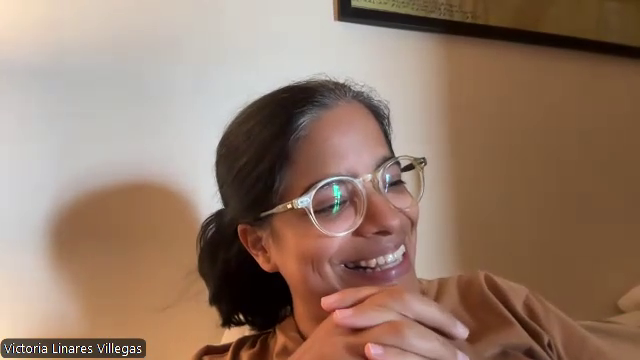
“When a person breaks the unspoken rules, all hell breaks loose.”
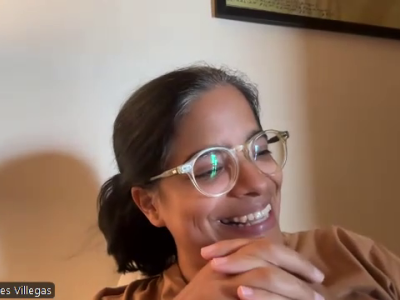
‘No Salgas’ premiered at the 2026- 76th Berlinale. It uses horror in an unusual way. Avoiding the usual shock elements, while concentrating on the more symbolic and metaphorical aspects, Linares Villegas expresses the deep-rooted homophobic atmosphere she grew up in, at a sensitive time in her own life, when she first started to write this story: -
“It was in a weird time in my life because I had tried to make another film before that didn’t happen, so I started working in other areas of filmmaking and then I wasn’t making any stuff of my own. Then Carlos came back from studying film and we got talking about the films that we love and how we could make a film that portrayed us, let’s say, middle class Dominican people, right? while [taking into account] the social context of homophobia in the Dominican Republic. I think I was about 24 and I was still kind of ‘in the closet’ in my family, so, that was feeding off it all … I was constantly putting all of my social anxiety into that screenplay. We started writing in 2016, and we tried again but it didn’t happen, so we kind of abandoned the project for a little bit and I started making my documentaries. Finally, in 2023, we felt we could make this film, if we tone it down and constrict the narrative and find a simpler way to tell this story, then we can make it! So that is what we did”
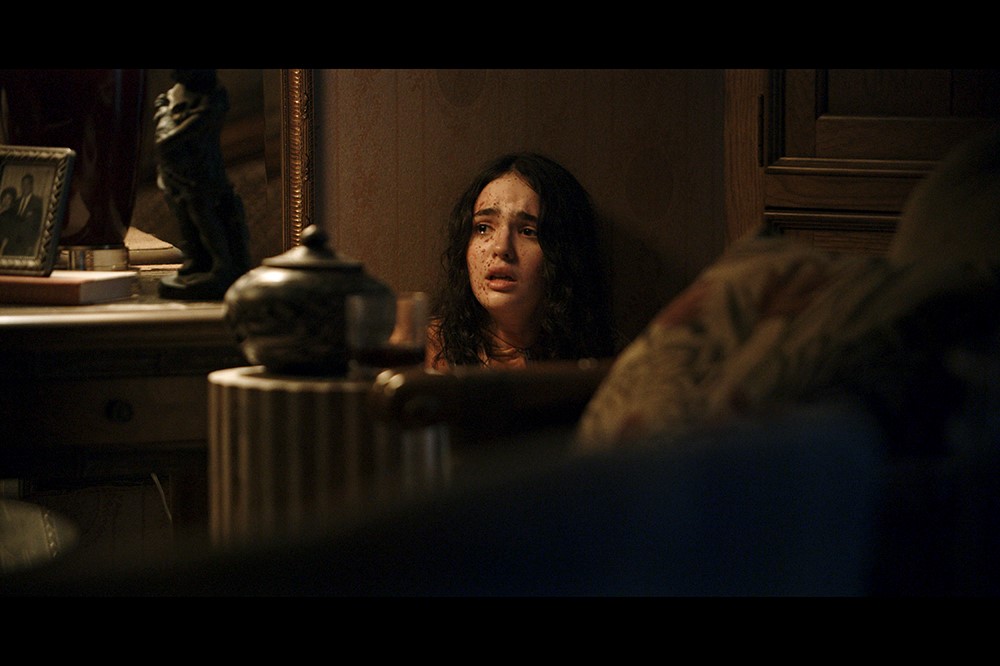
Cecile van Welie as Liz
The film opens with a shocking sequence, where a young girl flees from her mother’s wrath after she is discovered with her girlfriend, the rage having turned her mother into a monster zombie. Though apparently absent on the surface, the homophobic zombies surfaces as soon as rage takes over what seemed to be trustworthy people, with fatal consequences.
Liz has a girlfriend Wendy, who’s bold and keen to come out, but Liz has been warned by her friend: “If I were you, I’d be really careful with Wendy… you can’t always tell what catches someone’s eye.” True to form, Wendy becomes a victim and Liz is overcome with grief. It’s this element of being watched that permeates the film, adding a layer of constant tension and fear that Liz can never shake off and the viewer is gripped by it too. Liz joins her friends Laura (Camila Issa) and Danielle (Gabriela Cortés) at a weekend retreat, but things do not turn out as expected.
Growing up in the Dominican Republic, Victoria Linares Villegas found that studying film was not an option in that country: -
“I grew up in the Dom Rep where I live. I went to study film in NY after studying advertising here in the Dom Rep, we didn’t have a lot of possibilities here. The only way to study film was to go abroad. I grew up watching art films and I think because films [can be] so political … and so beautiful to look at that I decided that is what I wanted to do.”
She recognizes that she learned a lot by watching films by her favourite directors like Brian de Palma, some of which included horror elements, like ‘Carrie – 1976’, where de Palma captures the horror of being a teenager trapped in a nightmare from which there is no escape. She also loves the films of John Carpenter, who is a legendary horror director (Vampires 1998, the Halloween Franchise) as well as Agnès Varda and Pedro Almodóvar among others.
Linares Villegas: -
“I started making fiction at the start, short films. The transition from shorts to features and to make the films I wanted to make was hard, [especially to get funding …so we raised, in 2020, a little bit of money, as I was trying to get another feature film made, but Covid happened and other stuff, so with the little money we had, I made my first documentary feature. Most of my documentaries are hybrid as they contain a lot of fiction. They’re heavily scripted and [this one was] shot in 3 weeks – so it had a kind of fiction structure when it came to production – you could call it a drama documentary or docufiction. I have a love-hate relationship with writing- but I love it- “
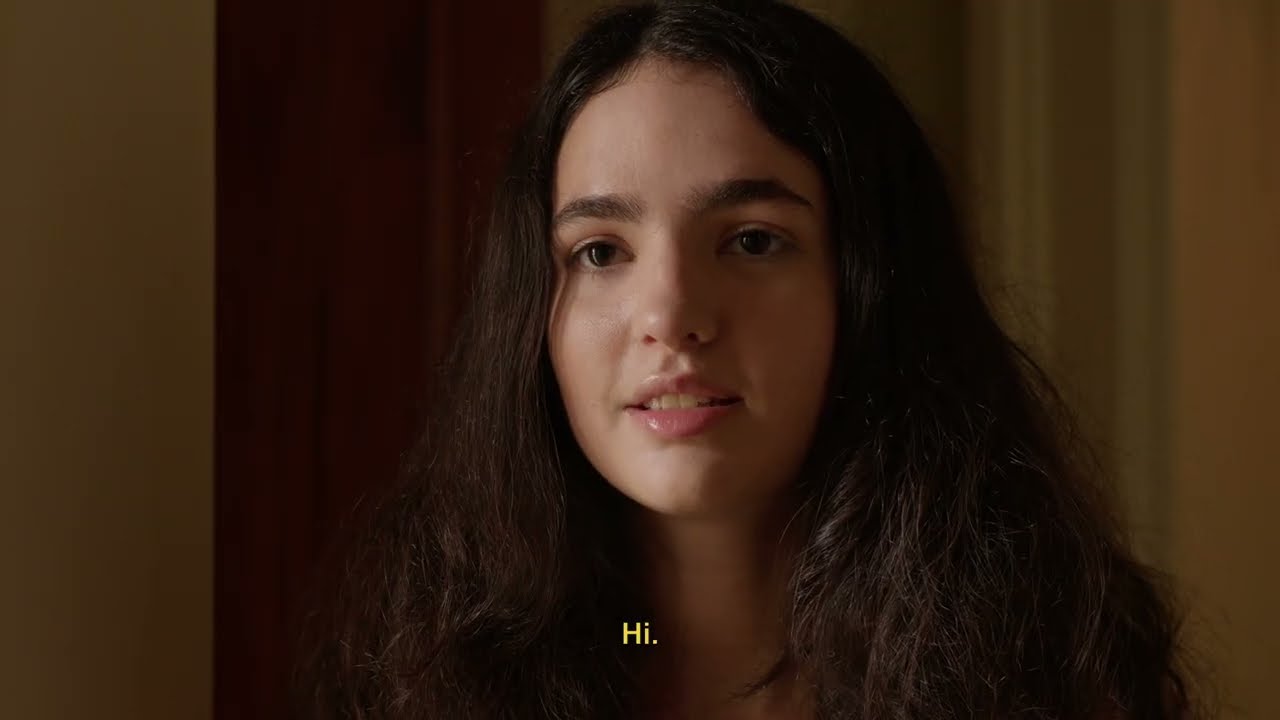
Cecile van Welie as Liz
Linares Villegas began to write “Don’t Come Out” shortly after leaving film school, with a theme close to her heart. It was the first fiction feature script she had started and she had to put on the back -burner, until later, when she was able to complete it with her close friend Carlos Marranzini: -
“It was in a weird time in my life because I had tried to make another film before that didn’t happen, so I started working in other areas of filmmaking and then I wasn’t making any stuff of my own. Then Carlos came back from studying film and we got talking about the films that we love and how we could make a film that portrayed us, let’s say, middle class Dominican people, right? [taking into account] the social context of homophobia in the Dominican Republic. I think I was about 24 and I was still kind of in the closet in my family, so, that was feeding off it all … I was constantly putting all of my social anxiety into that screenplay. We started writing in 2016, and we tried again, but it didn’t happen so we kind of abandoned the project for a little bit and I started making my documentaries. Finally, in 2023, we felt we could make this film, if we toned it down and constricted the narrative and found a simpler way to tell this story, then we can make it! So that is what we did”
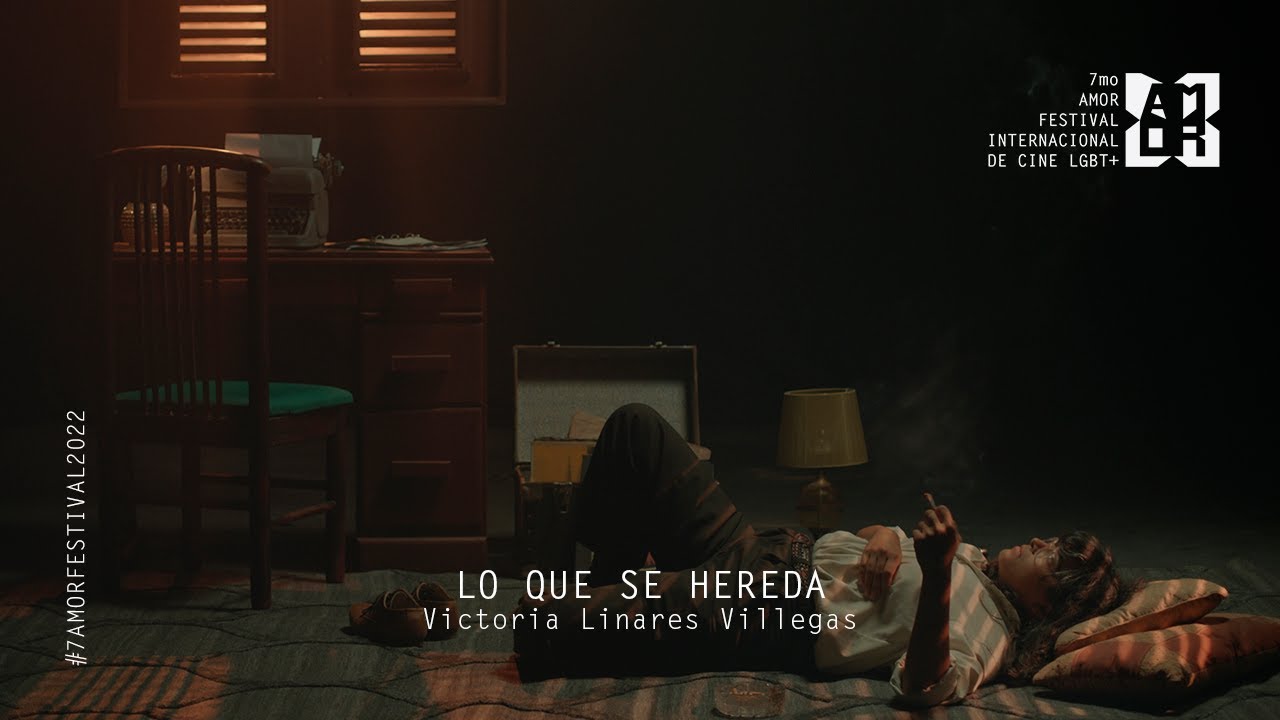
All her work in one way or another touches on stories regarding transgenerational trauma as an oppression. Her earlier works include “It runs in the Family” (Lo Que se Hereda) 2022 which was her debut into the film world. The film immediately won Best Documentary at the Fine Art Film Festival in the Dominican Republic and Best Film by the Youth Jury at the Trinidad+ Tobago Festival. The title refers to the fact that when she found out that a relative, the once world- famous film maker Oscar Torres, had had to flee the Dominican Republic for being gay during the authoritarian regime of Trujillo in the 1950s. Linares used fragments and details of his life, including re-enactments of her cousins’ unproduced screenplays, to created a powerful docu-fiction that received 14 nomination and two wins.
“…In other countries things are going right for queer people, but because of all the far-right leaders popping up around in many countries, [ if anything] we’re heading towards a set-back. In those countries it would be a set-back, but in my country, it has always been that way.”
Her second documentary was Ramona (2023), also a docu-fiction. It’s about an actress, who preparing for a role, interviews and rehearses with 15 young women who have experienced teenage pregnancy. Ramona had its World {Premiere at the 2023 Berlinale and then, went on to win the True Vision Award at the 2023 True/ False Film Festival, the Signis Award, Best Documentary at the Cinelatino Toulouse, before being selected by Cinema Tropical as one of the best Latin American films of the year (2023).
“The thing with the Dominican Republic and its film distribution situation. is that we have [only] one major distributor, who’s also a film producer, so, they prioritize their films over others. They may look at this film and think it is an artsy movie and it’s also a Lesbian film, so we wouldn’t get a lot of attention. We’re thinking of fighting this by trying to find alternative distribution, so that it’s not buried in a very bad schedule- There are probably one or two cinema clubs, one of which is in a film school. So, we were thinking of holding events, not necessarily a whole month of daily screenings, as, right now, that might not actually be viable, especially given the whole spectrum of Netflix, HBO. [But] I know that movie-going experiences have increased over the years, but I don’t even know if the regular distribution alternative is the only way right now.”
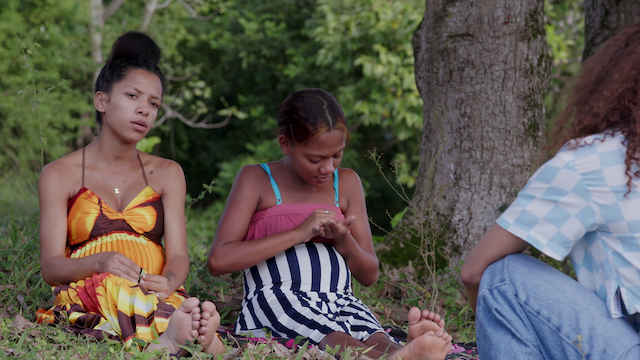
Ramona (2023)
In ‘No Salgas’, closeted homosexuality is framed into a horror story, although it is stronger on metaphors, as the traditional shock elements are not exactly text book, by transferring to a feeling of a lingering threat that permeates every scene that features the distraught and fragile Liz. She smoulders with emotion, passion and grief intertwined. Surrounded by a terror that seems to ooze from her reality and her fears. When she realizes that the murder of her girlfriend Wendy (Mariela Guerrero) could be linked to other murders that have taken place in the area related to homophobia, for her, it creates a world where nowhere is safe, not even the weekend retreat of one of your best friends. She has taken a boyfriend Carlos (Jonathan López), if somewhat apathetically, who follows her there, but all goes downhill when she meets the charismatic and mysterious Jessie (Camila Santana) that reawakens her deepest desires once again.
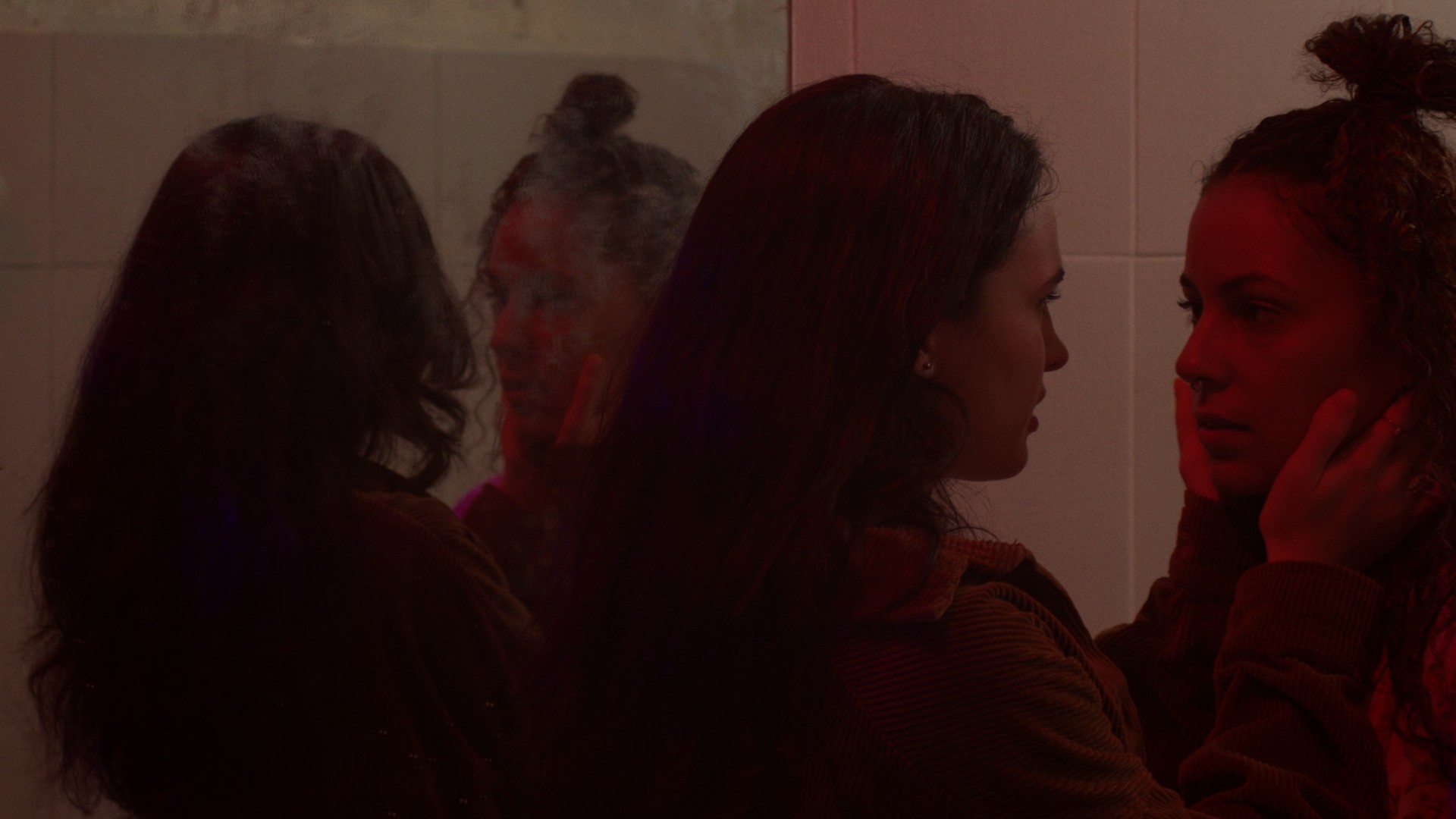
Cecile van Welie as Liz and Camila Santana as Jessie
The character and life of Liz take a while to take shape and after the shock of the very dramatic opening, the film falters for a while, until it picks up for the dramatic denouement. There is little purely graphic violence, presented more as the tragic result (Victoria’s bloodied remains hanging from a cliff) and the suggestion, rather than the event itself.
“NO SALGAS has had a controversial life at the festivals. When it comes to Horror, you can’t play with the expectations of the audience because genre films, like horror, are so specific. My film dangles more with a coming-of-age vibe more than the horror, so they don’t know how to feel about the film. I love horror, but maybe we were also trying to make a lot of other stuff in the process, you know. I think that NO SALGAS is a coming- of age- movie that is also about grief.”
While the chemistry between Wendy (Gabriela Cortés) and Liz is very powerful, it is a little less convincing with Jessie, especially given the situation. Also, it’s somewhat strange that Liz’s initial reluctance to ‘come out’ with Wendy, is so suddenly cast aside, as she takes uncharacteristic risks with Jessie that threaten their very existence. There is a great deal of discretion in the way the relationships are expressed, being tender and romantic rather than overtly sexual. This could be due to the hope that the film will be released in Latin America without censorship at any level.
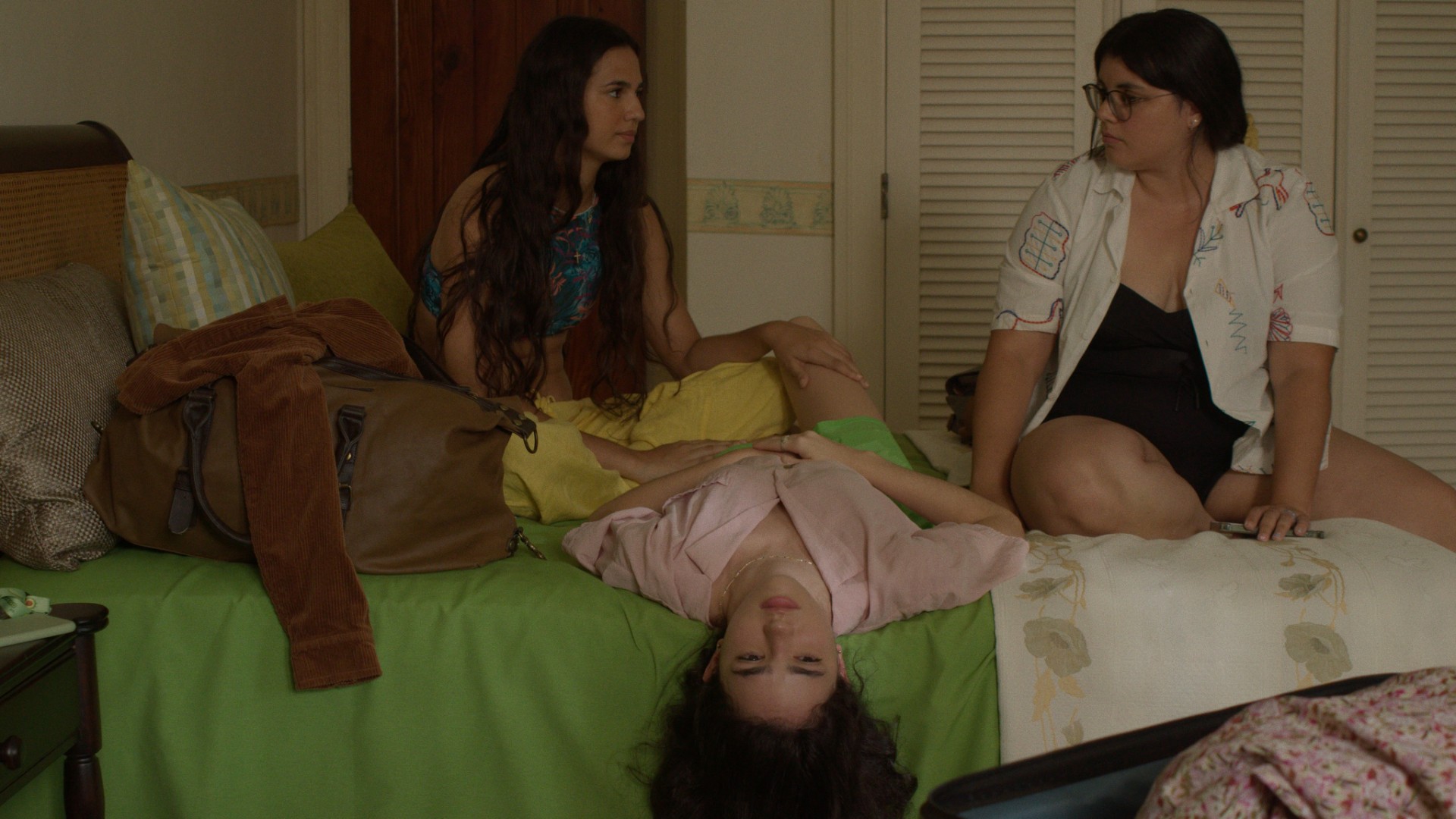
Camila Issa as Laura, Cecile van Welie as Liz and Gabriela Cortés as Danielle
Casting for this film is a story all of its own: -
“We were doing an acting call for another movie of mine. We were casting for the specific role of a nun. That was where I met Cecile van Welie, as she was playing the nun in that film! As I was casting her for that role, I realized that she reminded me of LIZ, the main character of DON’T’ COME OUT, but I put it on the back-burner and thought, okay, and I started auditioning other girls. That was when LAURA (Camila Issa), the flirtatious girl, came to audition for the role of the nun, but I felt, no she is too rigid, too flirty, too demanding, she reminds me this other girl from DON’T COME OUT, so I ended up casting the other film! I didn’t end up making that film in that year, but I ended up casting all the girls from my next movie ‘DON’T COME OUT’.
Then there was Danielle, the nerdy and loving friend, [Gabriela Cortéz] who is now my partner! She used to go to acting classes and she did theatre but then she ended up pursuing her career for a long time and she was very nervous. It was really early in our relationship and I had never seen her acting, but I said: ‘If you want the part, you have it!’ She’s great and we were all in awe! Oh, my God, where were you?
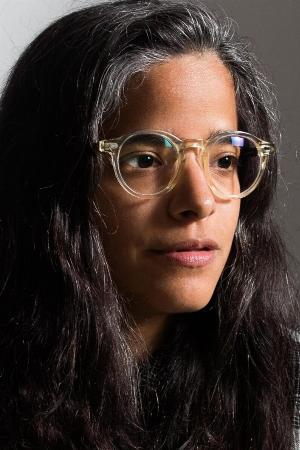
Victoria Linares Villegas
Despite using horror in this movie, Linares Villegas is adamant that she doesn’t want to be associated with any one genre in particular: -
“At the moment, I have this movie in post- production that is a drama and I am also thinking about another political drama in the future, so right now I don’t want to be identified with only one genre. For instance, people use to say’ Victora the documentary film maker’…and I don’t want that to pass on to ‘Victoria the genre film maker’… I just want to be called ‘the filmmaker’. So, for now, I think I will work with drama and let’s see what awaits in the future.”
Despite everything, Victoria Linares Villegas has one hope and that is that people take something back with them after watching the film: -
“It’s the most polarised film I’ve made, and most of the time that’s because of the political statement behind it, or the way that: Oh, you were expecting this conventional horror movie – oops sorry/ this is not it. I have had a wide variety of reactions but I think it is better when the film creates a response and a reaction, rather than not creating anything [at all] … When people see the film, will they acknowledge themselves in the friend, in Liz’s friend? Because when I was going through what Liz was going through, I had friends who I felt close to, even though they were mainly straight people, but then you kind of isolate yourself as you feel they cannot fully understand you – maybe it’s a thing. Jessie (Liz’s love interest) is like a saviour, you are not alone- You should try to stick out, there are other people like you. Someone wrote a nice comment about the film: ‘Is all the violence and sadness worth it for love? Victoria thinks YES, yes, it is!
NO SALGAS (Don’t Come Out-2026) was screened at the 2026 BFI Flare Film Festival
in the BODIES Strand: STORIES OF SEX, IDENTITY &TRANSFORMATION.
CREW: -
Director: Victoria Linares Villegas/ Writers: Victoria Linares Villegas and Carlos Marranzini / DOP: Jaime Guerra/ Steady-cam operator: Eduardo Pérez/ Sound Mixer: Alain Muñíz / Direct Sound: Homer Mora / Original Score: Oscar Chabebe/ Editor: Erik Alfredo Martínez/ Producers: Nicola Quiñones and José Alberto Jiménez / Production Company: El Perro de Argento.
CAST:-
Liz: Cecile van Welie/ Danielle: Gabriela Cortés / Laura: Camila Issa / Jessie: Camila Santana / Wendy: Mariela Guerrero / Alejandra: Nicole de León / Carlos Jonathan Andrés /Chico: José Beato/ Ángel: Alex Vásquez /