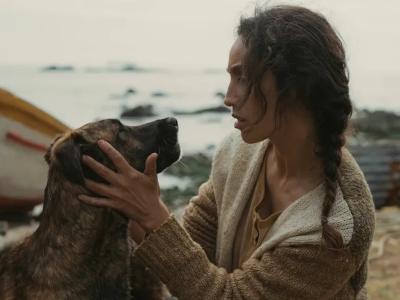
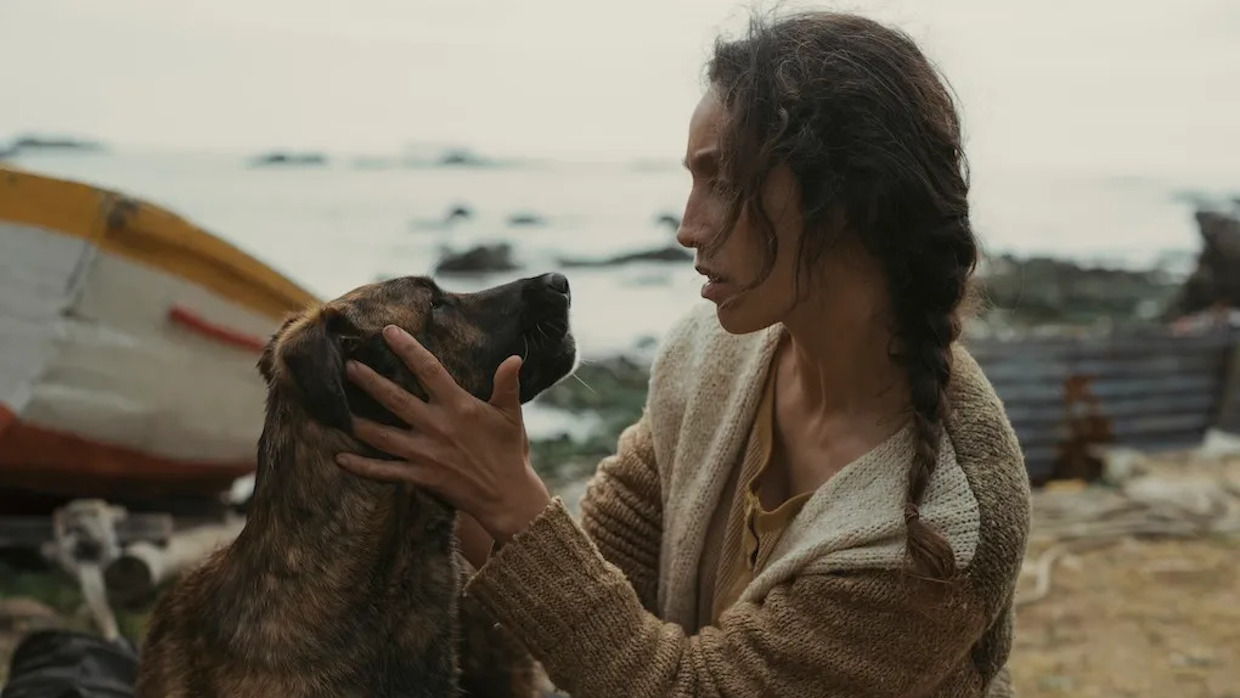
Manuela Oyarzún as Silvia with Yuri her dog
Award- winning Dominga Sotomayor Castillo, encouraged by her Brazilian producer Rodrigo Teixeira, adapted the award-winning book of the same name by celebrated Colombian author Pilar Quintana with sensitivity and panache with co-writer Inés Bortagaray. Pilar Quintana has a history of winning prestigious awards, from the Premio Alfaguara de Novela for Los Abismos (2021), and the Coleccionistas de Polvos Raros (2007) which won the Spanish ‘La Mar de Letras’ Award, to La Perra (2017) that walked off with the ‘English Pen Award’ and the ‘Premio de Biblioteca de Narrativa Colombiana’ adding to a long list of nominations.
Sotomayor transposed the story from the jungles of Colombia to Santa María, a remote and isolated island in the Gulf of Arauco off the Chilean coast. This austere and rugged landscape making the perfect setting for La Perra, a study of isolation, loneliness and motherhood.
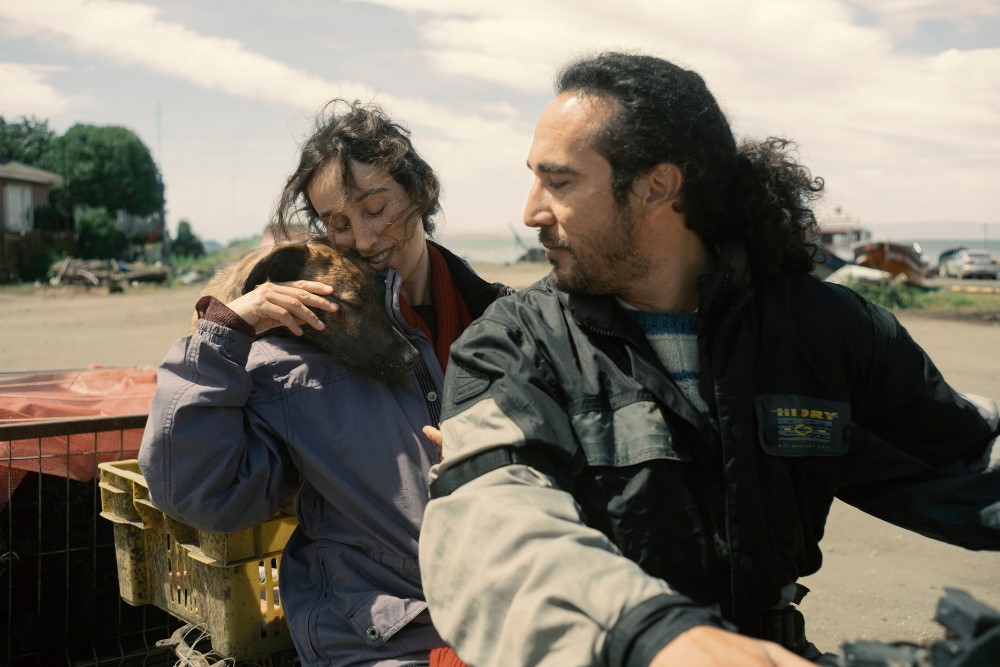
Silvia (beautifully played by Manuela Oyarzún) lives a quiet life on a remote island off the coast of Chile. Her life is upended when she finds an abandoned puppy and bonds with it. She names it YURI, and it awakens her motherly instincts, as she tries to fill the vacuum of longing for the daughter she never had. When Yuri goes missing, childhood traumas resurface forcing her to face situations that had never really been forgotten or put to rest.
Dominga Sotomayor was born in 1985. After graduating in Chile, she completed a Masters at the Escola de Cinema Y Audiovisuals de Catalunya (ESCAC) in film directing. Starting out with her debut feature ‘Thursday till Sunday’ in 2012, that won the Hivos Tiger Award, she later directed her excellent film ‘Too Late to Die Young’ (2018-Tarde para Morir Joven) that premiered at the Locarno Film Festival, winning the Leopard for Best Direction, the first ever woman to win this award. The film garnered 16 awards and had 35 nominations in total. Clearly working with RT Films and Producer Rodrigo Teixeira is a good match for Sotomayor.
Simone D’Arcangelo’s cinematography captures the character and savage harshness of the landscapes that tie in superbly with this haunting story of Silvia as she seemingly merely survives in the feral unforgiving world of the island. Separated from her parents at an early age, she was brought up there by her aunt and uncle and they all living in apparent abject poverty harvesting sea algae and shellfish. Silvia and her husband have no children and her past is haunted by a tragedy for which she feels responsible. When she finds a litter of abandoned puppies, she avidly chooses one, calls her Yuri and showers her with an affection she can express nowhere else. Her marriage is cordial but soulless and her life seemingly continues with little purpose, until Yuri appears and fills that dark abyss.
Sotomayor emphasizes the nature of the beast- not only with the harsh rugged, austerity of the environment, but also the nature of the local dogs, including Yuri, that are basically fiercely independent. Yuri disappears and, shockingly, abandons her own litter of puppies, presenting Silvi ith a terrible dilemma as she struggles to cope with the emotional fall back these creatures have opened in her. There is darkness, even violence present on this island and even less pity.
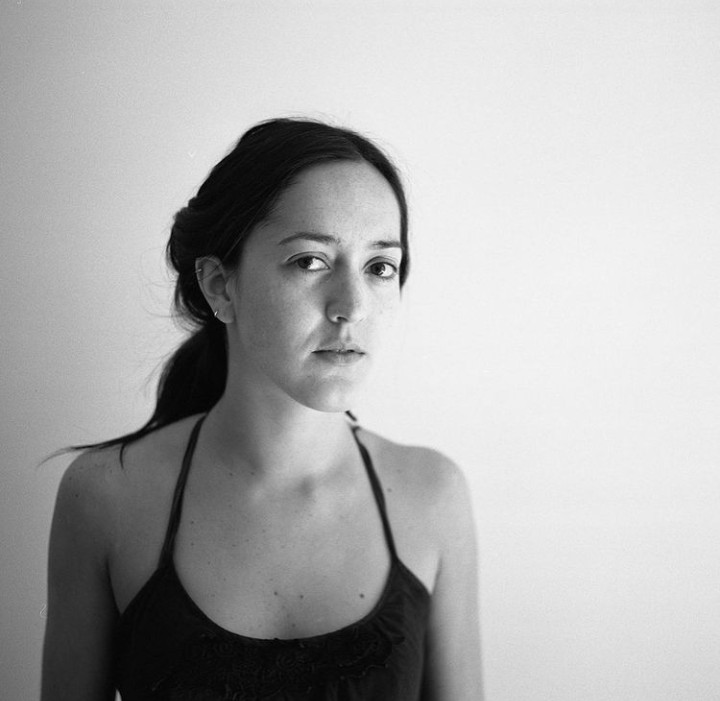
Dominga Sotomayor Castillo -the director
Silvia is faced with watching her relatives play with their new baby, painfully aware that she has none of her own and even the dog that helped her fill that painful gap, has abandoned her. The pup that she found grows into Yuri, an intelligent dog, that was, unsurprisingly, awarded the’ Dog Award’ at Cannes. However, I question one element, however wild and feral dogs are, it strikes me as unusual that they would chase local animals, let alone sea gulls or horses, when they have grown up with them. Having lived on farms with dogs, this feels unlikely, although it does increase the tension of the moment.
As Sotomayor has expressed in interviews, she does not want to send any messages to her audiences, she aims to leave the doors open for everyone to interpret the film according to their own personal traumas and experiences, challenges us to examine ourselves.
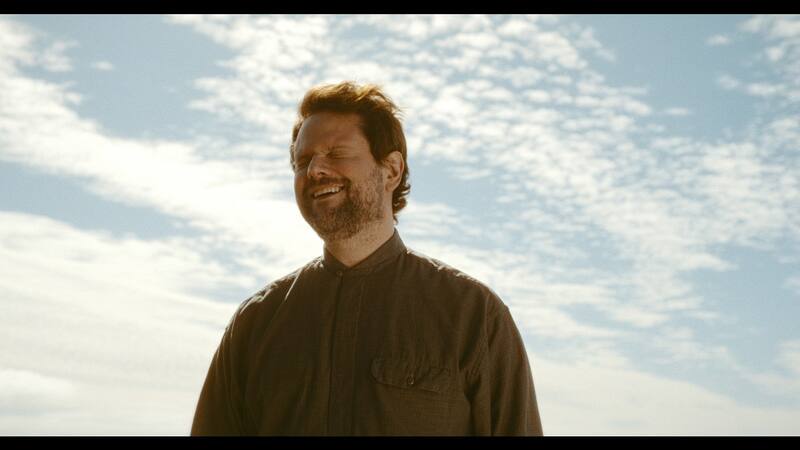
Selton Mello as Duda
Duda (played by Brazilian star Selton Mello), who is closely connected to the past unspoken tragedy, is a rather unpleasant wealthy Brazilian, who visits the island with an arrogant, colonialist swagger, as he appears to be building a bunker-style concrete house with a precipitous roof patio on the top that looks horribly dangerous! Not a BBQ spot for anyone who suffers from vertigo!
Some moments seem to be part of a flashback and almost a- play- within- a -play, as Duda, coming across as the white, wealthy landowner, uncomfortably mingles with the ‘natives’ (Mapuche & Araucano locals) being nice, until a terrible event changes everything. Meanwhile, the local characters shine in their quiet, discreet way, in particular the performance of Paula Dinamarca as Ximena, who wants to buy Yuri to have a breeding bitch of her own.
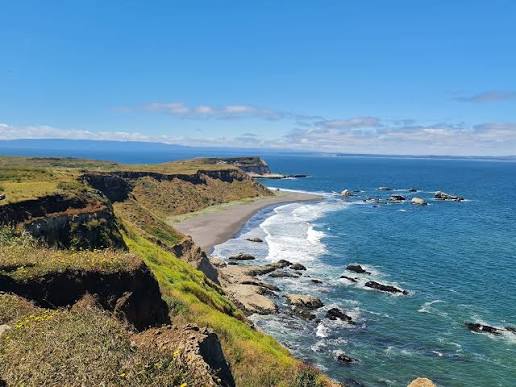
Isla Santa María, Chile.
Sotomayor was interested in the relationship with the animals, their wild feral aspect and how we do, or not, project our human emotions onto them. Although it is a character-driven film, Sotomayor doesn’t offer much in terms of a linear narrative, so it is from the accumulation and juxtaposition of images and experiences that we build up an emotional response. Sotomayor is very clear about her feeling for nature. She avoids urban shooting and aims to connect with nature in another way: -
“The discovery of this island was amazing. I think it’s a very dramatic landscape. I always try to put my characters in a landscape in my films. I do not often shoot in a city as nature is very important to me and I have a fascination with it and the dramatic connection between the main characters and the landscape. I also tend to put nature animals and people on the same level to connect them as a strategy. This island is complex and mysterious and as enigmatic as the main character Silvia.”
These very landscapes veer from a sheer stunning beauty to darker, rugged and dangerous possibilities, illustrated by gases that emanate from the deep, and fires that burn on the waves.
LA PERRA (2026) by Chilean Director Dominga Sotomayor
Screened at the 70th BFI London Film Festival in the Cult strand.
Cast: Manuela Oyarzún as Silvia / Rafaella Grimberg Monteverde as the young Silvia/ Selton Mello as Jaime / David Gaete as Mario / Paula Dinamarca as Ximena / Andrés Aliaga As Jaime / Selton Mello as Duda/Dante Ascui as Nicolás
Written by Dominga Sotomayor and Inés Bortagaray / Screenplay: Inés Bortagaray
Producers: Rodrigo Teixeira, Fernando Bascuñٔán & Berta Marchiori / Cinematographer: Simone D’Arcangelo / Editor: Federico Rotstein / Production Design: Natalia Geisse/ Original Music: Clint Mansel / Sound Designer: Daniela Turini / Direct Sound: Romina Cano.