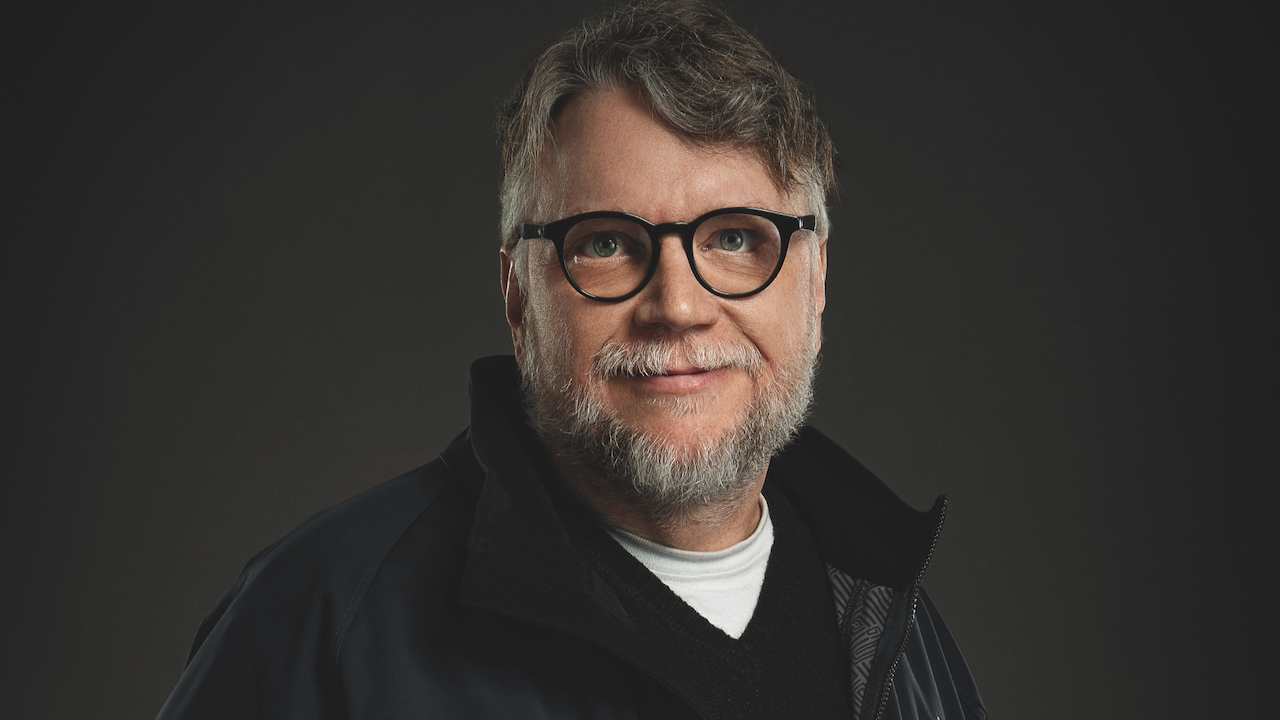
“The other day I had to fight for a movie, because I still have to fight to make them, and they said: we want a large audience, and I said: no, no, I want the right audience!”
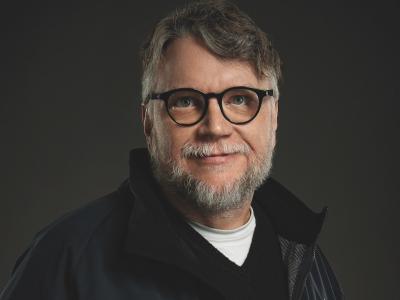
There is a richness that surrounds this very creative artist sitting in front of us in the auditorium at the British Film Instritute, where he has just recieved its most presitious award. It's difficult to imagine such an esteemed and succesful director could struggle to find industrybacking. But when you have such an imagination, it's unlikely you'll find many who can take the leap with you.
Having always been fascinated by monsters and Gothic fantasy since he was a child, Del Toro started out studying the art of theatrical make-up. This was born out of his fascination with everything from fairy tales, Sci- Fi, comic books, literature and the extraordinary universes that he later created, that take these elements into to an almost religious level: It is no surprise that he considers his monsters to be ‘benign and spiritual’.
Del Toro may work with horror, but not at a cut- and-slash level. His creatures and monsters express (and elicit) a far deeper and complex emotional level, with whom we, inevitably, empathise.
Since he was a child, he tells us, even aged under 10, Del Toro was already obsessed with Hammer films and monsters. Aged around 4, he watched ‘The Mutant’, an episode from ‘The Outer Limits’ Sci-Fi series when his parents were out. In it, the monster, played by Warren Oakes, appears with giant eyes. Del Toro was so petrified that afterwards, his brother endlessly teased him, turning up wearing magic shop fried eggs for eyes, in the middle of the night.
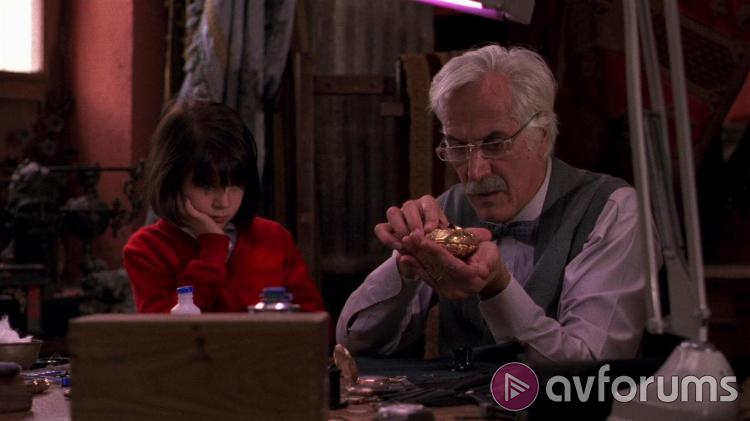
Federico Luppi as Jesús Gris and Tamara Xanath as Aurora in ' Cronos' 1993
Del Toro's awe for monsters was so extreme that it permeated everything, to the point that the shaggy piles of his bedroom carpet were transformed into long fingers waiting to grab him should he dare to leave his crib to go to the toilet at night. After far too many bed-wettings and far too many punishments, Del Toro said " I decided he had better make a ‘pact’ with the monsters and made a solemn promise: “If you let me go pee, I will be your friend forever”.
“So, I developed a reverse phobia. Basically, I loved and adored them [the monsters], and I adore them to this day. It is, truly, my spiritual place… " he continues. "There are recording of me at 4 years of age, asking for Mandrake root for Christmas, so I could do a ritual for witchcraft! My [concerned] mother took me to psychologist [instead]. He gave me some plasticine and said: ‘do whatever you want’, so I created a skeleton… but… (he shrugs) I find horror so benign and so beautiful!”
This love of creatures led to Del Toro with his colleague Rigo Mora, to found the first Special Effects company on Mexico, called ‘Necropia’. It was all part of Del Toros’ dream: to reach the pinnacle of sophistication in that realm, so that the stories in his head could be told exactly as he wanted. At that point, he was already dreaming of what was to become his debut film: ‘Cronos’ (1993), that took many more years in the preparation to finally bring it to the screen.
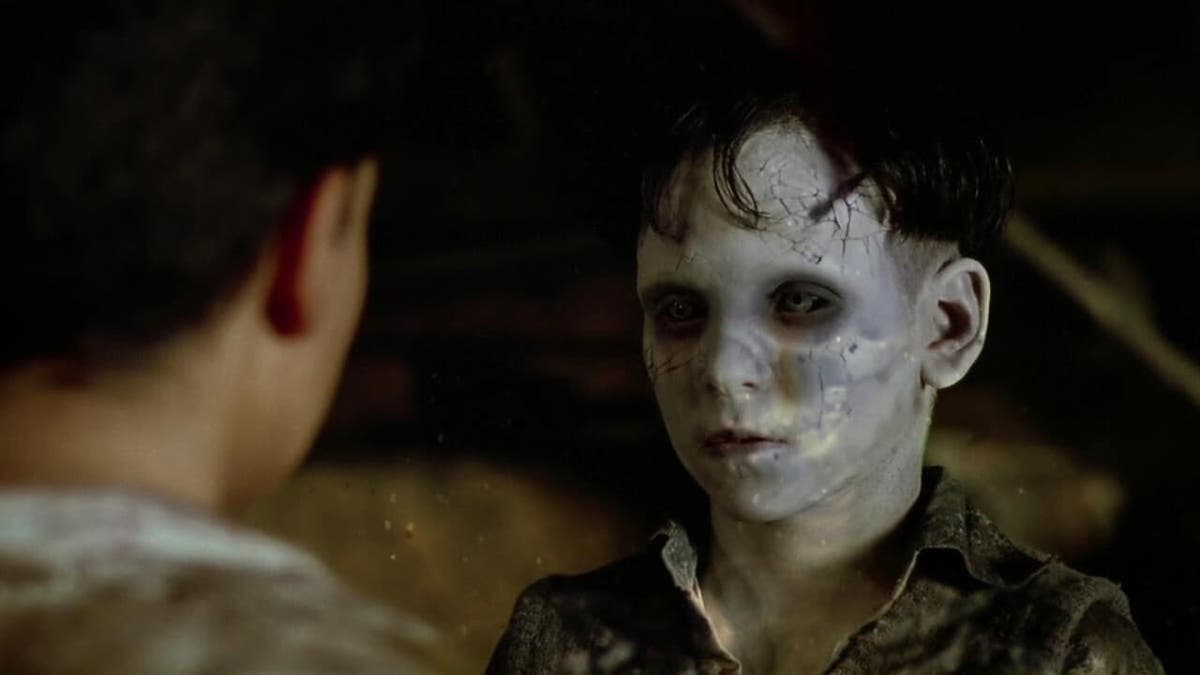
Junio Valverde as Santi in The Devil's Backbone
‘Necropia’ operated for around 10 years, creating Special Effects for many films and productions in Mexico, under the legendary Dick Smith. They produced animatronics, creature design, and all forms of mechanical and prosthetic effects, every inch of it vital to the requirement that awaited in the future film career of Del Toro. Del Toro always had a deeply personal and hands-on relationship with the work. In particular the ‘Cronos’ scarab that was so vital when trying to persuade producers that his idea would work: -
“The details inside the [scarab] machine: I sculpted it, I cast it and I mechanized it. The filter, I cast it, I sculpted and I also mechanized it. Always with the unwavering belief that it was important to speak about the genre in a new way… for me my work with monsters is evangelical. I really believe that they have a spiritual dimension that has the healing power of fairy tales and fables! So, when the movie connects with you, it kind of heals you. Why do I do that? Because that’s how I relate to Horror. The moment Boris Karl crossed the threshold I was healed: Like St Paul on the road to Damascus. I was transfixed.”
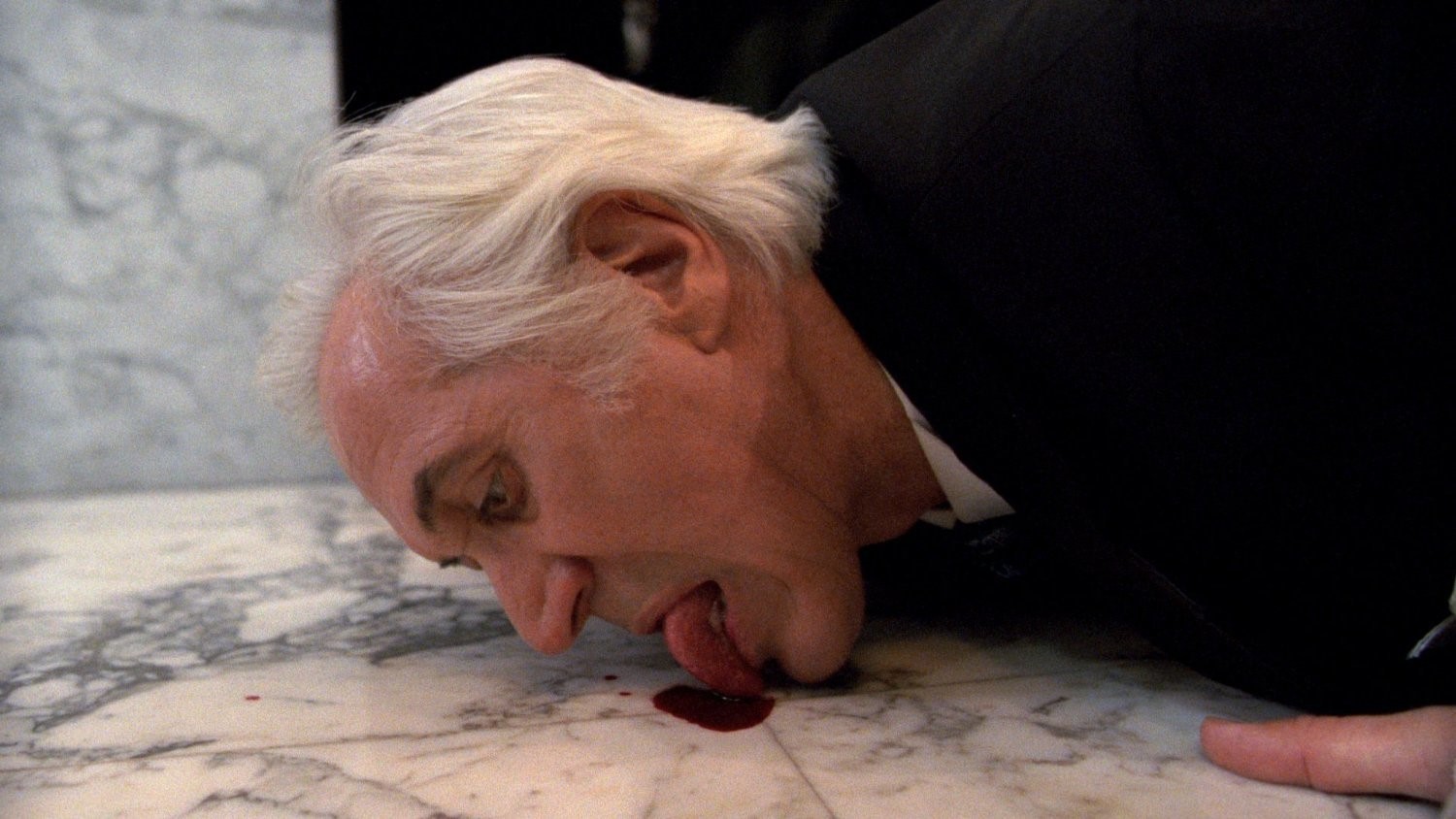
Federico Luppi as Jesús Gris in 'Cronos'
Del Toro's first film ‘Cronos’ has now been meticulously restored to 4K resolution using the original 35mm camera negative under the direct supervision of Del Toro himself: -
“I think you make one song all your life, but you have so many angles and so many ways of rephrasing the same song that it becomes eternal for you. You are born with one song in your heart… one… and then you modulate it and supposedly you perfect it, or you croak! The beautiful thing about CRONOS when I was restoring it and colour-correcting it, is that I realized that [it was] like Hitchcock, he tried things in one film and finally perfected the idea in a later film”.
Del Toro’s ability to infuse visually poetic beauty into his films raises them all above the label of mere horror. They are true epics imbued with a dark Gothic fantasy and rich undertones of Catholicism (which he also sees as being essentially Gothic). These elements merge to celebrate and provide a universe for his string of profoundly sympathetic monsters: from the ‘monster’ in his latest movie Frankenstein, to the earliest mechanical ‘monster’ in ‘Cronos,’ a mysterious scarab-like mechanism that can provide eternal life to those who desire it, but with a horrible price to pay.
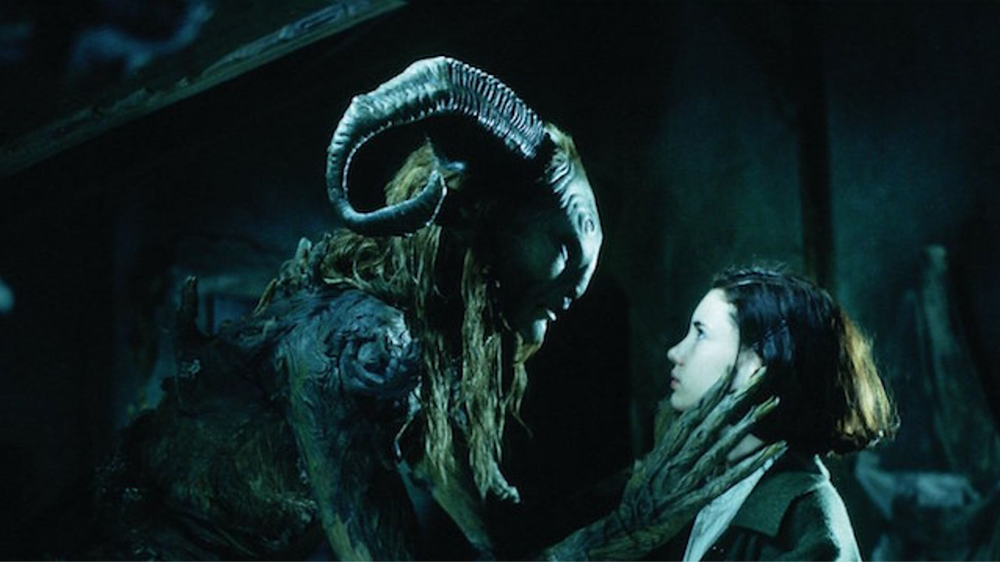
Doug Jones as The Faun and Ivana Baquero as Mercedes in 'Pan's Labyrinth'
Del Toro’s filmography is extensive and covers a very wide range, from more Gothic horrors like ‘The Devil’s Backbone’ (2001) and ‘Pan’s Labyrinth’ (2006) to very different and strikingly original takes on comics like ‘Hellboy’ (2004) and ‘Hellboy II: The Golden Army’ (2008) which were both visually astounding and as always, with the inspired decision to have Ron Perlman as the anti- hero investigator Hellboy, Del Toro’s actor of preference at every opportunity.
In these films, Del Toro took no prisoners, and explored a range of genres, inspired by the mecha genre, popular in Japanese anime, not to mention manga and video games, attributing credit to the legendary artist Hideo Kojima as a powerful influence.
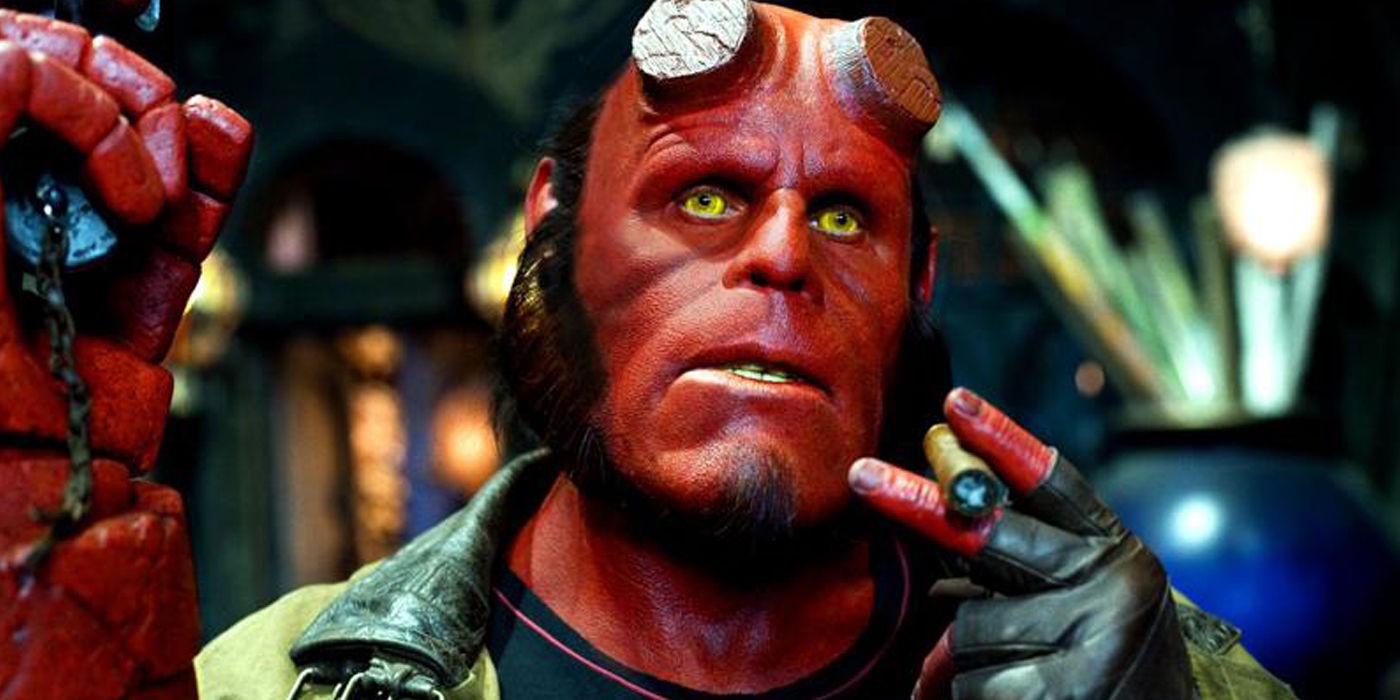
Ron Perlman as Hellboy in 'Hellboy'
At the beginning of May 2026, del Toro was not only awarded the Fellowship but also the extended and beautifully chaired interview at the BFI Southbank by curator Jason Wood:
‘Guillermo del Toro in Conversation’:
The talk was enlightening, profoundly honest and riveting, and, of course, overflowing with Del Toro’s incomparable humour and sharp wit. They discussed his life and his career, focussing on the many challenges he faced. Despite the success of his works, with every new script, Del Toro revealed how he had had a battle on his hands to persuade the producers to allow him to make films ‘his way’. Not an attitude that producers appreciate!
His first encounter with Hollywood, with Sci-fi ‘Mimic’ (1997) was very stressful, although he eventually managed to find a way to work there, despite initially thinking of quitting. But giving up is not in Del Toro’s genes. He went on the create a deeply personal body of work, where, thanks to his own background, the production designs are truly extraordinary. With his favourite Production designer Tamara Feverell and Costume Designer Kate Hawley, Del Toto weaves various worlds as if they were a tapestry of fairy tales and fables mixed with horror, all the while using historical settings that create a flavour all their own.
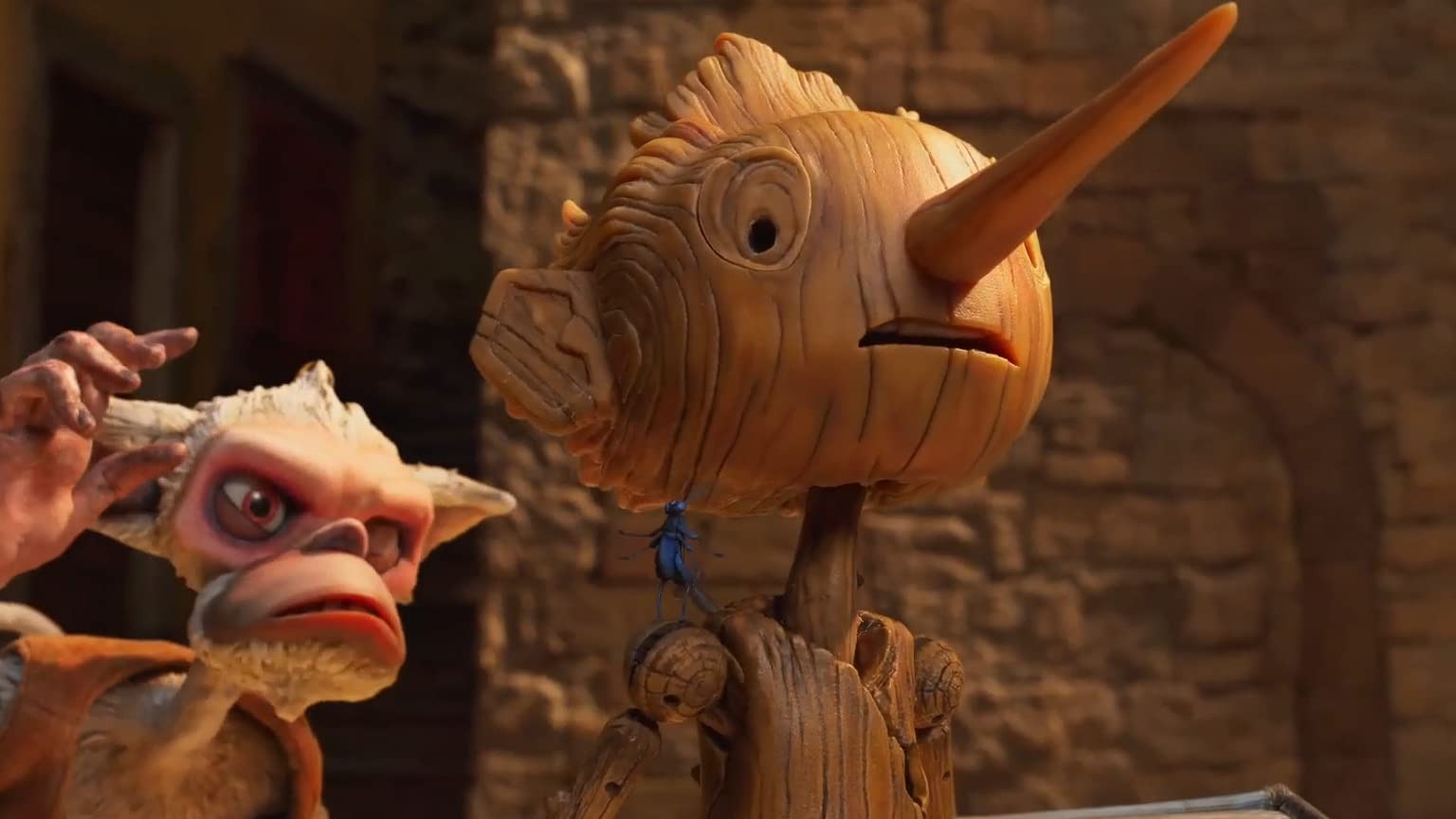
Pinocchio (2022)
In “The Devil’s Backbone’ and ‘Pan’s Labyrinth’, it is the Spanish Civil War bathing every scene with a political undertone. Pinocchio, on the other hand, has a backdrop of Nazism: -
“There are two types of horror repressive and liberating – there is the anarchic horror that goes against all the structure and there is the horror that tells you: be a good boy, don’t have sex with teenagers or the bogie man will get you, which is repressive. Don’t go out at night or go into the forest. Fairy tales are the same, there are those that say: obey your parents and be a good boy, which I hate, and the ones that hate all the Jungian proportions. The anarchic ones go against the Prince, the King… they are political.”
“The things that can make a film unmakeable is the one thing that can make it memorable”
Frankenstein is set in a deeply gothic Victorian worldm while ‘The Shape of Water’ with the superb Sally Hawkins, feels almost contemporary. Del Toro admits to have been also profoundly influenced by writers like Edgar Allen Poe, Bram Stoker, and of course Mary Shelley. He praises Mary Shelly who at the tender age of 18 was able to write a novel of such depth and understanding as Frankenstein. Del Toro admits his life-long love of that story began when he watched James Whales’s 1931 adaptation of ‘Frankenstein’ with Boris Karloff.
Ron Perlman as 'Hellboy' 2019
This points out the importance of the performer. Boris Karloff in the original Frankenstein, Ron Perlman in HellBoy, Jacob Elordi as the monster in the new Frankenstein and then of course, there is Doug Jones who played the Faun as well as the Pale Man in ‘Pan’s Labyrinth’, plus the sympathetic creature in ‘The Shape of Water’: --
“Doug jones has grace. I told him: you have to play the faun and the Pale man? Because the pale man IS the faun. All of the tests of Ophelia are controlled by the faun. The faun also takes the personality of the frog, he takes the personality of the Pale Man but it’s all him, for he’s a trickster- He’s trying to trick Ophelia into obeying him- because this obedience is WILL and WILL is intelligence, and intelligence is intelligence itself and that is what they want to take away- It’s not artificial intelligence, they want to create natural stupidity… they want us to stop thinking! … That creature evolved from one concept to another.
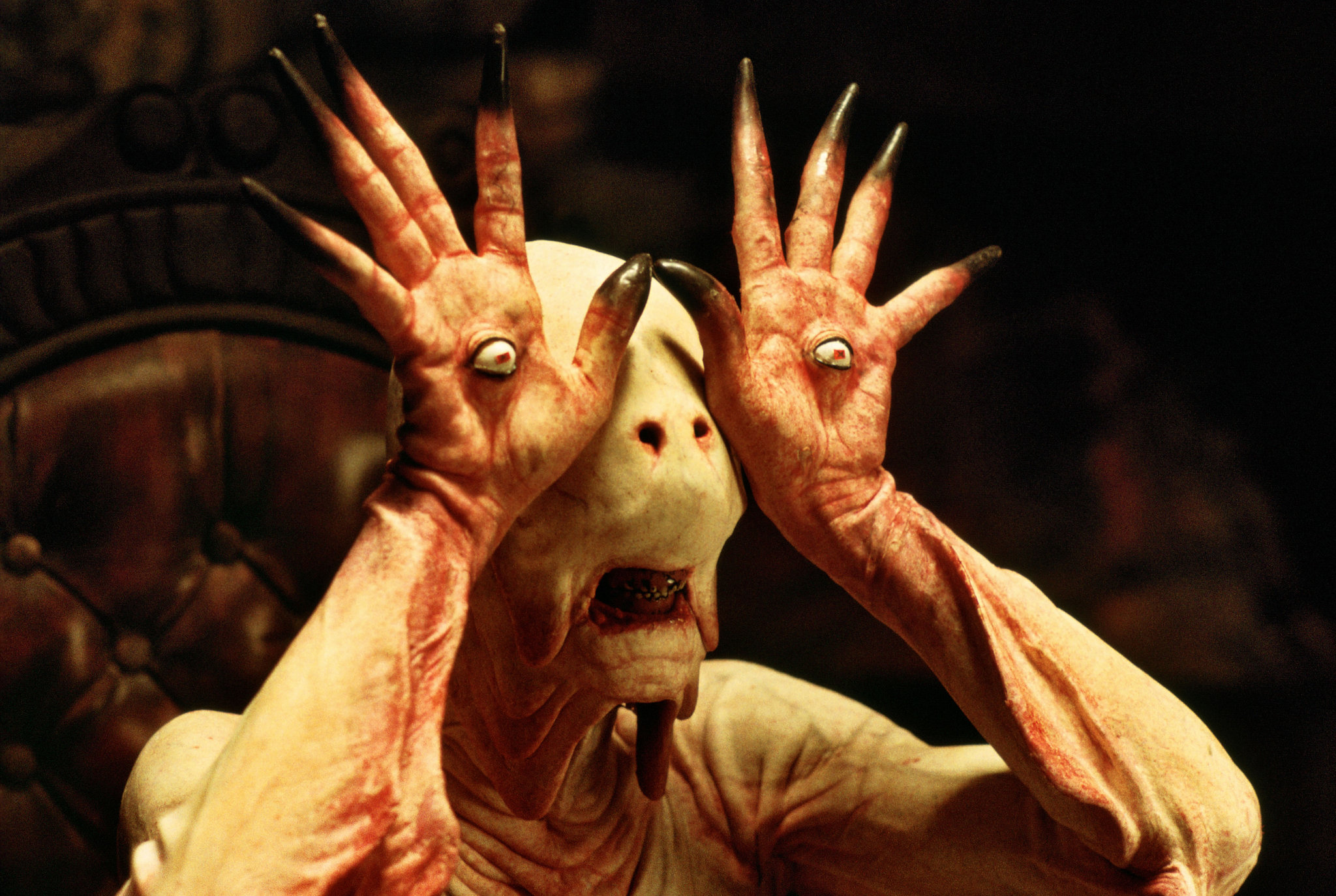
Doug Jones as the Pale Man in Pan's labyrinth
Originally it was to be a wooden…mannequin with drawers and something would come out of each drawer and he had two hands on a blade …I wanted to make it mean something, so it became a church, little by little. Then we made him eternally hungry, but [then] perversely, he has a banquet and does not touch it… he wants to eat the skin of the innocent … so, it became a symbol of something more powerful and we did this skeletal thing with hanging skin – but he had the face of an old man. I saw a photo of a manta ray and I saw the little nostrils and the little mouth, and I thought: ‘That is scariest thing’ – so I said, erase the face on the clay and make it flat … then the stigmata with the eyes…and I remembered a photo of ‘Fantasm’ with the girl screaming and you could see the eyes through the ‘Fantasm’.
The audience at the BFI for ‘Guillermo del Toro in Conversation’ were hugely enthusiastic and fascinated by this eminently articulate and creative film maker. As the talk progressed Del Toro got more philosophical, discussing archetypes and repeating a phrase that says it all: -
“Never fear the dad, fear the living, for they are the real danger.”
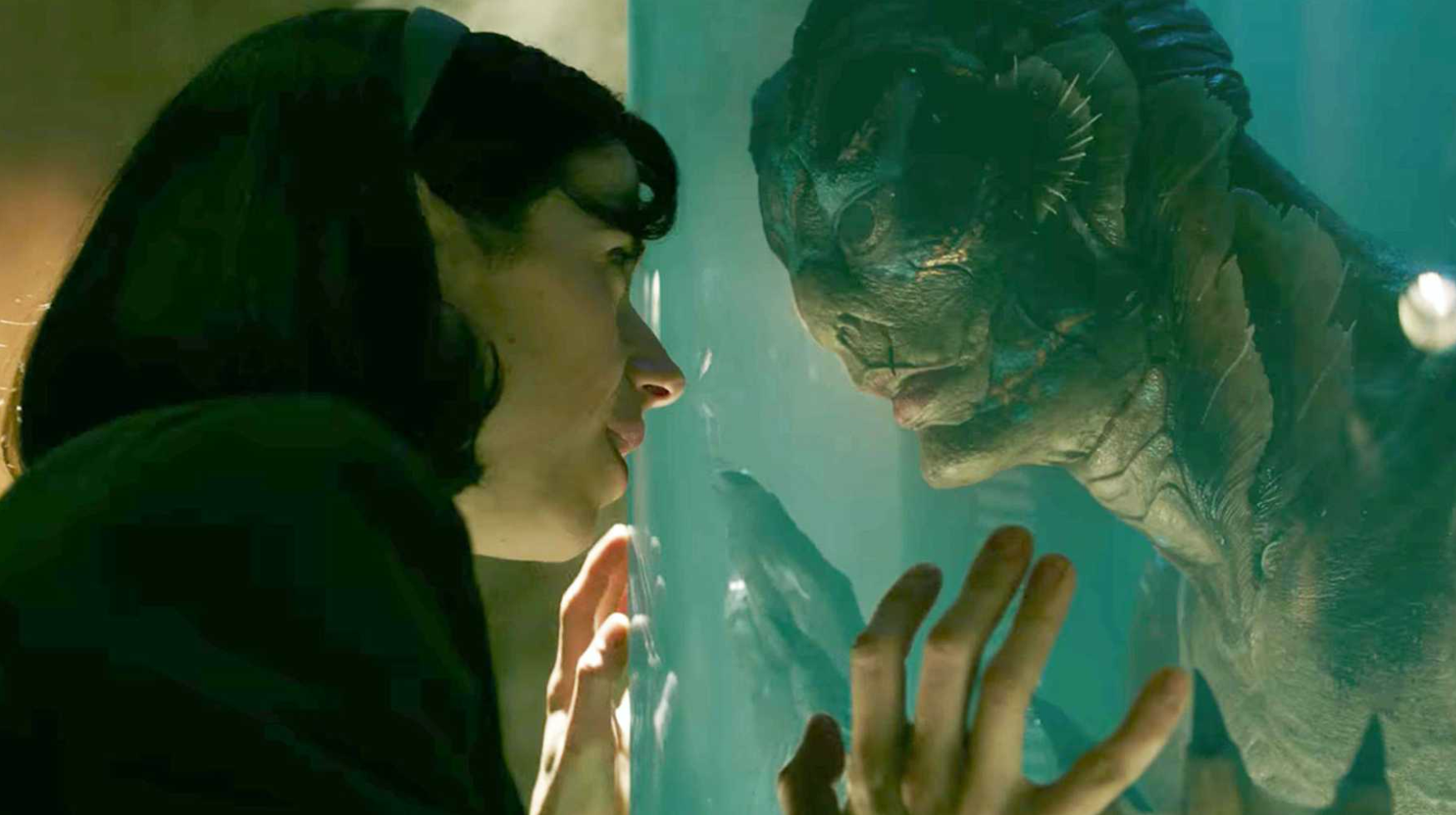
Sally Hawkins and Doug Jones in the Shape of Water (2017)
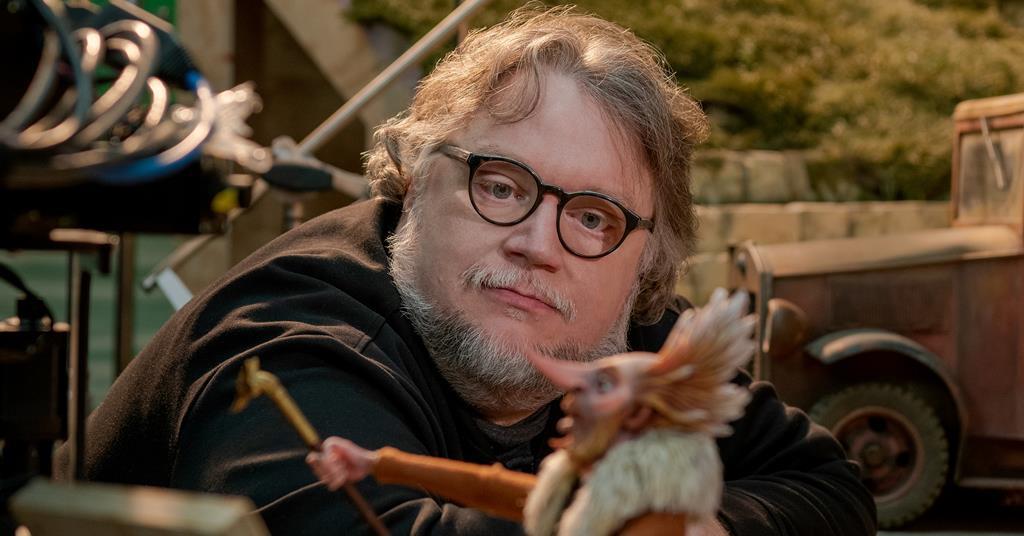
His new film, adapted from the book by Kazuo Ishiguro, called “The Buried Giant” is being made in stop-frame animation like Pinocchio. Del Toro believes it is a particularly fine technique for film making despite it being the very slowest of all!
“For me the perfect way is to do this fascinatingly difficult stop-frame movie for adults. A fairy tale for adults, which is ‘The Buried Giant’, by Kazuo Ishiguro. It’s being done without any concessions to a family audience. It’s being done as a movie that is in stop- motion for one reason, the same reason that Pinocchio was in stop-motion, because if you do a live action Pinocchio and all of a sudden, a puppet walks through, it’s uncanny and a horrible thing that doesn’t belong in the same world. If you do a live action movie about an old couple that is crossing a landscape full of trolls and fairies then it is a special effects anachronism. I wanted all the creatures to be of the same material and it’s going to take us years…and it’s incredibly difficult and it’s being done because I believe in stop-motion as one of the highest art forms on film.”
So, nothing changes. Despite claiming that we should enshrine imperfection and our defects until, by some miracle, we get it right, Del Toro also realizes that the real challenge is to manage to get the film done at all. In this he is humble, as he also was on receiving his BFI Fellowship award:
“This is the honour of a lifetime and a thrilling moment in a storyteller’s life: to join a rarefied pantheon and to be recognized by the BFI. I have been greatly influenced by British film and have enjoyed a long and fruitful collaboration with great talent on both sides of the camera going back decades. I thank everyone at the BFI for this great distinction. I will endeavour myself to work hard to prove myself worthy of their faith in me.”
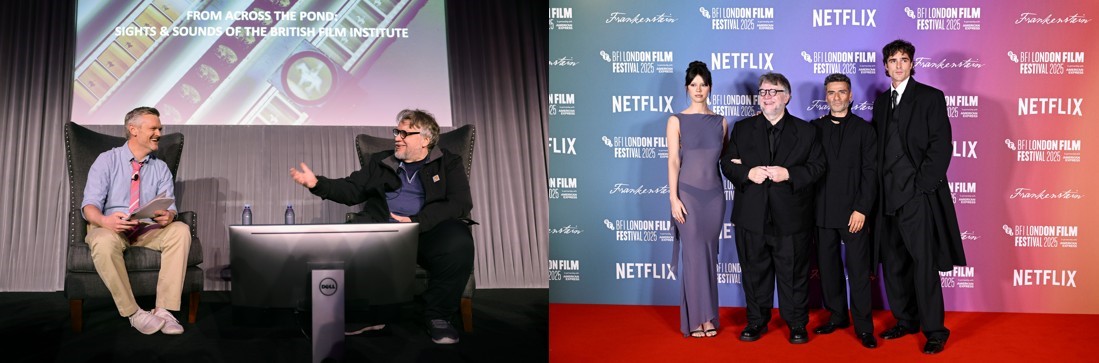
The BFI Fellowship accolade is accompanied by a season at the BFI Southbank of Del Toro’s films throughout May, as well as the screening of a number of films by directors he considers as important influences in his life and work. These include productions by The Archers, the production company of Michael Powell and Emeric Pressburger who together produced a string of powerful films like ‘Black Narcissus (1947) and The Red Shoes (1958).
Del Toro freely admits the latter influenced his film ‘The Shape of Water’. These screenings also include other favourites that Del Toro became acquainted with when he worked as a projectionist, in Mexico: by Alfred Hitchcock, or Thorold Dickinson’s famous ‘Gaslight’ (1940), even some animation, such as Martin Rosen’s ‘Watership Down’ (1978). The BFI player is also offering an exclusive subscription collection of 13 classics: Guillermo del Toro selects: that include ‘Nosferatu’(1922), ‘La Belle et le Bête’(1946) and ‘Memories of Murder’ (2003).
GUILLERMO DEL TORO is at the BFI throughout the month of May 2026 with a comprehensive season of his works and the opportunity to see his astounding debut film CRONOS after its magnificent restoration.
Quotes are from “ Guillermo del Toro in Conversation” at the BFI with Jason Wood. (https://www.tiktok.com/@britishfilminstitute/video/7637612373347454230)