
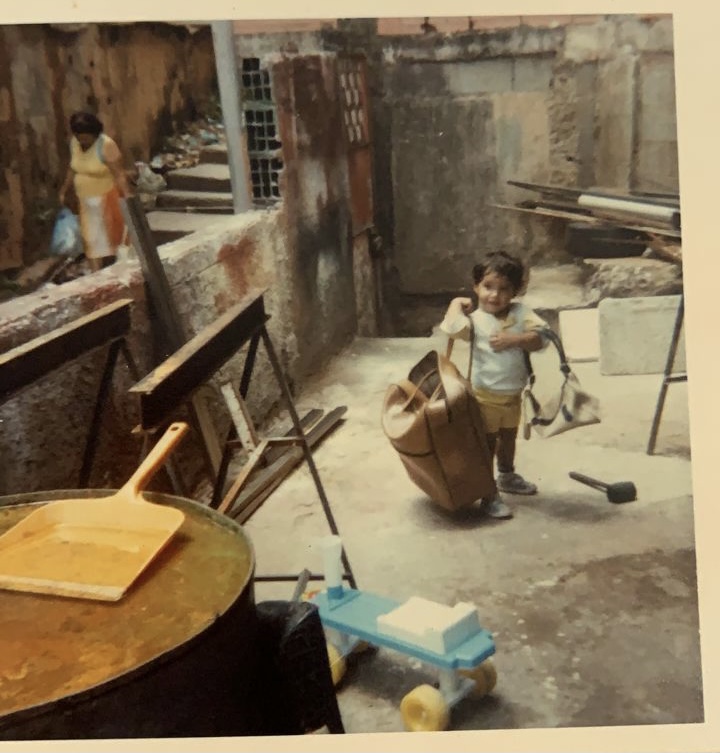
Perched on a chair, sunlight shining on her flawless blow-out and impeccable white suit as we sit outside and enjoy the warm weather, you would never guess that Jemelin was ever anything other than a confidence-oozing suited and booted businesswoman. But the Venezuelan mentor and influencer wasn’t always the bold, glamorous woman in front of me now. Her story begins in the small beach town of Puerto La Cruz, on the Caribbean. She was a shy kid with two little sisters to look after, bullied in the playground, and secretly dealing with an abusive stepfather.
“I think that was the beginning of my spark. It came from hiding, in a way,” she reflects. “My mum left my dad and we went to live with her and my stepdad. I had really horrible stepsisters, like really really terrible. They hated me and would be so mean. I just kind of hid away. We didn't have phones or computers but I remember there were these books around, grown-up books, some of them were about entrepreneurship or, you know, mindset. I was about nine or ten and remember reading them because I was hiding for such a long time. That's when I started seeing how my mom works. My mom is really, really hard working.”
Jemelin’s mother provided for her family, while Jemelín took on the household chores.
“She used to say to me, it doesn't matter what you choose to do, even if it's cleaning the streets, make sure you are the best street cleaner. So, I think a combination of reading books, having a mom that is super ambitious and hard working, who never puts limitations on me, really helped.”
 |  |
At seventeen, Jemelin’s mother supported Jemelin’s move to the UK, where several of her friends, and her then-boyfriend, lived at the time.
“I think my mom at the time was kind of like, you know, Jem’s lived a very adult life. My mom had to work, so I looked after my sisters and my stepdad. I was cooking, cleaning, doing everything, plus I was dealing with a stepdad who was abusive. Not that I told my mom, but she knew that it was difficult. So I think it was her way of saying, ‘you know what, you've done enough. Go to London for a year.’”
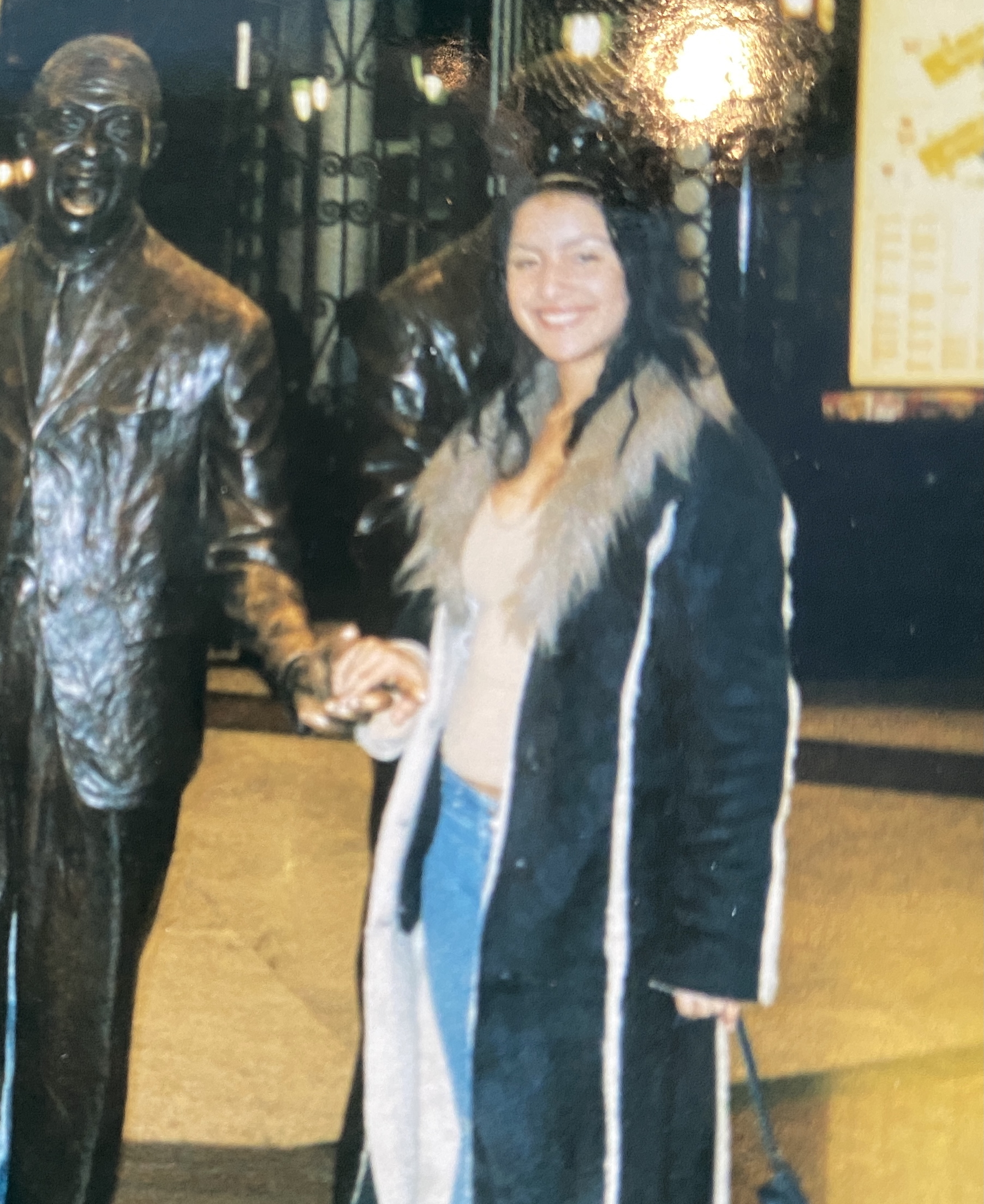
Jemelin arrived in London in September 2002 with a plan to learn English, and return to Venezuela, and £800 for the whole year.
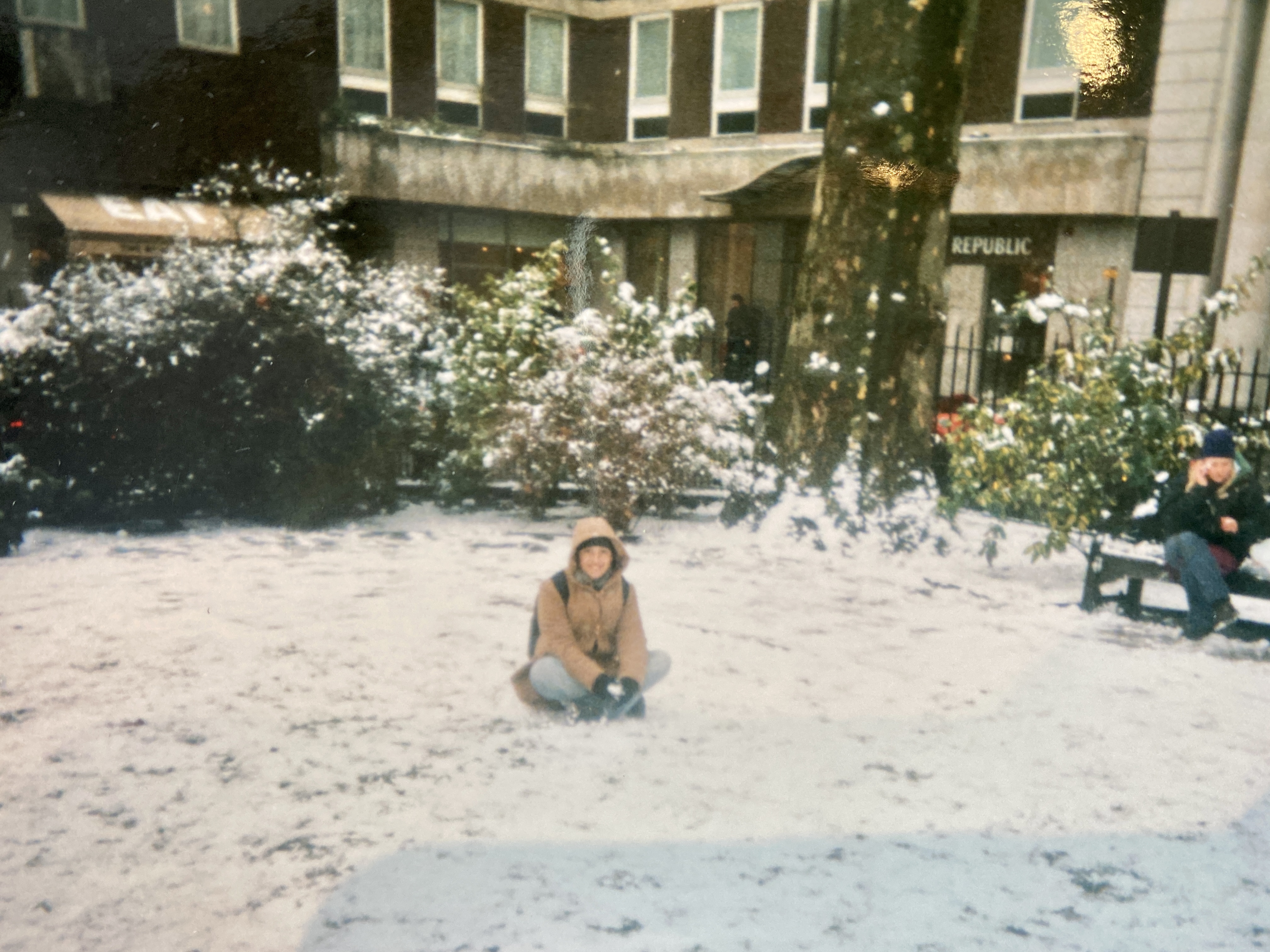
“I remember being cold, and I spent some silly money, like maybe £300 bucks on a beautiful fake fur jacket.”
And so to work, to support herself while studying, first as a flyerer for the language school she studied at.
“That was so bad. It was freezing. And they caught me throwing the flyers in the bin!” She laughs.
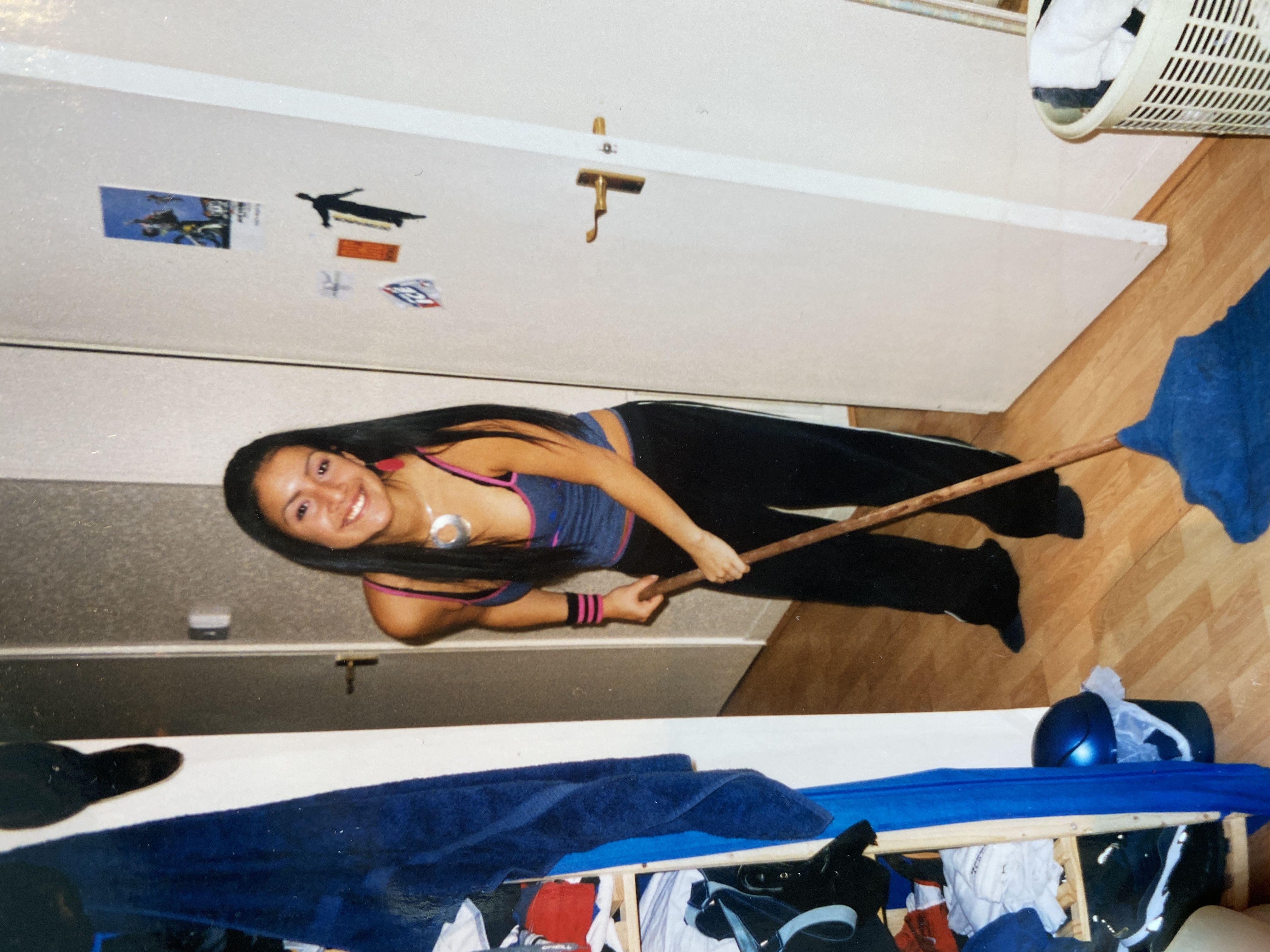
After that, a stint as a cleaner in a restaurant.
“I was making £500 a month working full time, but because it was in the warm I didn't even care. I listened to my headphones and danced salsa while I was working.”
The brief period of relative stability came to an end when she discovered her then-boyfriend was cheating on her. She had nowhere to go but she had to move out.
“I had no money, I didn't even have a phone. And I remember one day I started crying in the street before I looked up and there was this building there, and I saw all these people start coming out of the building with briefcases. And I thought ‘one day, I'm going to be like them. I'm going to have an amazing career, and I'm going to make it. I don't know what I'm gonna do, but I'm gonna make it work.’”
 |  |
From that moment on Jemelin decided she wasn’t going back to Venezuela. She was determined to do things on her own.
“I did not want to go back to live with my stepdad. I think that was probably the biggest factor, because I'd been suffering abuse from him since I was nine years old. So it was like, you know, this is hell, but that is a worse hell,” Jemelin tells me. For her, there was no option. “I just thought, no, I'm not going to go back to Venezuela. So, I decided to carry on fighting. And that was kind of like the moment where my life just took a whole different turn.”
That day Jemelin searched for pounds on the street so she could go on the bus and avoid the cold. She scrounged food from a place called Benjy’s that used to throw away food.
“I used to dance every single night at a club called Havana where you could get in for free before 9pm. I would get invited to after parties and wash up in strangers’ bathrooms.”
It was only after a motorcycle accident left her hospitalised for a night, that she realised she needed to change something.
“I don’t remember anything, only that I woke up in hospital thinking, oh my god this is amazing, I'm in a warm bed. I hope I broke something so I can stay here until I can figure things out. When the doctor came in he said, ‘This is a miracle. You rolled over 20 times apparently and you flew and you hit your head on the pavement. You have nothing broken, just a few scratches. You're so lucky to be alive.’
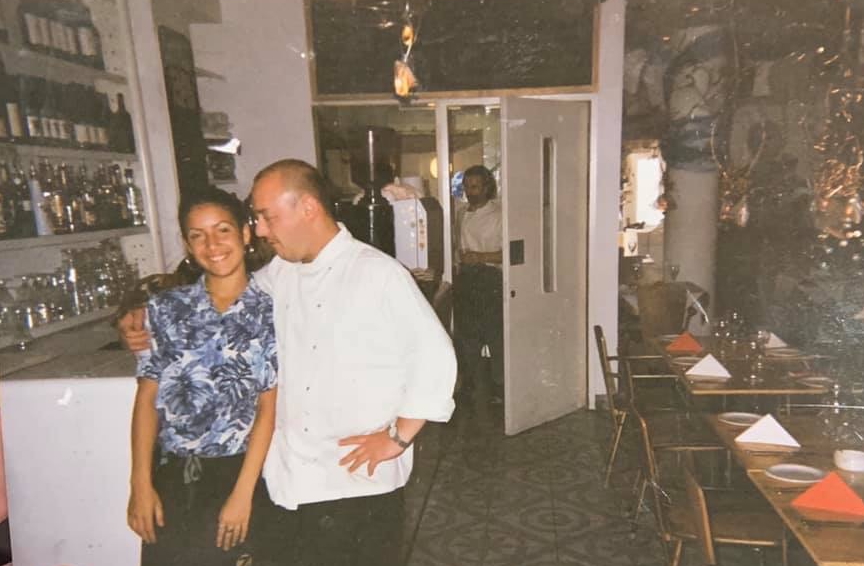
That near-scrape with death gave Jemelin a new sense of focus to seize every moment. After recovering, Jemelin began working as a waitress, and found a permanent place to stay. Eventually, she was promoted to head waitress. But she still wasn’t satisfied. So, she decided to become a beautician.
“Ever since I was a little girl, I did my mom's makeup and hair. Everybody used to come to me. So, I was like, why don't I just become a beauty therapist? They make good money and that could help me with my English.”
She studied at Croydon College for two years, and landed her first job, despite not having enough experience on paper.
“My thought process has always been, ‘Never say I can't do it. Say you can and then along the way, work it out.’ And that's got me to where I am today. I've been in places where they ask, ‘Can you present?’ Yes. I have no idea. I have no clue, but yes. But inside me, I'm like, I have no idea, but I'm going to work it out. But you also have to be disciplined. You can't say, ‘Oh yeah, I can do this,’ but then not actually apply yourself.’”
“We live in an era where everybody wants to half-ass it. And unfortunately, that attitude usually gets you nowhere. I've always gone the extra mile. I've always become indispensable.”
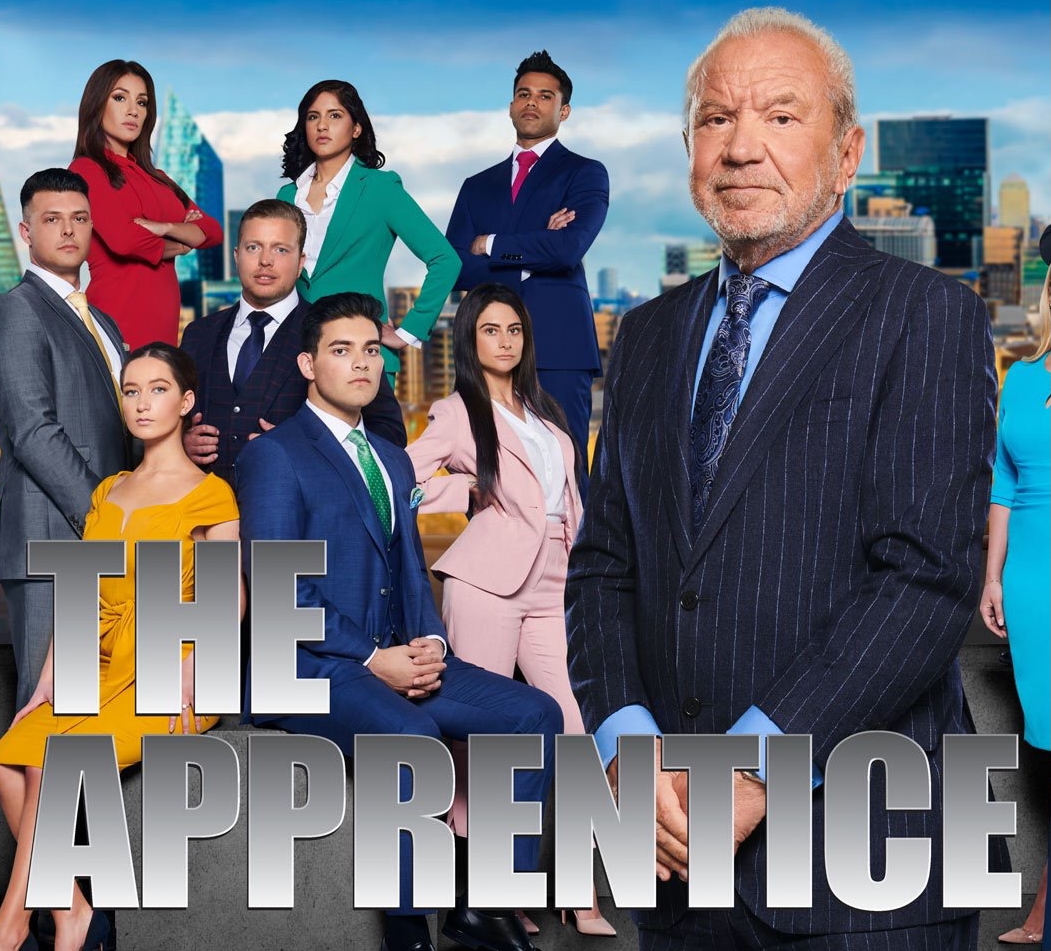
She takes a pause to sip her drink and, smiling, admits she has been fired two times. Once from a restaurant, “which was fair, because I was partying too much”. And once from The Apprentice. She laughs, “Which is not too bad because it’s a big job.”
Even after becoming a successful beauty therapist, working in a high-end salon frequented by clients like Kate Moss, Jemelín wanted more. A chance encounter introduced her to the world of lead generation.
“Somebody who used to come in to get massages said to me, ‘Jem, you have such a nice, bright personality. You should do events. You should be a presenter.’
“As soon as she said that, I was like, ‘What, you get paid to talk?’ And then she's like, ‘Yeah.’
“I'm like, ‘Oh my God, this is brilliant. This is my dream job.’”
Travelling around trade shows and exhibitions, using her language skills, was a dream come true. Jemelin went to New York, Barcelona, Amsterdam. She helped a company close a multimillion-dollar deal with BT. In an industry known for its volatility, she was fully booked for an entire year. After her pregnancy, however, things slowed down and Jemelin went into a deep depression.
“It was tough. I wasn't getting much work because, in this environment, you have to be in it all the time. My son was about six. I was just at home, on Jobseeker’s Allowance and thinking, what is gonna happen with my life? That was my lowest point. I thought about suicide a lot. I used to take a lot of sleeping pills. And I remember my son coming one day and said, ‘Mommy, what is wrong with you? Why are you sad all the time?’ And I was like, oh my God, this is gonna affect him. I'm gonna mess up my son. I need to get my shit together.”
Determined to make a change, Jemelin opened up her laptop and saw an ad for the Apprentice. “I used to watch The Apprentice all the time. I was obsessed with The Apprentice.”
Jemelin applied, pitching an app connecting trade show exhibitors directly with lead generators. She got the call for the interview and was instructed to wear a suit.
“I didn't even have a suit. But got someone to lend me a blazer.’”
As she walked towards the building on Tottenham Court Road for her interview, Jemelin realised it was the same place that had inspired her to become a businesswoman while homeless years earlier.
“I could see my eighteen year old self in that corner, crying, looking at people in that same building coming out with suits and me saying, ‘That's gonna be me one day and my life is gonna change.’ So that's when I knew, this is it. This is my destiny.”
 |  |
Even though The Apprentice opened huge doors for her, including more international travel and public recognition, Jemelin's mental health struggles lingered in the background.
“Deep down, I hadn't dealt with my depression. It was just go, go, go,” she says. “When I left The Apprentice, I was like, I'm not okay. Because I can't constantly be thinking I want to die when I have a beautiful son and everything to live for. So I got help.”
“I think when you're going through depression, you don't want to burden people with your problems. But if people only knew how much easier it gets once you speak about it - oh my God. If you don't want to bother your friends and family, call Samaritans, call somebody. Find counselling. There is so much help out there. But it really helps to speak.”
After seeking help, things looked up again. The Apprentice brought a new world of opportunities.
“I was on a high. My story had gone in the papers, and I was being called to speak in universities, go to movie premieres. I had an investor for my app. He was ready to give me £275,000 for 30% of the company. I had brand deals. I was getting paid four and a half thousand from one, another five thousand from another per month.”
And then the pandemic happened. Trade exhibitions stopped. It was back to zero. She went back to waitressing, in her partner’s bar, with depression looming again.
“I was angry with the world. I was angry with the universe. I felt cheated.”
Still, Jemelin decided to try selling marketing courses online, and found that people would actually pay for her expertise. She reinvested the money into developing her skills, paying for a mentor and working with coaches to build her own business. Then, the idea for her next app struck, after she saw people cloning themselves with AI, spotting a gap in the market.
“I figured that so many business owners get caught up creating content when they just want to do their work.” she says. “They want to be visible, to grow the business without having to got bogged down creating content. They never signed up to create content. And if I can build an app where you can just upload a selfie, and let the app do the rest? So then I built Twinora, which is my new baby.”
After six months of working on the app, Jemelin’s ready to launch. “We've got global distribution forecasts and we want to reach people in rural areas,” she says, explaining how she plans to share her success with people like her, by training young women and survivors of abuse as virtual assistants. She’s already hired her first employee from the Philippines.
What would Jemelin do with all the free time she has if an AI clone did all her content? Acting, of course. Something she’s dabbled in for the last twenty years, outside of all her other accomplishments. If resilience and confidence are things you build through struggle, hard work and hustle, then it’s no surprise that Jemelín Artigas has those things in spades.
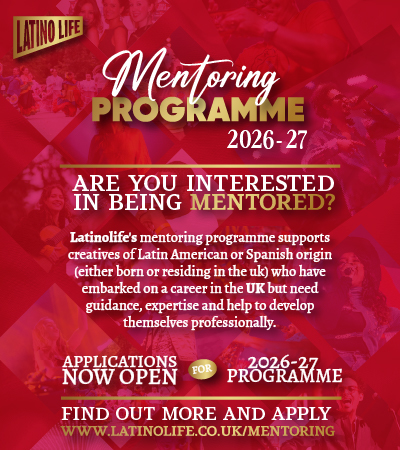
Jemelin launches her App on SundayJune 7th @jemelinartigas and will be presenting LatinoLife in the Park on 19th July in Walpole Park, London W5 www.latinolifeinthepark.com