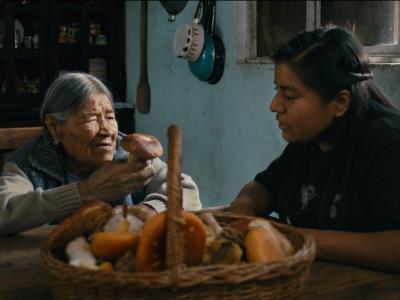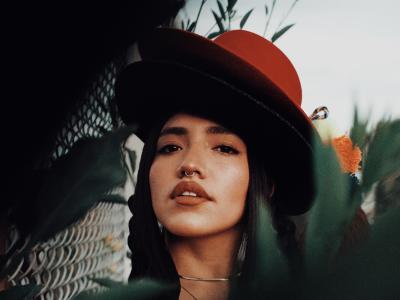
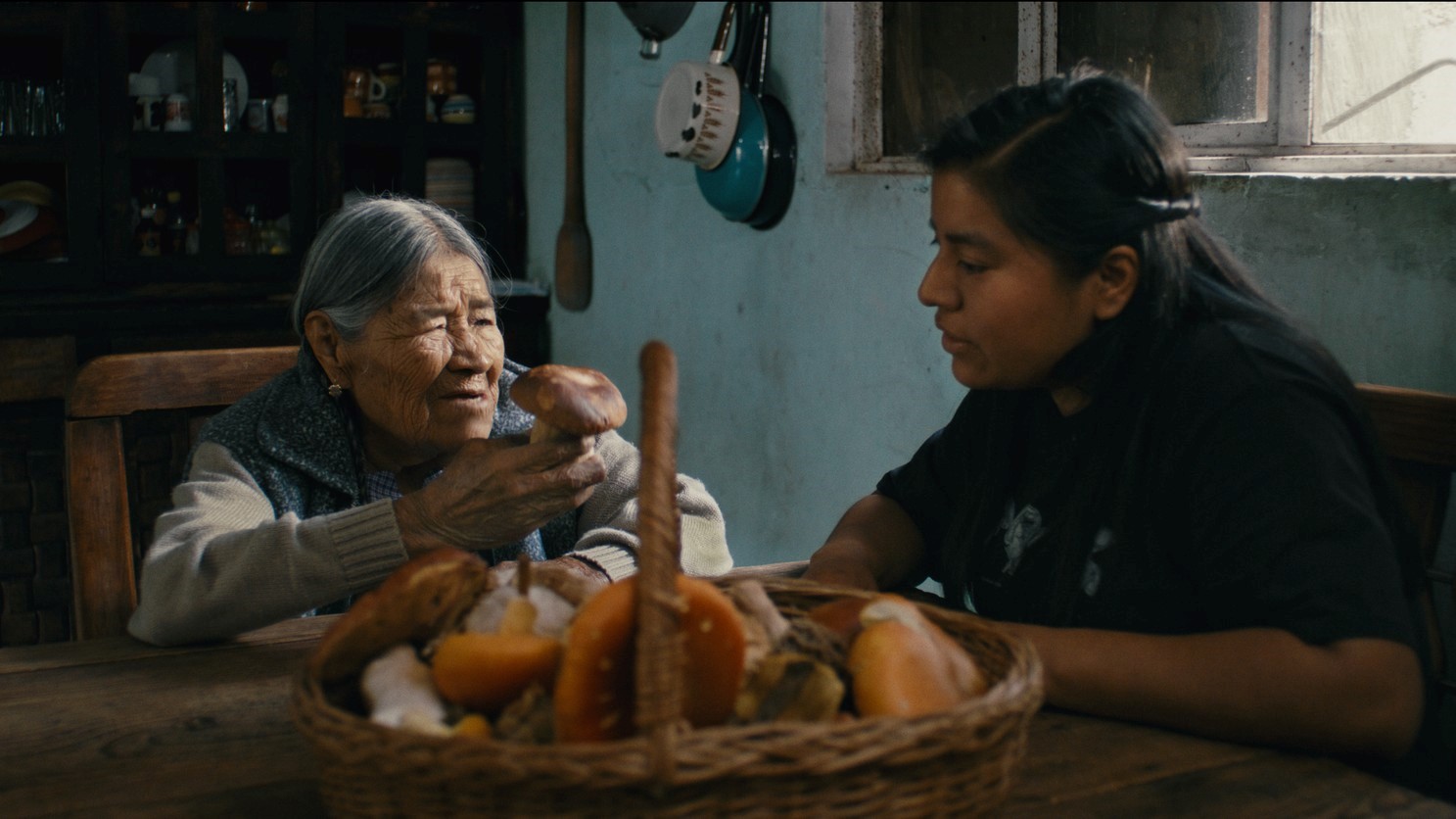
Eliseete (Lis) and her grandmother Doña Julia
Seeking to protect their forests and in particular its rich diversity of mushroom species, two indigenous mycologists in Mexico, (fungi specialists), Julieta Serafina Amaya and Eliseete Ramírez Carbajal, seek out the lore before it is lost. The Mazatecs of Oaxaca, including the Zapotecs give great importance to mushrooms in particular the hongos sagrados or holy mushrooms. They are both trying to save as much ancient knowledge from the local communities as is possible before it is lost forever.
Eliseete seeks advice from her Zapotec grandmother Abuela Doña Julia, and is keen to record as much of her immense knowledge as possible and write it all up for future generations in a book. Examining an ample array of astonishingly colourful and strangely shaped mushrooms, these mycologists are profoundly aware of the precarious existence of these fungi.
These mushrooms are intimately woven into the most important ecosystem of the forest: the mycelium. This acts like the mother board of an internet system in the forest, that allows plants to communicate between themselves. The mushrooms need the mycelium to get their nutrients. Visually it resembles a woolly fabric where the mycorrhizae can develop. Without the mycelium, there would be no fungi at all. The fungi and the plants have an intrinsic symbiotic existence, unable to survive apart.
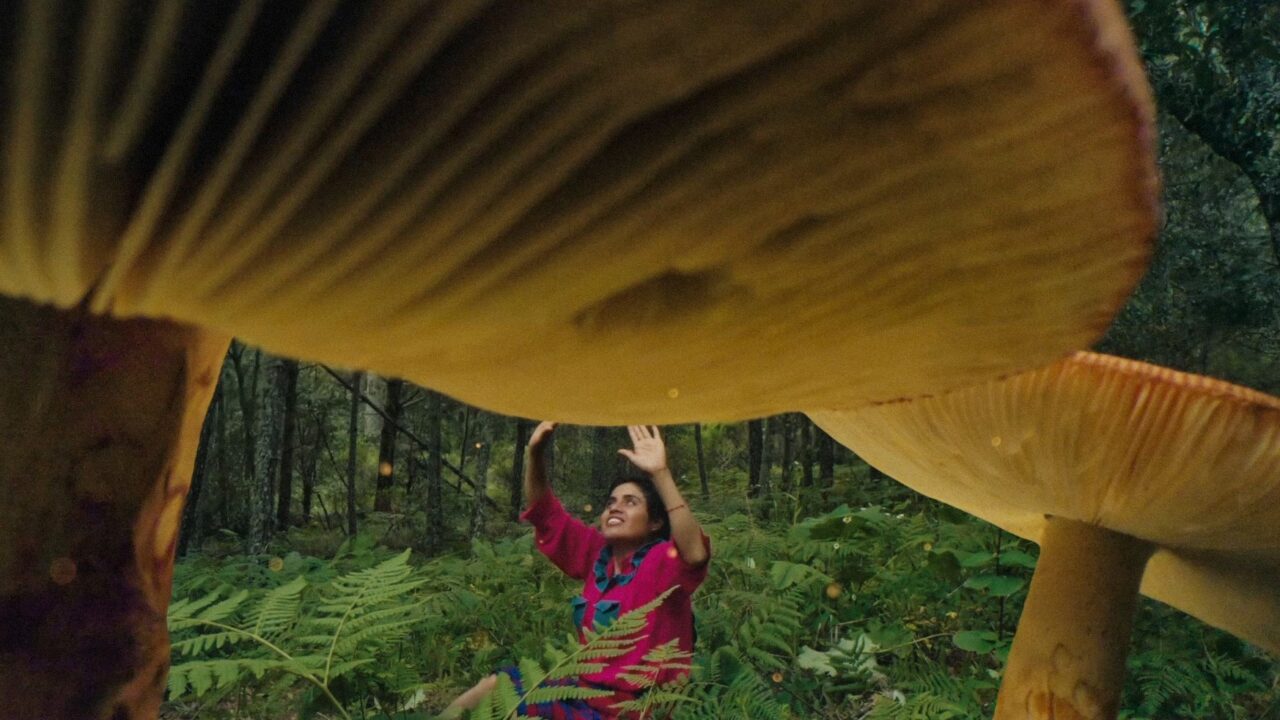
Martín Boege, the director of photography, has managed to film some intimate close-up shots of growing fungi penetrating the mycelium with stunning shots that almost conjure up the damp smell of the forest floor, with its rotting leaves and particles under which many fungi hide. With slightly psychedelic like images, the camera- penetrate the inner life of the fungi on the forest floor, giving the viewer a feel of the environment where this plant life grows, spreading millions of spores that are caught in the rays of the sun with every breeze. There is the slightly disturbing whispered voices of the fungi themselves: -
“Asleep we fell onto this immense rock, the lightening woke us up, sky moves particles of microbes as structures unit in the forest transforming death into life”
They say that you do not find the mushrooms, they find you. You can also talk to them and ask them to help you find them.
Old Doña Julia is one of the last Zapotec speakers left alive, she believes she is the only one. In her language there are names for every single mushroom and a clear understanding of their qualities. She carefully explains how when you pick the mushrooms you must gently tap it, to release the spores which must be left behind, also use a loosely woven basket that will allow even more spores to filter out as you move through the forest.
Julieta on the other hand gets information and help from her mother Zenaida. In groups they constantly search the forest for the fungi being careful not to step on them as they are concealed in the undergrowth.
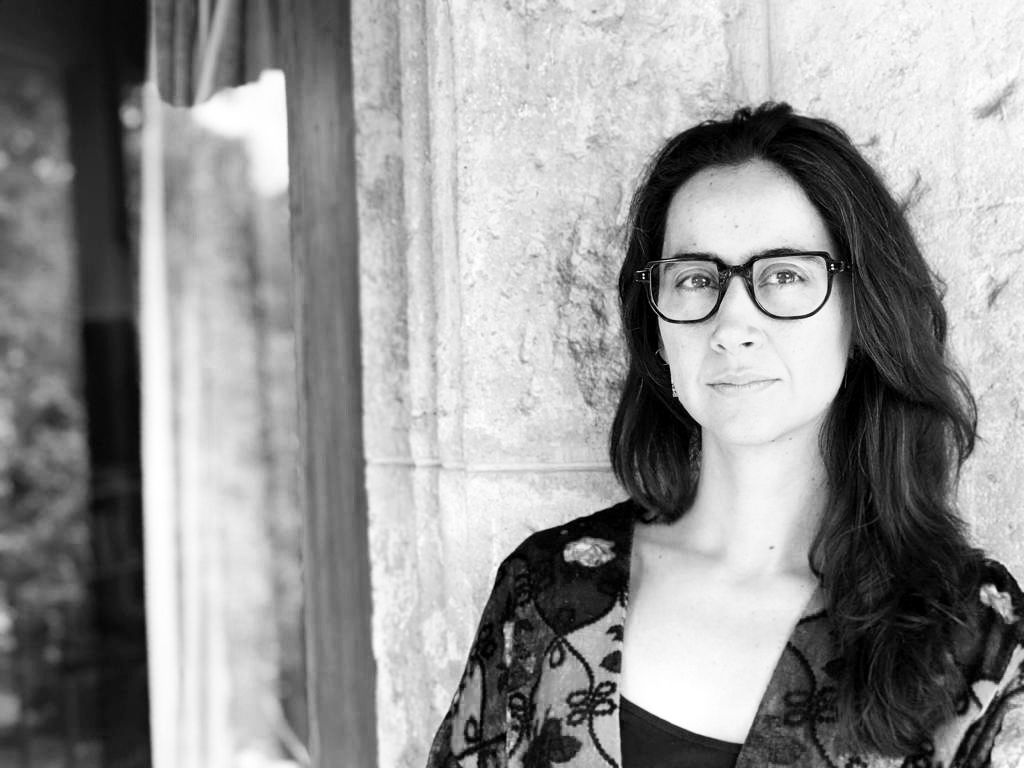
Otilia Portillo Padua, Director
Mexican film director and producer Otilia Portillo Padua, studied architecture at Cambridge University and then at the Architectural association hence her interest in the structure of things. Her works include ‘Three Voices’ and ‘Birders’ a short film for Netflix. ‘Daughters of the Forest’ won the First Look Prize at Hot Docs Forum and has had support from the Sundance- Sandbox, the Redford Center and the Doc Society Climate Fund.
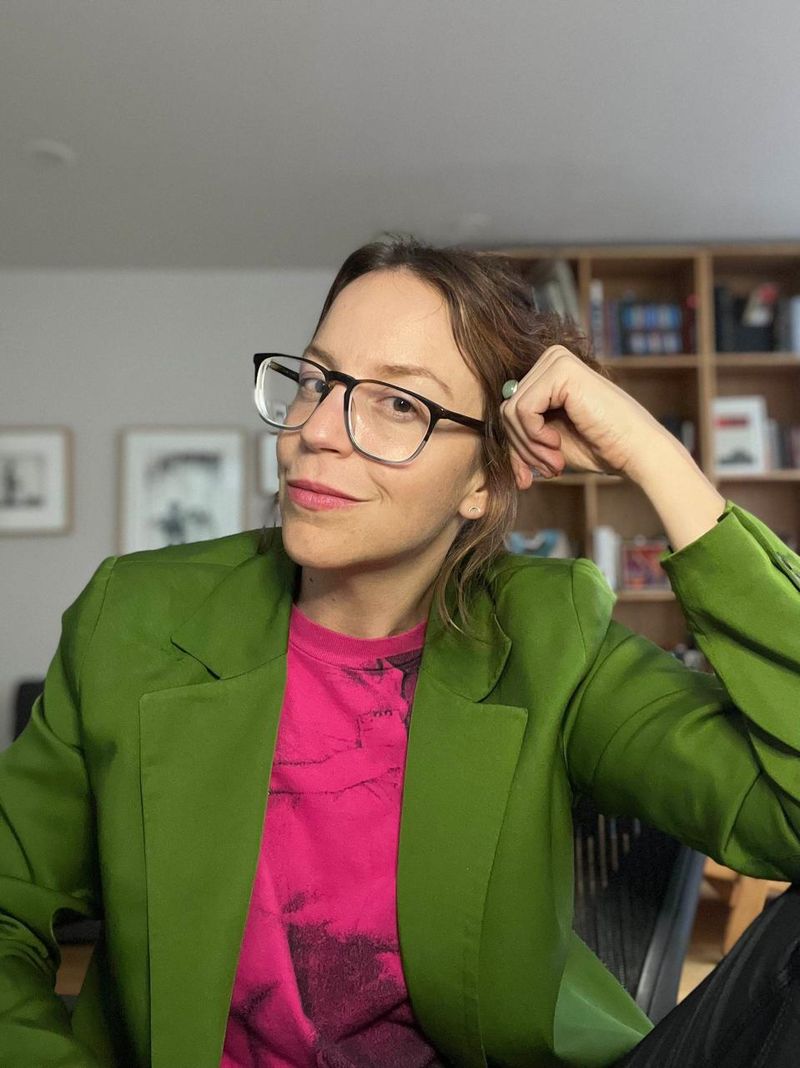
Elena Fortes, Producer.
The two main producers on the film, with Otilia are also well-known producers with a number of films under their belt. Paula Arroio’s from Oscura Producciones, with her award-winning ‘Nomads’ (2020) and Elena Fortes’ ‘A Cop Movie’ 2021 (d. Alonso Ruizpalacios) which won the Silver Bear for outstanding contribution to editing (Netflix).
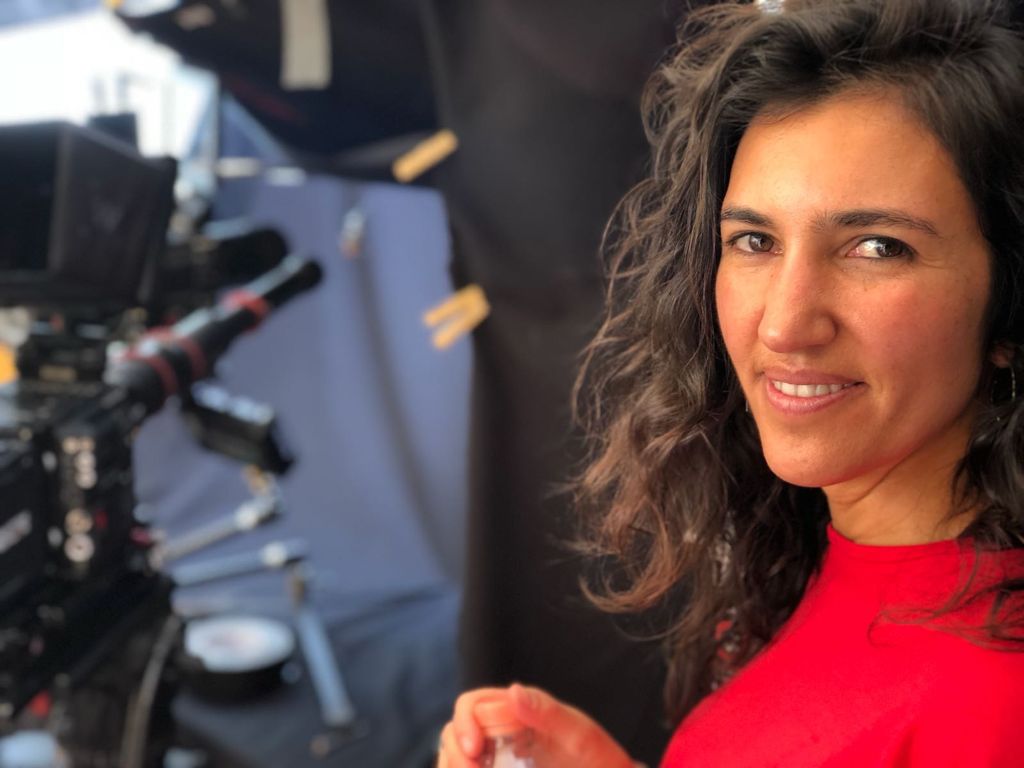
Paula Arroio, Producer
Between 2005 and 2016, Elena also served as the director of Ambulante, a non-profit organization and travelling film festival that she co-founded with Gaël García Bernal, Diego Luna, and Pablo Cruz to support documentary film culture in Mexico.
In this film, we see the ‘daughters of the forest’ learning how to prepare the mushrooms into what appear to be a delicious stew. Some are ground into a sauce and then they are combined and enclosed in corn husks to be steamed. ‘Loco’ mushrooms are the toxic varieties, but old Doña Julia emphasises that even loco mushrooms can be eaten, if you know how to prepare them properly.
Eliseete (called Lis) has already written one book about the mushrooms. She is particularly keen that the ancient knowledge is not lost, though they are all aware of a battle on their hands, to not only protect that knowledge, but also the mushrooms themselves, as they are more fragile that many realize. Some are so susceptible to noise that they can die from shock.
Julieta: - “Do you see this tissue?... this mushroom need silence and solitude. Noises make it scared and it goes away.”
This is not so strange while illegal loggers haunt the National Forest Reserves with their noisy chain saws with impunity, their activities totally ignored by the local authorities. When they’re around, the mushroom collectors hide as their lives could be in danger.
Julieta and Lis both study when they can. Lis is determined to get her MA in Mycology and works very hard. Julieta focuses on her study of holy mushrooms, also seeking to take some herself as she says: - “The holy mushroom is medicinal and, in the community, people take it for some diseases and the say it can help to see the future… it is like consuming a saint…Behind every mushroom there is a story. When a person from the community begins to learn, going back to the traditional knowledge, they are no longer the same person.”
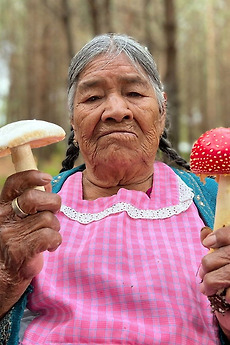
These holy mushrooms are known to have powerful hallucinogenic qualities when taken, as they contain psilocybin. There is a long history of shamanic use in many Mesoamerican cultures, for healing, spiritual and even divination purposes and are the same as those known universally as psychedelic or magic mushrooms. Julieta is very intrigued by them as her father took some 10 years earlier and it enabled him to see that he was going to die. She is determined to have the experience of seeing into the future herself and eventually does with the help of Doña Ana, a healer and guide, who works with mushrooms.
“The mushroom spoke to me about my family. Where is your son? Without him you cannot go on. Everything is possible- work together to achieve it- it opened many paths for me that shall I do in the future.”
At the same time, the gentle, intimate photography fills the screens as it penetrates the surface of the damp undergrowth land to discover the universe below, coupled with impressive shots of spores spreading through the air and the environment. The visuals bring the ever-present message of the importance of protecting the forests and the ecosystems, reminding us that we are also symbiotic with it all, in a similar way.
The film also covers others working towards the same objectives, such as demonstrators fighting to protect the forests from loggers. One banner reads: -
“Humanity’s downfall begins with the felling of one tree.”
The aim of the film is clear, if overstated, and sadly we do not actually learn much about these mushrooms in themselves. I found myself wanting more. There was plenty ethereal information about the communication that the indigenous people have with the forest, but not enough about why it is important from a more scientific point of view. We were left in the dark about the medicinal values, other than vague references, and what I found the hardest to deal with was the repetitive whining music, that permeated everything, instead of being selectively used for some shots, where its effect could have been powerful. In the end, it was overwhelming and even irritating, detracting from the calm, tranquillity of the forest.
This is a well-intentioned documentary that is perhaps a little too long, repeating itself without adding much. We are left a bit in the air as to what the director wants us to take home, but it is visually stunning and the pace of the film fits neatly into what one can imagine is the serenity of these beautiful huge forests.
“Life ends so it can continue over and over, all that lives and all that dies weaves us together.”
DAUGHTERS OF THE FOREST: MYCELIUM CHRONICLES (2026)
At the CPH: DOX - Copenhagen March 13th 2026.
Written and directed by Otilia Portillo Padua
Produced Paula Arroio / Elena Fortes / Otilia Portillo Padua / Exec: Producer: Jessica Harrop / Caitlin Mae Burke / Maxyne Franklin / Cast Julia Dolores Raimundo / Eliseete Ramírez Carbajal / Julieta Serafina Amaya Pérez / DOP: Martin Boege AMC / Editor: Lorenzo Mora Salazar AMEE /Music: Hannah Peel /Sound Designer: Javier Umpierrez Graphic Design: Daniel Farah / Mushroom Voice written: Gabriela Damián Miravete / Lacey Pipkin /Cast voices: Julieta Serafina Ama {érez/ Antonio Marcos/ Vicenta Anastasia Amaya Pérez/ Ángel Carlos Reyes Anaya
With: Cristina Carbajal/ Sergio Ramírez/ Griselda Bautista Hernández/ Leonardo Ram rez Bautista/ Zenaida Pérez Marcos/ Vicenta Anastasia Amaya Pérez/Ángel Jayden Amaya Pérez, Juan Pablo Amaya Pérez/ Magdalena Martínez Reyes/ Olivia Ayala Vazquez, Ana Imbilimbo Caro
Mural Artists: Mural Ambulante: Abdiel Cervantes Suárez y Veneranda Pérez Pérez
People and communities from Lomas de Teocaltzingo, San Pedro Nexapa, San Mateo and Tiaxiaco and San Miguel and Eloxochitián Oaxaca/ Lagunas de Zempoalla National Park/ Central Valleys Oaxaca/ Sierra Mazateca, Oaxaca.
Sandbox Films/ DOC Society/ The Redford Center/ Oscura Producciones.