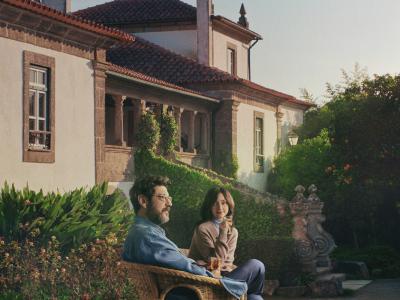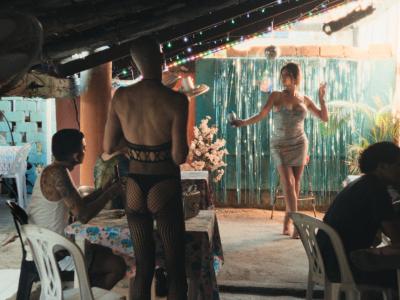
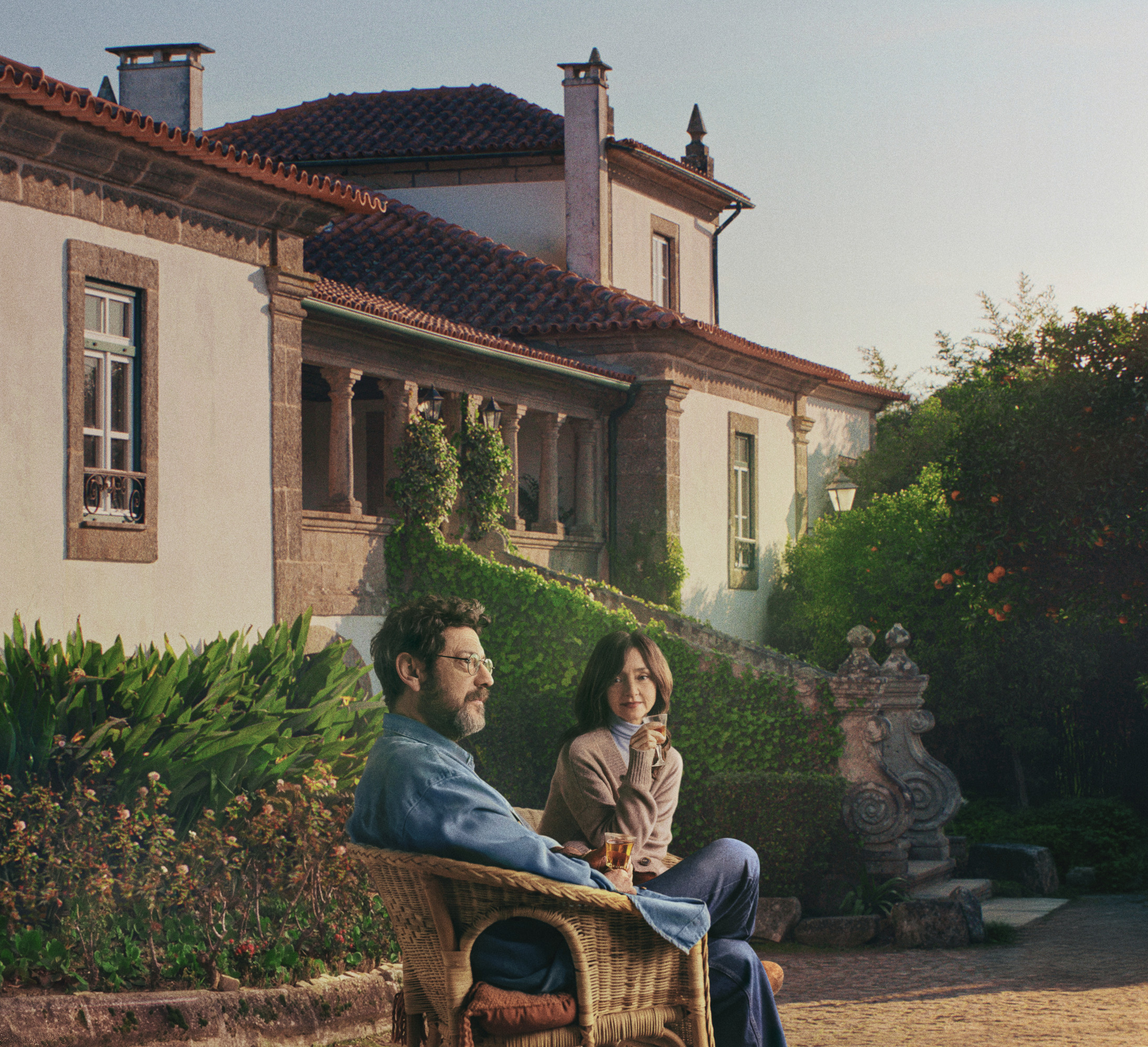
Manolo Solo as Manoel and María de Medeiros as Amália
“I’m going home’
In Spanish, the film’s title is ‘Una Quinta Portuguesa’- ‘Quinta’ being Spanish for estate, small farm, or even an orchard. Yet Prat chooses to translated the title into ‘The Portuguese House ‘. The word quinta is not that commonly used in Spain, so she chose to translate it to ‘House.’ No surprise there as the quinta building also becomes a presence in the movie. House also implies ‘home’ which you could say, has great significance in this story. The ‘house’ is a stunning example of traditional Portuguese architecture, a subject Prat knows a great deal about, having started out her professional life as an architect practising for over 5 years. She then started taking some film courses in her free time and an opportunity to take it further suddenly appeared: -
“One of my tutors on the short film course was a [well-known] film director who wanted to shoot a movie in the summer, exactly when I had my holidays. He asked me to be his script supervisor… The influence of architecture on my work is very present. I take note of the structure as I write the scripts and then also in the composition of the shots. Everything is studied, with the camera mostly fixed and all movements carefully controlled. So we try to find a certain harmony and certain compositions.”
Layer upon layer, not unlike a building itself.
“All houses have their own ghost”
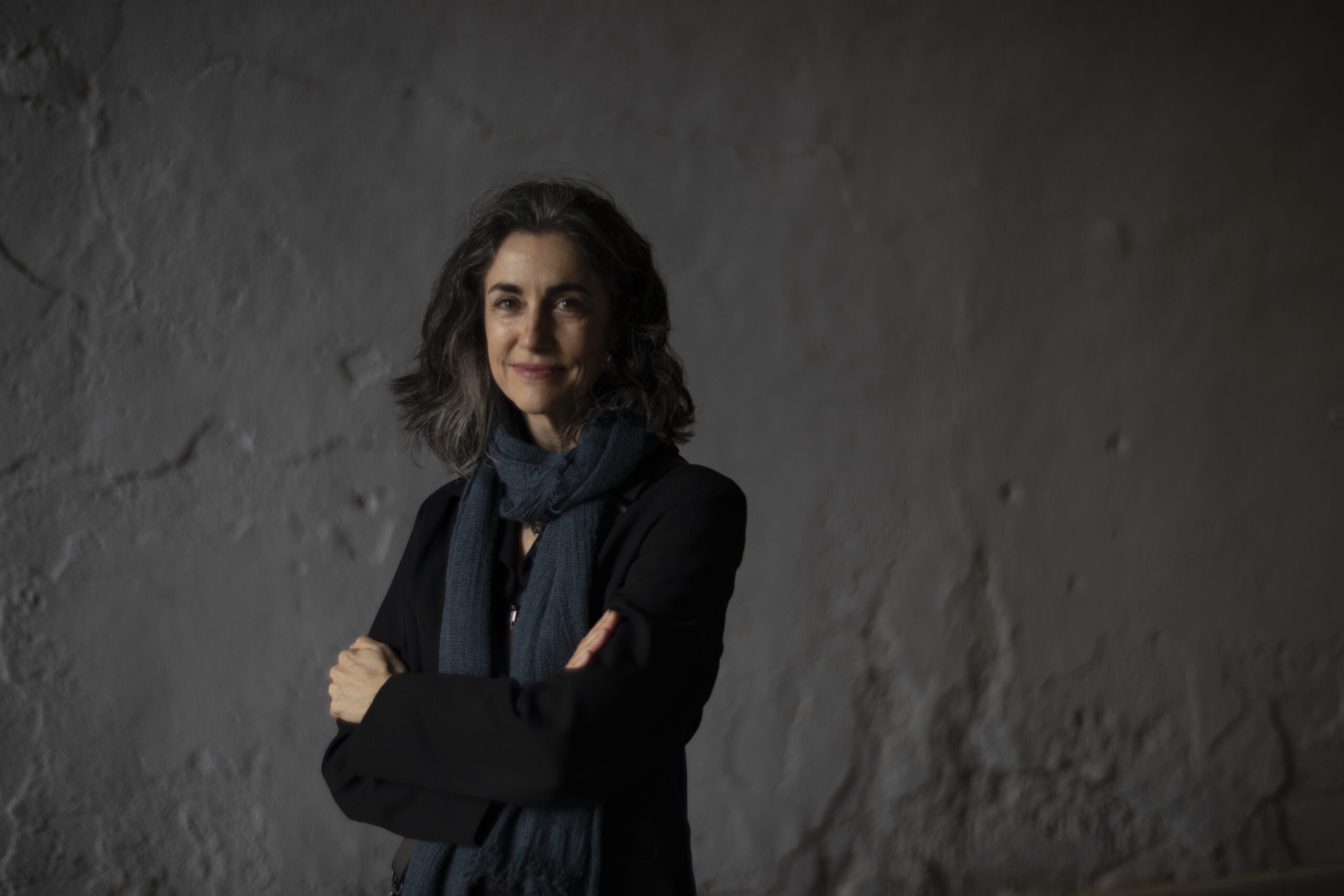
Avelina Prat, the writer/ director.
Later, Avelina ended up working on over 30 films. These include Fernando Trueba’s comedy drama, ‘The Queen of Spain’ (2016) with Penelope Cruz, in which Avelina Prat herself plays a role, amusingly, as ‘a script supervisor.’ These experiences gave her a powerful grounding in script writing that she has now developed to award level. Her debut feature, ‘VASIL’ (2022) a Spanish -Bulgarian production, premiered at the Warsaw Film Festival in Poland. She worked with well- known Bulgarian filmmakers Mina Mileva & Vesela Kazakova and the film went on to win over 13 awards.
‘The Portuguese House’ was co-produced by Spanish & Portuguese companies, including ‘Distinto Films’, ‘Jaibo Films’ and ‘O Som e a Fúria.’
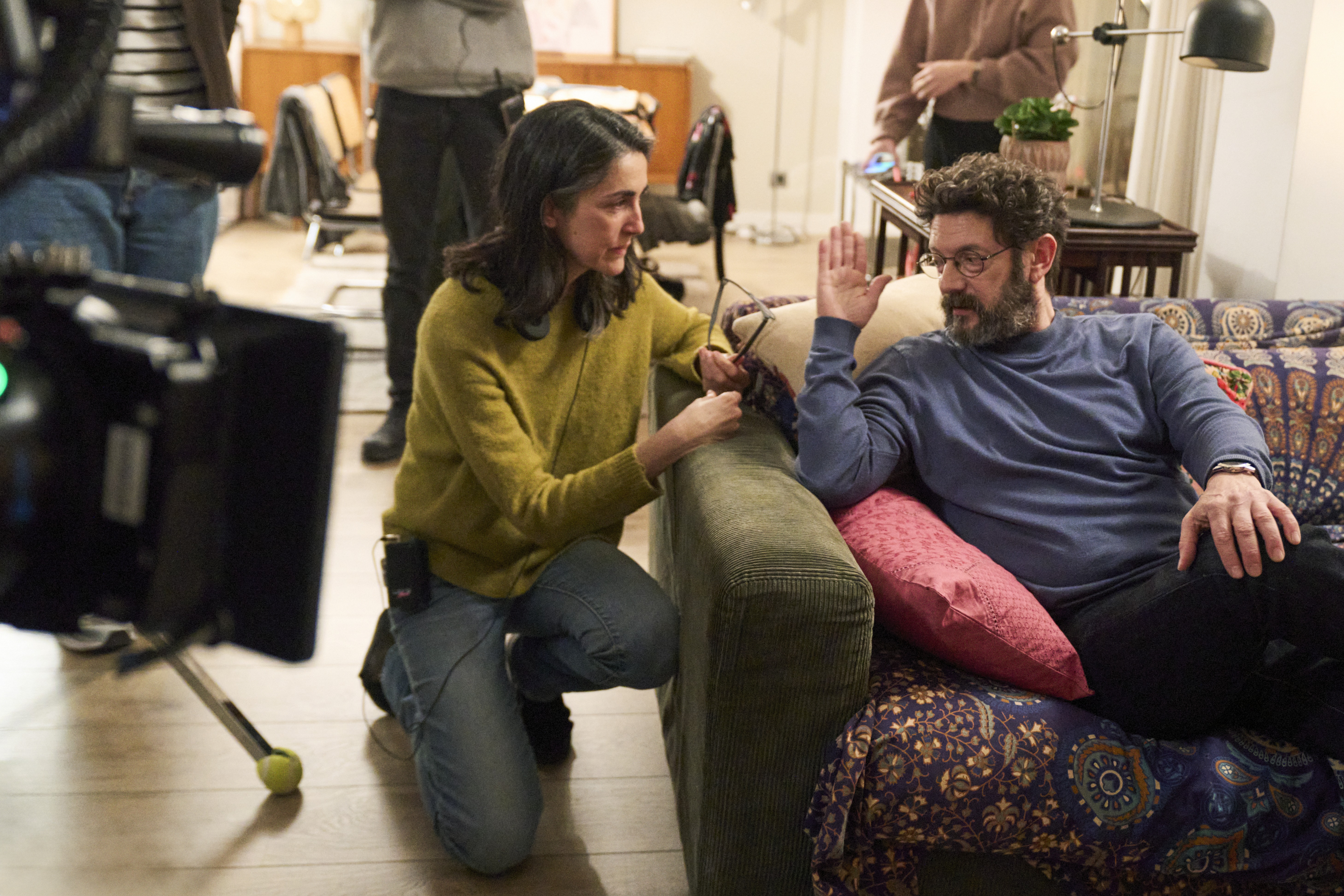
Avelina Prat and Manolo Solo on set.
The idea for the film emerged from a deep interest that Avelina has in people and how they live their lives: -
“… it came from various sources. I have always liked migration, that is, that persons can suddenly change their lives, change their location, leaving all sorts of things behind, and I think that every one of those people has a story and that is probably one of the big themes that affects our lives today. Thinking about this, I then read an article in a newspaper and the heading was: “My name is Ángel González and I declare that I am not dead.” This was the story of a man who had emigrated to Venezuela leaving everything behind. He had just gone, leaving no signs of life. Twenty years later he wanted to return to Spain and found that he was not allowed in, as officially he was registered as dead. He could not understand anything, but it turned out that one of his daughters had tried to locate him in vain and Spanish law, allows you to declare a person dead if at least 20 years or so have gone by with no sign of life, which is important in terms of inheritance and so on. This situation fascinated me and I began to wonder what could have happened to a person so that he felt the need to leave everything behind and start an entirely new life somewhere else: so, I invented this tale because everyone has a story.”
The story that Avelina then wrote in ‘The Portuguese House’ is about Fernando: -
A quiet, somewhat reticent geography teacher Fernando, works at a college and is totally devastated at being abandoned by his Serbian wife who suddenly disappears. He takes up an opportunity that presents itself unexpectedly to take over another man’s identity and turns up as ‘Manoel’ for a job as a gardener at a stunning Portuguese quinta, where he gradually creates a new life for himself.

Manolo Solo as Fernando
Interested in, rather than directly influenced by film makers like Jim Jarmusch and Aki Kaurismaki, she nevertheless captures a particular mood and calm meditative quality in her film that Invites us right into heart of the character’s lives with all their contradictions and hopes, as this gentle and heart- warming story explores identity and survival.
Loss is a powerful underlying theme, as Fernando tries to mourn the loss of his life and wife. In the end almost everyone in the film has also suffered losses and had to remake their lives. Prat intelligently and subtly keeps us interested and on the edge of our seats as to whether Fernando’s new found identity will end up being his downfall.
“I don’t want to find someone who doesn’t want to be found! Fernando exclaims.
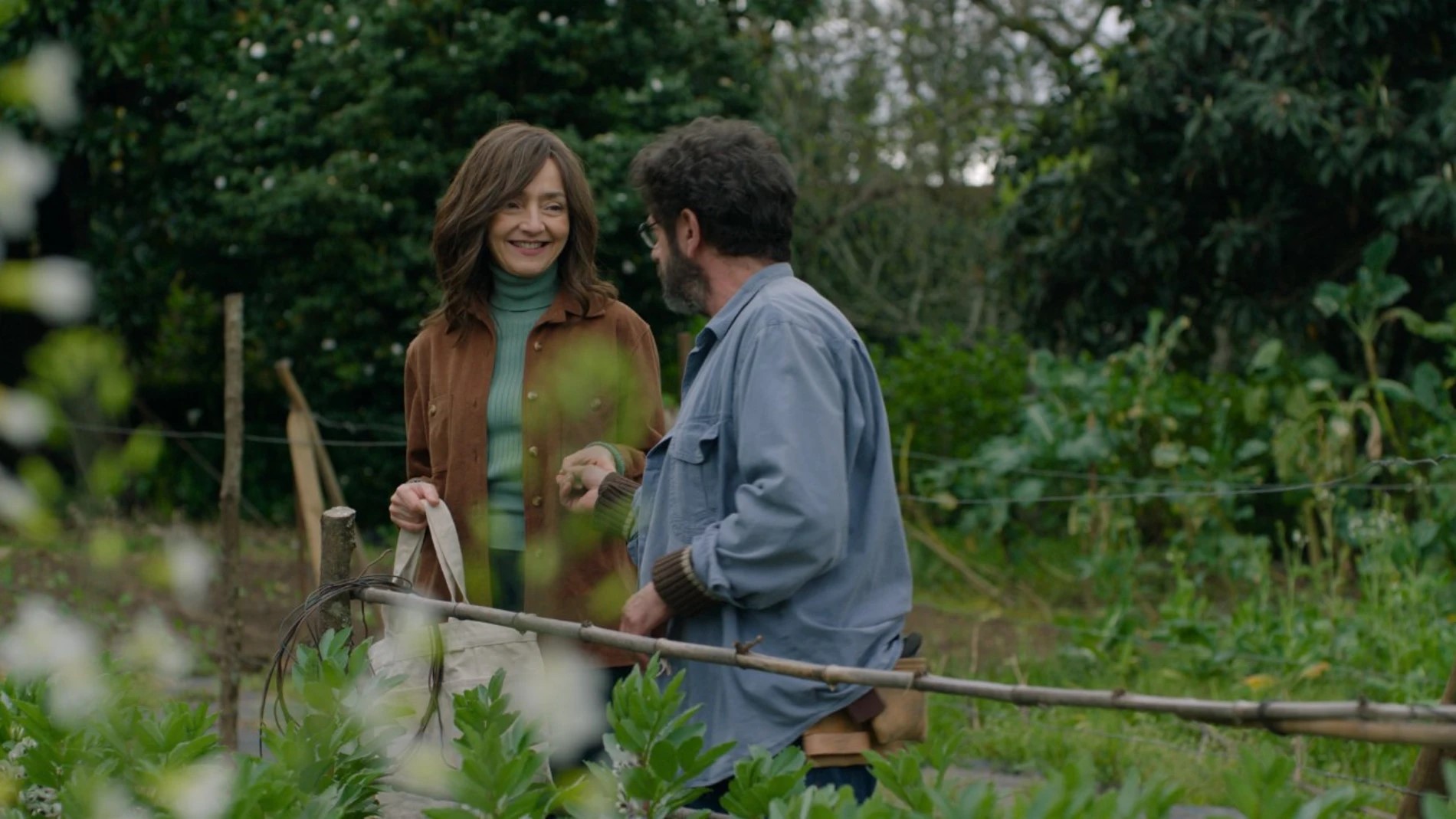
The calm intimacy of cinematographer Santiago Racaj’s photography captures the atmosphere with fine detail and careful lighting. The suspense is such that despite not having that much action, we never feel let down, but are able to identify with the characters on many levels. The natural and unenforced styles bring out the nuances and subtleties of the performances. In particular the late Manolo Solo (who sadly died aged only 62, in July 2026) who plays Fernando / Manoel in one of his last appearances, with a presence that radiates a distinct warmth and humanity in every move.
“One day a cloud starts to pour, so you start to run for cover. You run and run but you are always below it. You realise that you can’t go on and on, or that, if you stop, the cloud will continue, leaving you behind.”
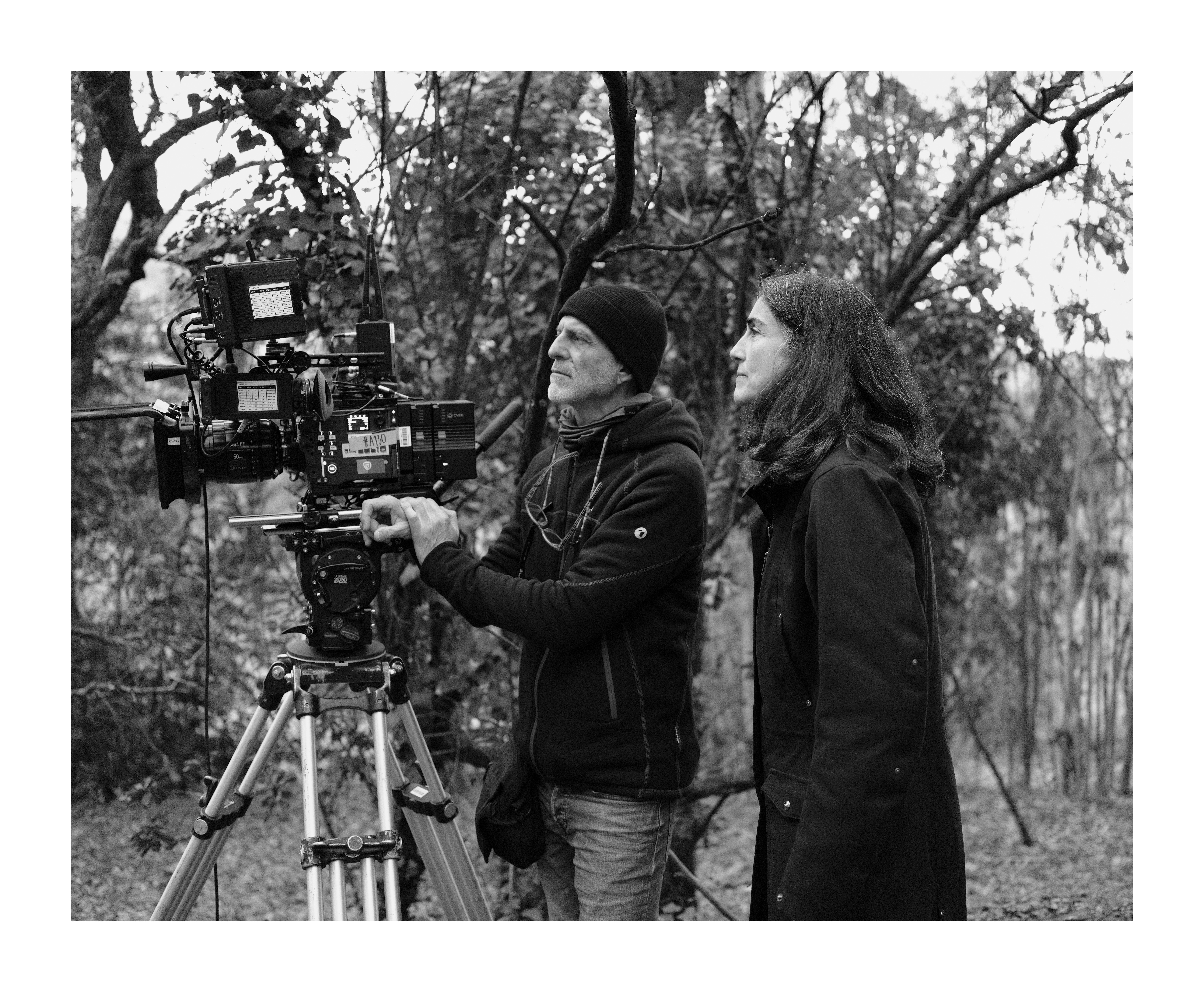
Avelina Prat with DOP Santiago Racaj
Avelina Prat had worked with Manolo Solo on a short film over 10 years ago, on one of her first films. When she started writing [The Portuguese House] script, she realized she was thinking of him for the role of Fernando: -
“I wanted a man who seemed totally normal and yet something like this could happen to him. A man who was working at his university and then, suddenly, his whole life changes …. Having had Manolo Solo so much in mind, I was really worried he might not agree, but he loved the script right away and got on board. He is an amazing screen presence. Hardly doing anything with minimal gestures, he immediately communicates a myriad of things with enormous elegance.”
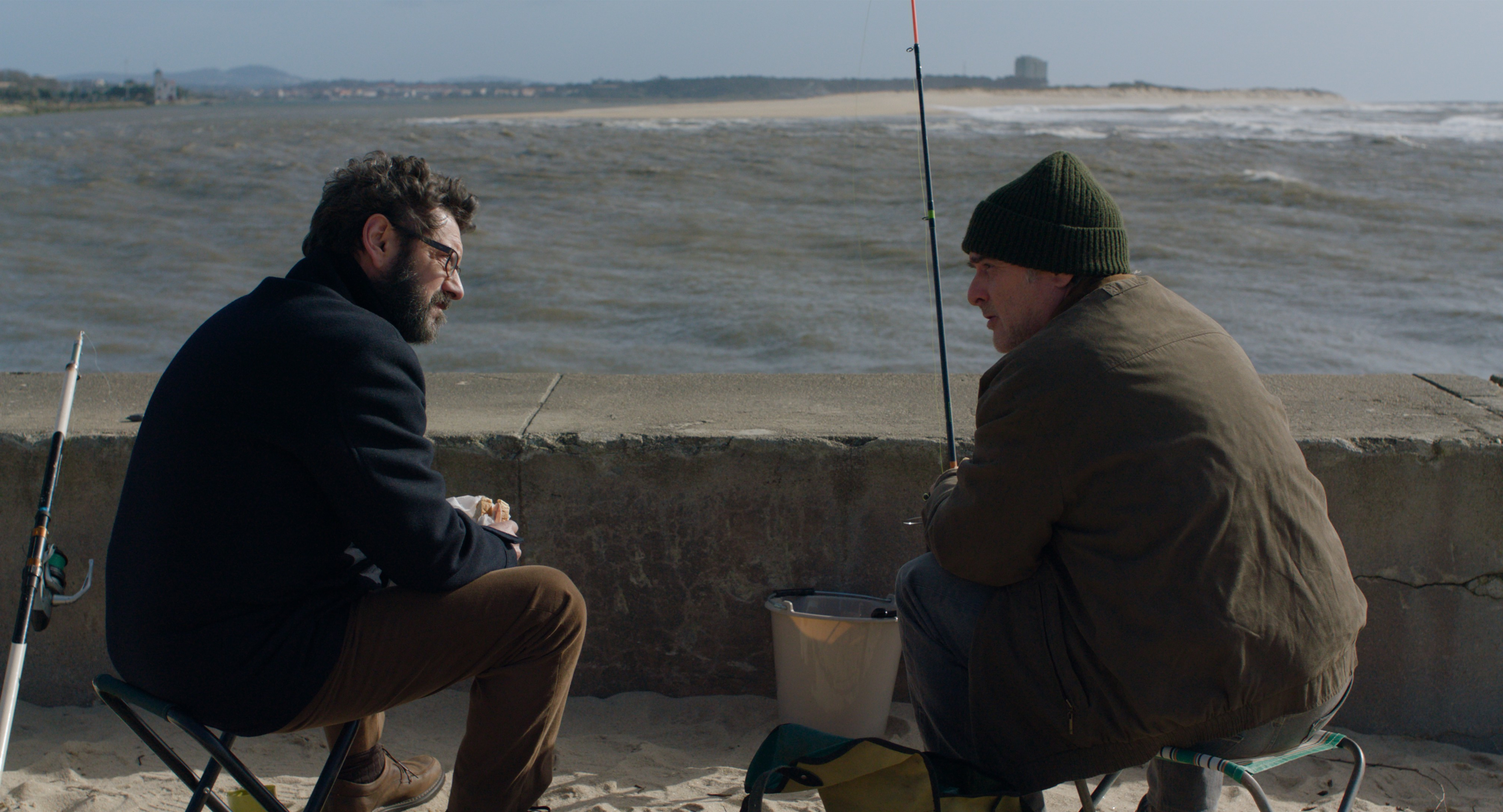
Manolo Solo as Fernando and Xavi Mira as Manoel
Manolo Solo started out as a musician, playing in the Seville rock scene. He was bass player and vocalist in groups like ‘Hacienda Somos Todos’ & ‘Libertad provisional’, ‘Arden Lagrimas’ and ‘Los Relicarios’ where he shared the stage with Santi Amodeo. After training at Seville’s Instituto de Teatro, he began a new career in acting, becoming a very busy jobbing actor for many years, finally achieving late recognition in ‘Close your Eyes’ (2023) by Victor Eric for which he was awarded the Goya for Best Supporting Actor to add to his other awards. In other notable roles, he played the subordinate of the cruel Captain Vidal in Guillermo del Toro’s ‘Pan’s Labyrinth (2006) and later leading roles in ‘Face to Face’ (2025) and now in ‘The Portuguese House’ (2025) by Avelina Prat, he plays in what was to be almost his swan song.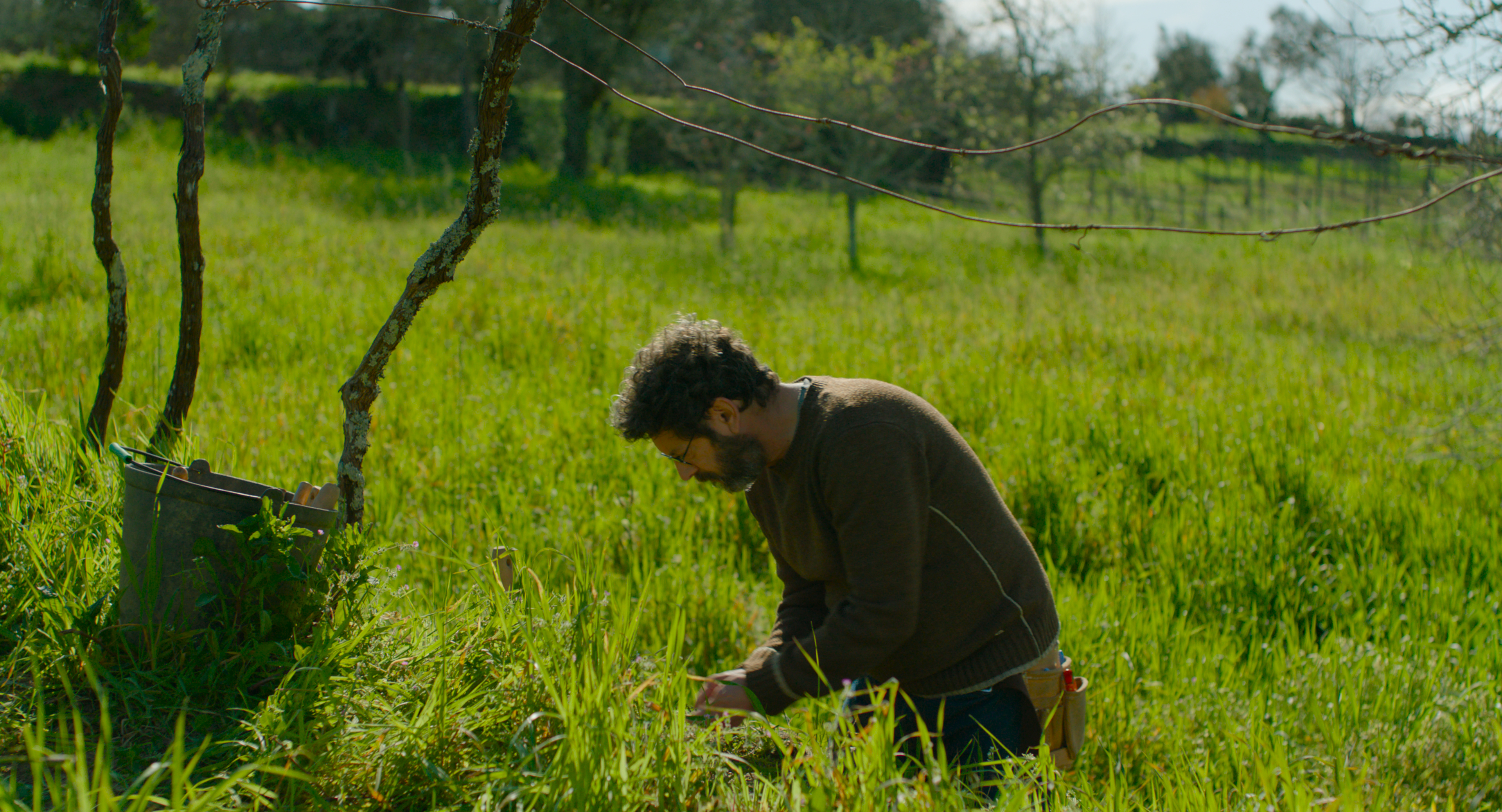
The renowned Portuguese actress Maria de Medeiros as Amália, manages to convey an air tinged with sadness, possibly from the life she also left behind, creating the perfect balance to Fernando/ Manoel’s more taciturn character. Every scene is imbued with a thriller element despite the slow- burn technique that permeates the whole film, as Prat plays with identity transfers more than once. Medeiros is an experienced performer. One of her earliest works was as Anaïs Nin in “Henry and June’ (1990) due to her uncanny resemblance to the author. She then also appeared in Alejandro Iñarritú’s ‘Babel’ (1999), Guy Maddin’s ‘The Saddest Music in the World’ (2004) and Quentin Tarantino’s ‘Pulp Fiction’ (1994). Such is her versatility that she is also known for performing songs and recording albums with numbers by Brazilian composers like Chico Buarque and Caetano Veloso singing in Portuguese, French and English.
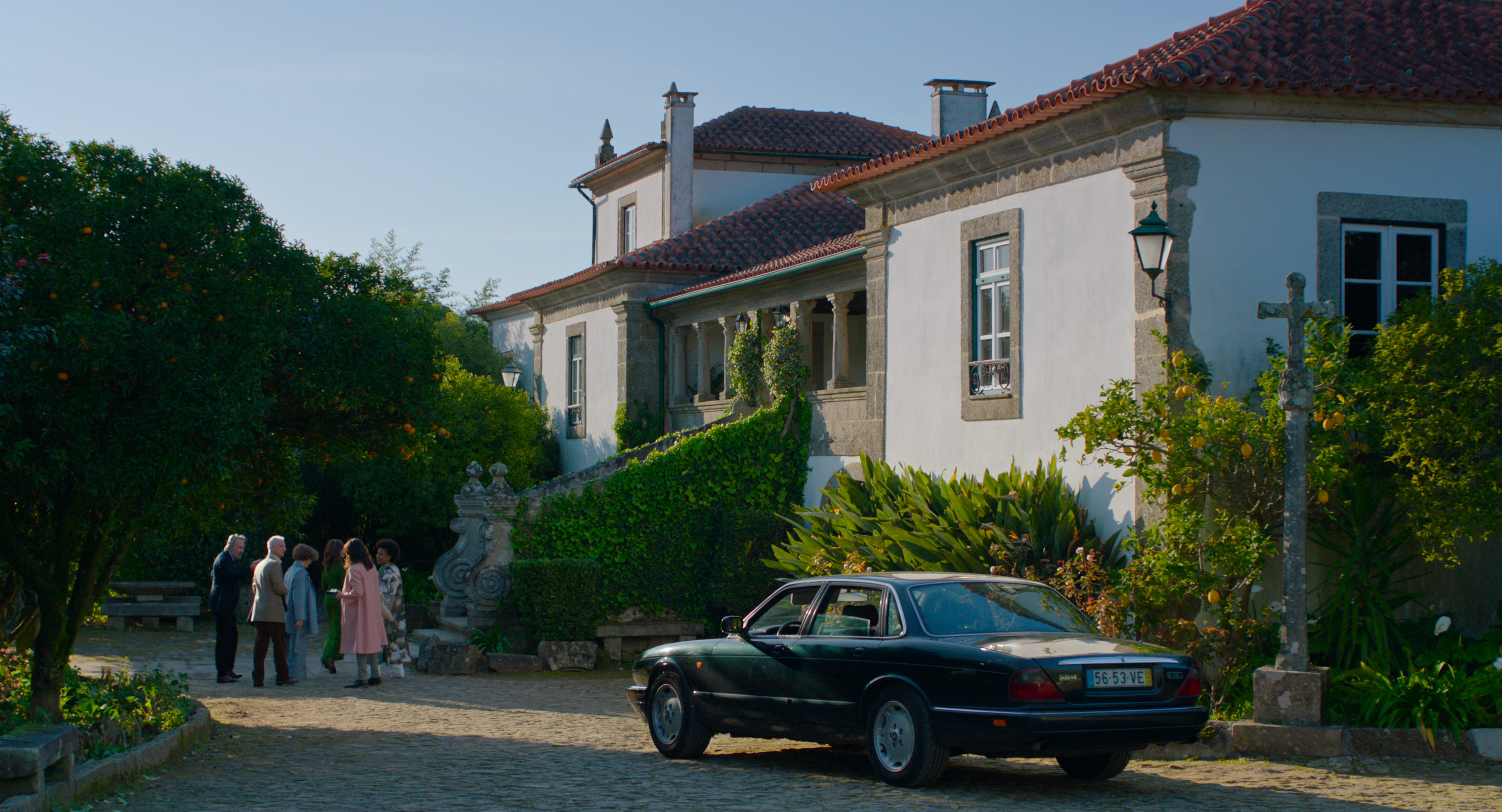
‘The Portuguese House’ was shot near the village Ponte de Lima in Braga, northern Portugal, an idyllic setting that envelops the film with fine scenery and spectacular light. Can Fernando find a new life that is meaningful to him? His Serbian wife never adapted to life in Spain and he feels the need to leave his normal existence. His new boss Amália (María de Medeiros) is a refugee from Angola herself. Then, to cap it all, Fernando discovers someone impersonating his wife in Spain. There are whole sequences of changed identities and finding a life being someone else.
This auteur film feels personal and intimate and is very heart- warming. It is not surprising it’s from a female director given the levels of sensitivity and gentle observance. The film has a refreshing originality, a quality that has, at times, been lost in cinema today. The images and feelings of this production remain with you, long after the credits have rolled.

Avelina Prat is now working on a new project, working title: ‘The Polygrapher ’with her core crew members, Santiago Lacaj as Director of Photography, the editor Juliana Montañés, and musician Vincent Barrière. She would only reveal that her new script would be a story that challenges truth versus lies, reality versus fiction and the whole creative process.
‘THE PORTUGUESE HOUSE’ (2026) will be in UK and Irish cinemas from October 2nd-2026
Written and directed by AVELINA PRAT
Producers: Miriam Porté, Luis Urgano, Miguel Molina, Adán Aliaga/ DOP: Santiago Racaj /Original Music: Vincent Barrière/ Editor: Juliana Montañés / Production Designer: Artur Pinheiro / Sound Designer: Iván Martínez-Rufat / Direct Sound: Nora Haddad / Content supervisor Clara Serrano Llorens
CAST: Fernando: Manolo Solo / Amália: María de Medeiros / Olga: Branka Katić /Rita: Rita Cabaço/ Manuel: Xavi Mira / Rodrigo: Gonçalo Dantas / Milena: Kasia Kapcia / Camilo: António Mortágua /