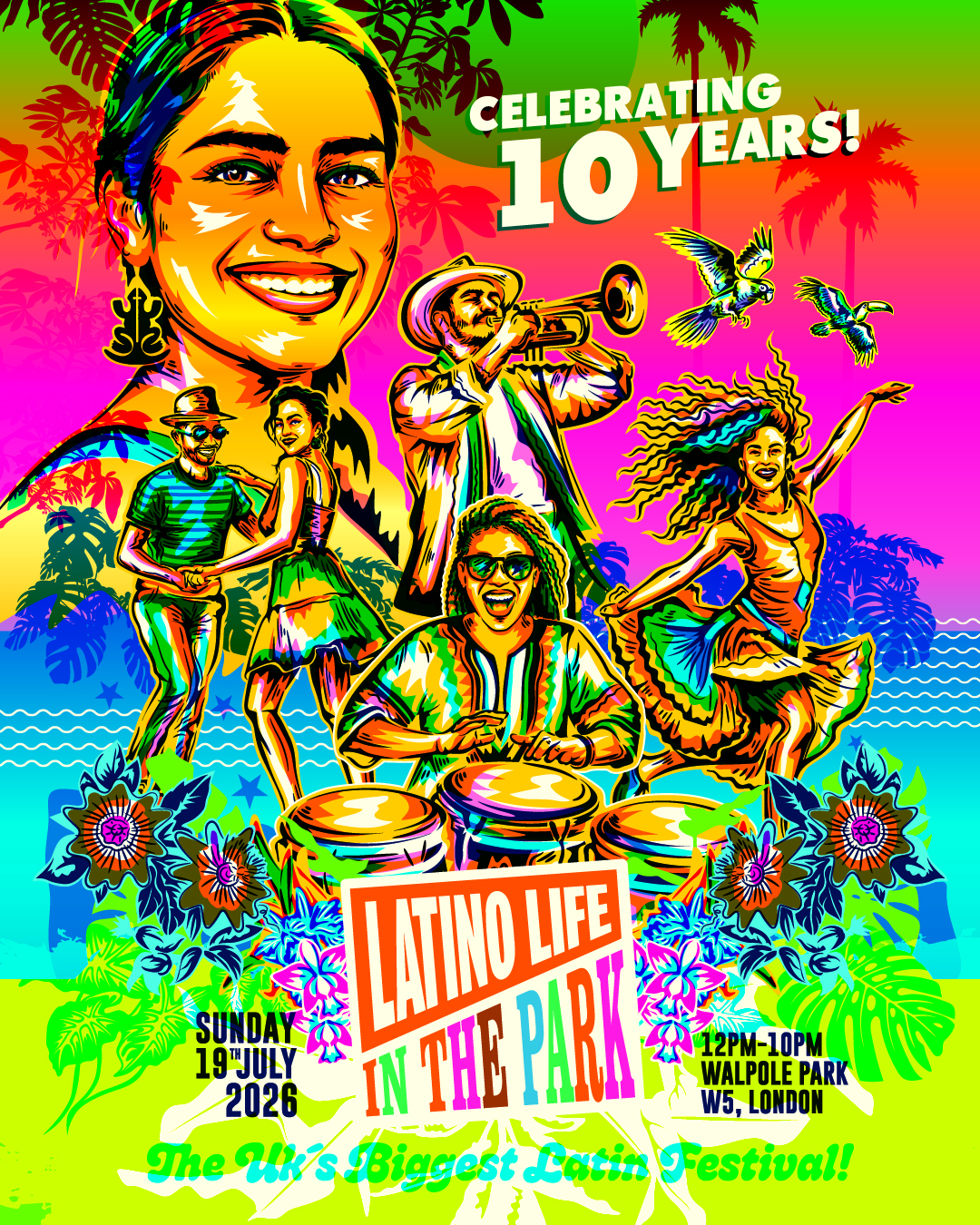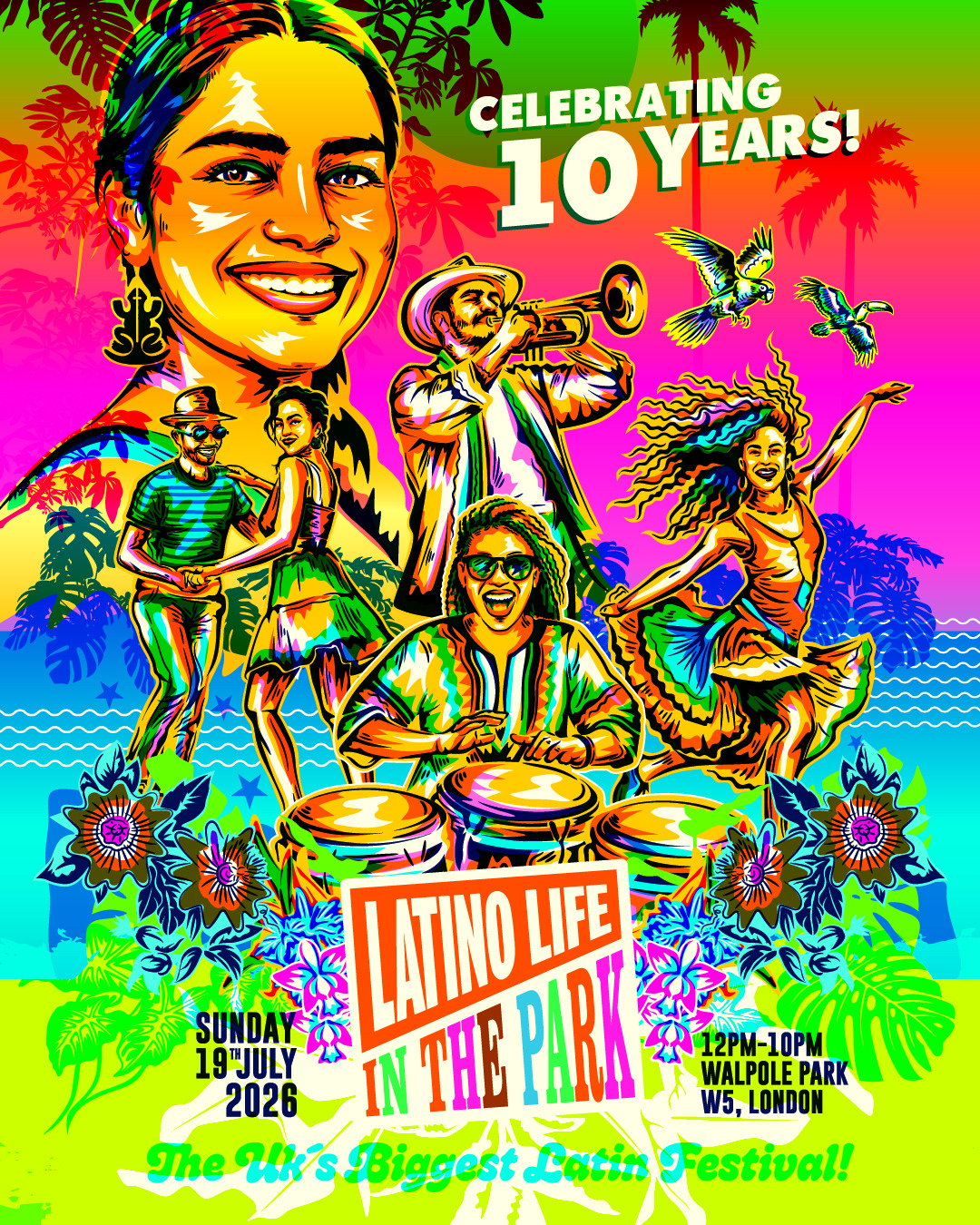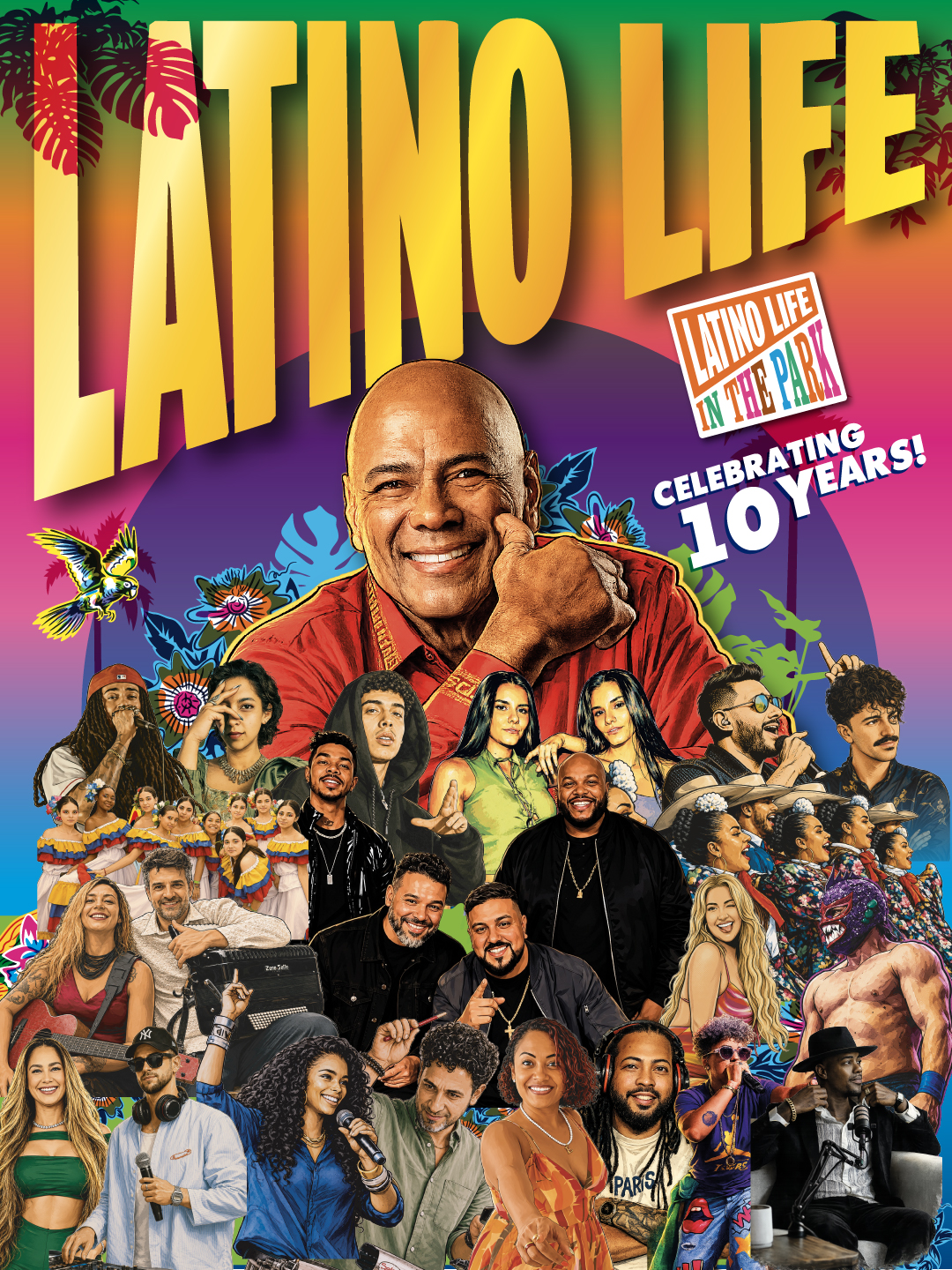
For one weekend this month, as tens of thousands of Londoners walked towards Tottenham Hotspurs stadium from Seven Sisters Latin market, Haringey became irrecogniseable from the place I landed in from Buenos Aires, forty-five years ago. Back then, if you had mentioned the word ‘Latin’, people thought you were talking about ancient Rome. In 2026, with reggaetón blaring from local shops on the High Street selling Puerto Rican pava straw hats, everyone knows what Latin means. In 2026, with Bad Bunny, then Pitbull becoming the first Latin artist to headline Hyde Park, and LatinoLife one the Park, the UK’s largest Latin Music festival celebrating 10 years, Latin music is well and truly planted in British culture, and it’s here to stay.
Growing up in Hornsey in the 1980s, I didn’t know any other Latin Americans outside my parents circle of friends. But I do remember the dinner parties at home, with long dark-haired, poncho-wearing folk, and the fierce political debate of a more intense splinter group on the smoky top floor, plotting revolutions in far off places.
The soundtrack to these events were the likes of Cuba’s Pablo Milanes and Silvio Rodriguez, Chile’s Victor Jara, Argentine Mercedes Sosa and Panama’s Rúben Blades, their protest songs giving voice to a region battling against repressive regimes. But I remember the exact moment when the music from this other place I belonged to really hit me…
It was 1981 and I was 9 years old, squeezing through what seemed like a forest of flared jeans, to get to the stage at what was then called the Hammersmith Palais. When I got to the front, my eyes fell on a beautiful man on stage, who filled my ears with a playful, sweetly percussive sound that I'd never heard before; so rich yet with an easy simplicity, joyful, yet so so tender. Overwhelmed with emotion I didn't know whether to dance or to cry.
I still thank the flaky babysitter, whoever she was, who failed to turn up that night, forcing my parents to sneak me into my first ever concert on a cold winter’s night. It was Gilberto Gil who cemented my love of music forever. More importantly, that experience made me feel for the first time that what made me different, and at times embarrassed, like when my mum waited for me in the playground in that dreaded poncho, was suddenly something I wanted to be part of.
From then to now, and the road in between
Twenty years later, in 2001, Jose and I met, upstairs at Bar Lorca in Islington, a popular salsa club at the time. I had just come back from Latin America, where I had spent most of my twenties, as a journalist, like my dad. Jose was pretty much fresh off the boat from Venezuela. He was a massive music fan, who was running a Latin music record store, and I was writing a book. Even though we met dancing salsa, Jose was most impressed with my collection of Argentine rock, Spinetta, Charly Garcia, Soda Stereo, who he was crazy about (though I was more ricotera)
From the day we met we’ve been inseparable, joining forces in life and in work, building a family and a cultural institution at the same time. About a year after we met, Jose, came back from his record store with a CD, Tego Calderón’s El Abayarde, the 2002 seminal reggaetón album. “This is the future of Latin music,” he said. That was saying something for a die-hard salsa fan.
Jose soon began running London’s first reggaetón clubnights. He pioneered the UK urban Latin music scene with his La Bomba nights at Ministry of Sound, which he then took to Europe, and produced the UK's first ever Reggaeton Festival in 2004. At the time few music curators or media pundits in the UK were taking notice of reggaetón, those that were inclined towards disparaging.
While Jose was promoting reggaetón nights, I began a Latin culture magazine, determined to fulfil an unfinished dream of my dad who, back in the 1980s, started a Latin news magazine in English, before his Venezuelan investors pulled out. Jose couldn’t stop coming up with ideas (“there is no Latino this or that, we should do it”) and I would take up each baton and run.
The next thing we knew, on top of the club nights and the magazine, we started The LUKAS (Europe’s only Latin Entertainment Awards), a red carpet event inspired by the MOBO Awards, celebrating Latin achievement in the UK. It wasn’t till 2016, however, that we launched LatinoLife in the Park (initially called La Clave Fest).
By then, LatinoLife magazine and the LUKAS Awards were going strong. Jose’s club nights were giving a platform to first generation UK-Latin rappers and The LUKAS was our effort to give more visibility, recognition and profile to Latin American artists in the UK. But it felt like we weren't really making an impact. While The LUKAS was a brilliant a VIP red-carpet gala, no festivals would book our award-winning artists. For The LUKAS to have some kind of legacy, we decided we had to do a festival ourselves.
The Most Important Thing is to Begin
Despite both being massive music lovers, and now working in Latin music, neither of us felt represented by the Latin music events being put on by UK promoters, because of the type of acts (not always most popular with Latinos) and the absence of our community in them. We wanted to tell our own story of Latin music, away from the “World Music” framing of it. We wanted a festival Made by Latinos, for Everybody.
The best piece of advice I’ve ever been given was when I went to the southern Brazilian city of Curitiba to interview its mayor, Jaime Lerner. I had been sent by a US magazine as part of an article on ‘cities that work.’ By implementing a revolutionary public transport system, Lerner had transformed his city into one of the most socially integrated in Latin America. How did he do it? “The most difficult thing of all,” he told me. “is to begin.”
With no money, our only option with the festival was to start local and start small. We were living in Hornsey, which happened to have its own community festival centred around the plaza in front of an amazing Art Deco listed building that was the Hornsey Town Hall. We figured it could definitely do with an injection of Latin joy and so approached the organisers about us taking over a day.
Of course, we were never going to start small. We wanted a proper cultural take over. And so we approached small venues, ending up with over 20 events; poetry readings, jazz concerts, pub gigs, theatre pieces, even a human tower competition, and a street parade with Bolivian monsters, drumming troops and samba dancers marching down Crouch End Broadway, to the amazement of locals shoppers. That parade is today the ever-popular Big Dance Extravaganza of 500 dancers that kicks off the festival every year.
Not surprisingly, with crowds spilling out onto the streets, by 2018 were told that we were getting too big for Hornsey. After months looking for another venue, the Mayor of London, who had now started funding us, kindly offered us The Scoop, the stunning bowl scooped out of the ground beside the then egg-shaped City Hall, between London and Tower bridges.
Being in Central London doubled our audience and the day turned into a full on salsa rave in the middle of the city. I remember how Cuban violinist Omar Puente jumped into the public with his violin and sent everyone crazy, and at one point the whole 5,000 plus audience line dancing.
Alas, again, with Scoop overflowing we were told we would have to find somewhere else. Homeless again, where could we go? With Councils now making big bucks hiring their parks out to major festival promoters, pickings were slim. Ah but a stroke of luck…back in Haringey, the Friends of Finsbury Park had told us they were in talks with Haringey Council about being given a day to celebrate the park’s 150th anniversary, could we help them? The very organisation complaining about major events in Finsbury Park wanted LatinoLife in the Park - an accessible independent festival, loved by those who attend - to help restore the park’s original intention as ‘The People’s Park.’
Still a two person show, we weren’t ready to be a park festival. But offers like this didn’t come every day. What an opportunity; London was finally to get its first major Latin park festival for years, and for the first time ever, it was UK Latin artists who would be headlining.
And so it was that in three years, we went from being a tiny community festival to a major park festival. In 2019 we had 40,000 people in Finsbury Park, and it was literally just Jose, me and a few helpers. That was the year Jose ended up in hospital.
When, in 2021, we did finally get a production manager, he jokingly asked if Jose would be stage managing, whilst filling in for the drummer, grilling sausages at one of the food stalls and refereeing the kids football tournament that we’d, for some insane reason, decided to put in the middle of the two stages. There were no hospital visits this year, only a long drive across London at dawn, with a car load of stinking garbage, thanks to some misbehaving traders. As we paid the geezer at his processing plant, it was a reminder that, feeling on top of the world after pulling off another festival, there was still the rubbish to take out!
By 2022 it became clear that there was a new energy that was taking centre stage, and it belonged to young people. As we pushed the reggaetón artists to centre stage, we’d drawn a whole new audience. We were the first festival to feature UK Urban Latin talent, singing their very own London-Spanglish. The crowd’s reaction was unbelievable, and we could see what a buzz it gave young Latino artists. They were on the big stage and the next generation in the audience could see themselves in the future.
Now LatinoLife in the Park is the UK’s largest one day Latin music festival, the only Latina-run major park festival, voted the UK’s most inclusive festival (FestSpace). And yet it is now just one in a whole ecosystem of activity, events media and talent development to push forward the Latin music industry in the UK.
When I think of us, I think of Jose provoking me with his red cape of ideas, and me charging at them with the stubbornness of a mad toro. We are both idealists and naturally entrepreneurial, or suckers for punishment, and have more than once ended up collapsed in a bundle, wondering what are we doing and why and who started it.
But the gratification is seeing what a diverse audience real Latin music has come to attract. We see Afro-Caribbean women in traditional head gear, women in head scarves, men in turbans, others baring torsos, dancing together to Mexico pop hits or Brazilian samba
This year, with Bad Bunny just having produced a fever over in Tottenham, with the British media talking about the joy and warmth of his music, it feels like the country I call home has finally understood the music that I fell in love with as a child.
This week, 45 years after that concert in Hammersmith ignited my love of Latin music, Gilberto Gil gave is farewell concert, in Camden’s Roundhouse, not far from where I grew up. The next evening, in the same venue, Rúben Blades, who Jose and I named our first son after, also said goodbye. It feels like the end of an era, and the start of a new one. I never dreamed that I’d somehow be part of this exciting new chapter. Almost 25 years after Jose and I first met and started working together, LatinoLife’s growth has mirrored a global cultural phenomenon: Latin Music has gone from being a niche genre to the most consumed genre in the world. And on its 10th anniversary this July, LatinoLife in the Park has grown from an obscure community festival to the UK’s largest Latin Music Festival.
LatinoLife in the Park is not only the best place to discover authentic Latin music, its the best place to discover unique homegrown Latin talent right here in the capital. As the single biggest employer of Latin talent, contracting over 700 performers, it is the launchpad that has helped build the careers of young bi-lingual UK Latin artists, in the hope that some will find their way to the forefront of a global music industry, where music in English is no longer dominant. Who knows, perhaps one of the UK artists you’ll see at LatinoLife will be the International headliners of tomorrow. The difference is that they’ll be singing in Spanish and Portuguese.
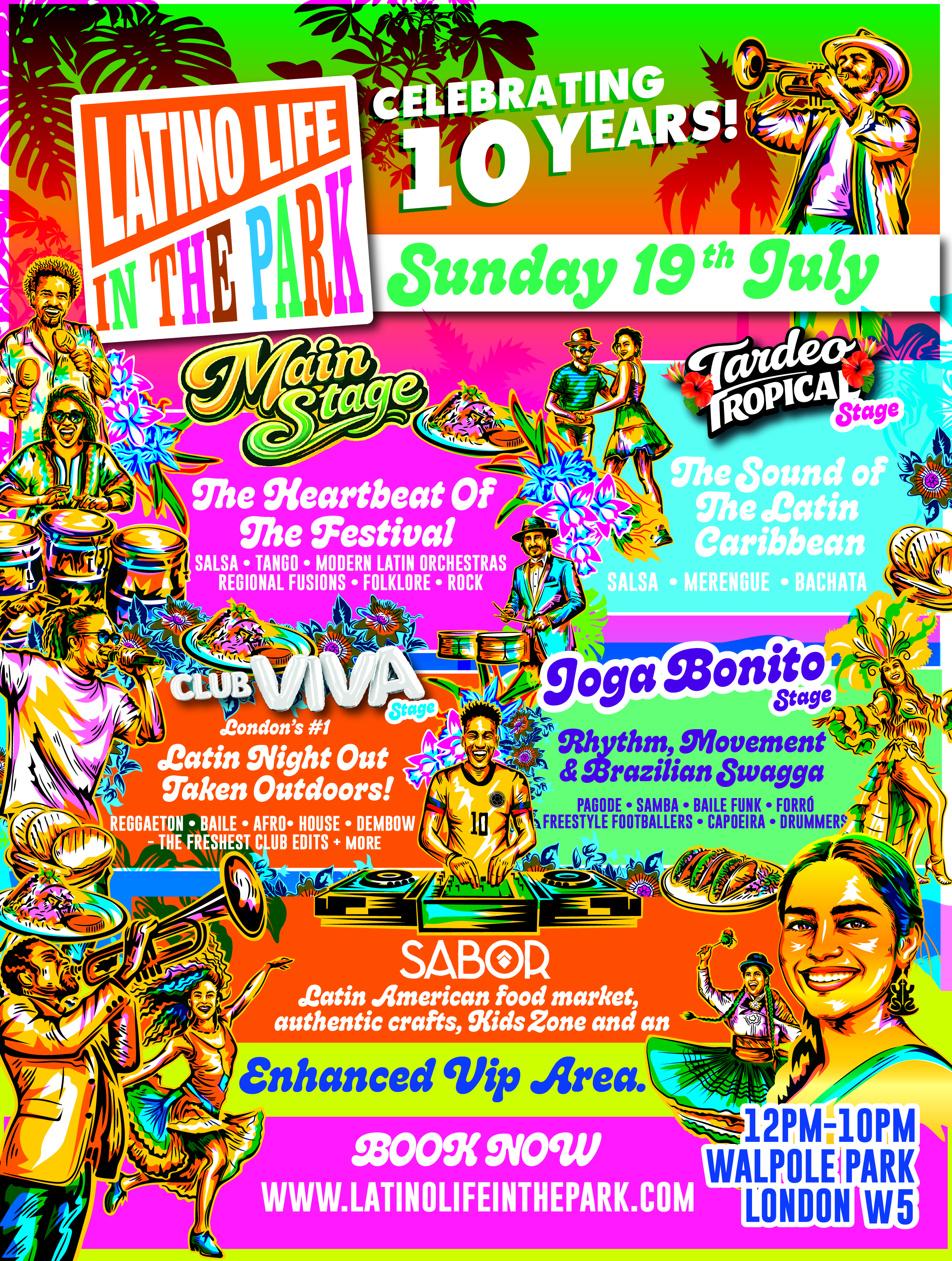
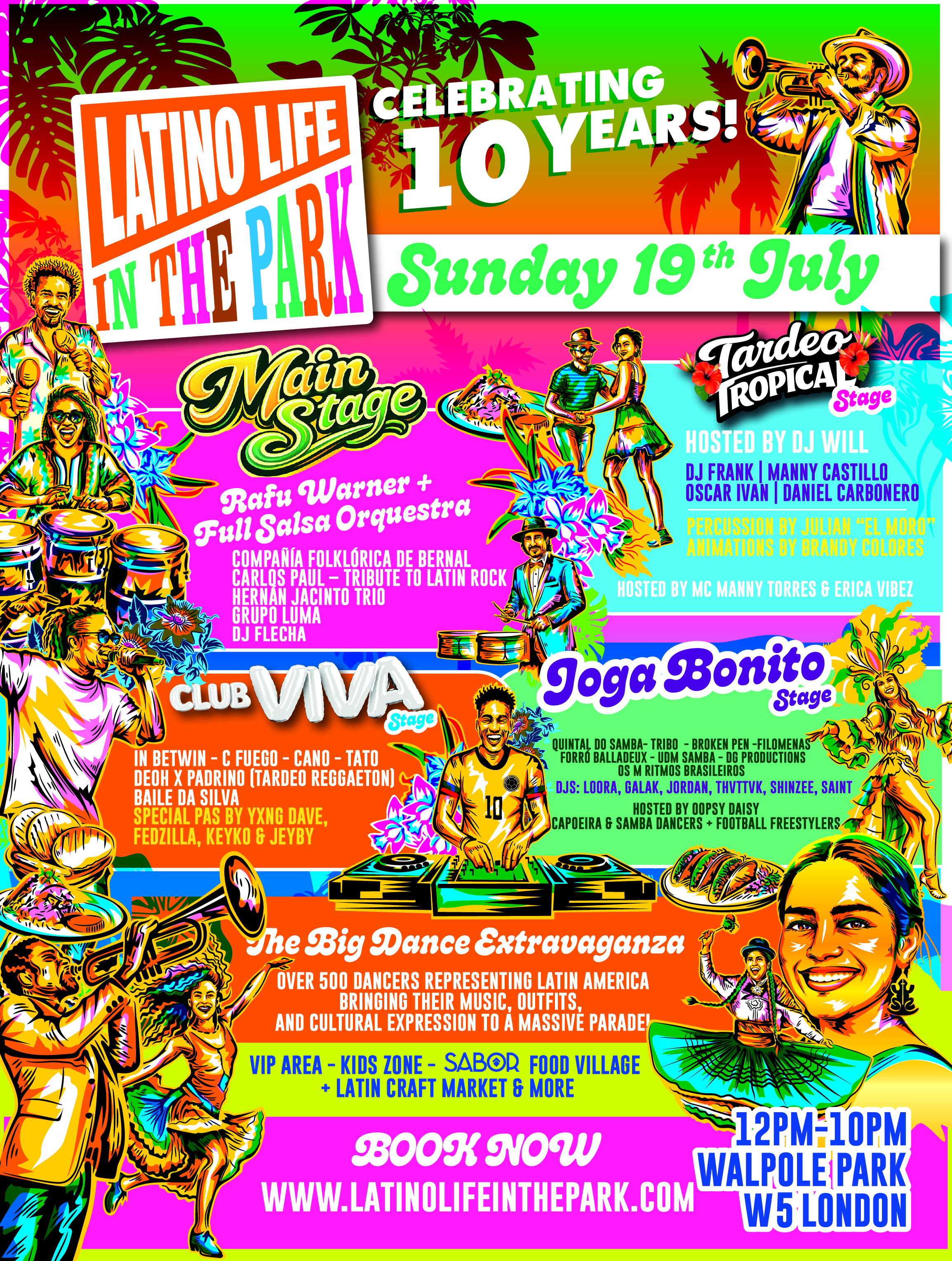
LatinoLife in the Park will take place on Sunday 19th July in Walpole Park, London W5 www.latinolifeinthepark.com